Shatavari: Real Dangers, Side Effects and Contraindications
Shatavari, the "women's herb" praised for cycles and menopause, is not as trivial as it sounds: cross-allergy, hormone sensitivity, pregnancy requiring supervision. Here are the real risks, without dramatizing or downplaying.
In this article 9 sections
- Shatavari: what are the real dangers?
- Asparagus cross-allergy: the most underestimated risk
- Hormone sensitivity: endometriosis, fibroids, hormone-dependent cancers
- Pregnancy and breastfeeding: medical supervision is essential
- Shatavari while pregnant: postpartum tradition, no pregnancy data
- Interactions with hormonal treatments
- Common side effects and warning signs
- Precautions for use: what to remember before taking it
- Your questions
The main danger of shatavari does not come from general toxicity — the plant is traditionally well tolerated — but from three precise situations: a cross-allergy with asparagus (shatavari belongs to the same botanical family), hormone sensitivity in people with endometriosis, fibroids or a hormone-dependent cancer, and pregnancy without medical supervision. For most healthy people, occasional, moderate use poses no known problem.
The marketing around shatavari sometimes casts it as a miracle remedy of the "sacred feminine": that is not what the available data show, and those data remain limited. This article separates what the Ayurvedic tradition attributes to the plant, what a few preliminary studies suggest, and the concrete precautions to respect before taking it.
Shatavari: what are the real dangers?
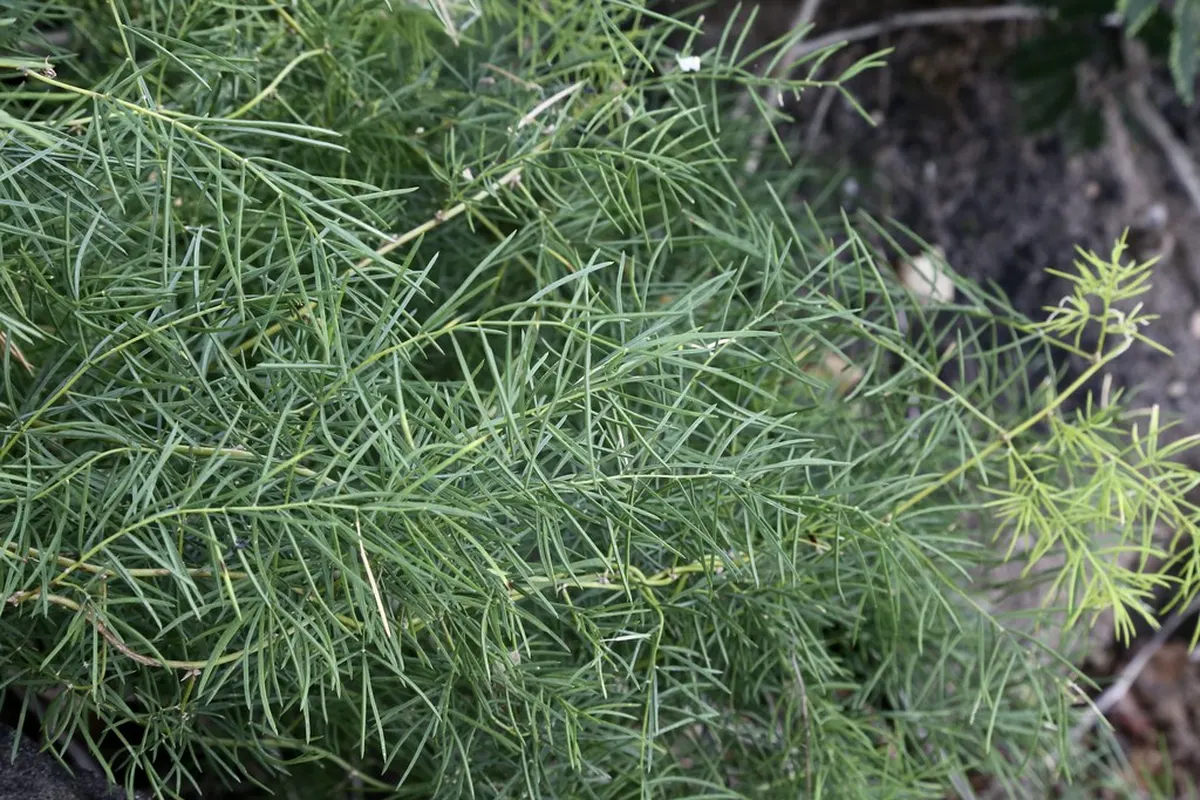
Shatavari (Asparagus racemosus) is a root classed among the women's rasayanas in the Ayurvedic tradition, reputed to nourish and soothe the reproductive system. The documented or plausible risks remain well circumscribed:
- Cross-allergy with asparagus: skin, digestive or respiratory reactions in people already allergic to edible asparagus or other Asparagaceae.
- Potential estrogen-like effect: tradition and some preliminary work point to activity resembling phytoestrogens, which justifies caution in hormone-dependent conditions.
- Pregnancy: an old traditional use exists, but no solid modern data can guarantee total safety — medical advice is essential.
- Possible drug interactions with hormonal treatments (contraception, menopause hormone therapy, certain breast cancer therapies).
- Minor digestive upset (bloating, loose stools) at too high a dose, especially when starting out.
None of this means shatavari is an herb to ban: it means it deserves the same precautions as any supplement with potential hormonal activity — no more, no less.
Asparagus cross-allergy: the most underestimated risk
This is the most concrete danger and the one most often left off product pages. Shatavari belongs to the Asparagaceae family — the same as the asparagus you eat as a vegetable. Someone allergic to asparagus, leeks or garlic (closely related botanical families) can develop a reaction when taking shatavari as powder or capsules: itching, hives, digestive discomfort, more rarely trouble breathing.
In practice: if you have ever had a reaction, even mild, to asparagus or another plant in this family, test a minimal dose before any regular intake, or simply avoid shatavari altogether. At the first unusual symptom (rash, facial swelling, difficulty breathing), stop immediately and see a doctor.
Hormone sensitivity: endometriosis, fibroids, hormone-dependent cancers
This is the point that deserves the most seriousness. The Ayurvedic tradition credits shatavari with a supporting role for the menstrual cycle and menopause, and some preliminary work points to phytoestrogen-like activity. That hypothesis, even unconfirmed by solid data, is enough to justify heightened caution for certain people:
- Endometriosis: a condition driven by estrogenic stimulation of tissue; any herb suspected of hormonal activity must be discussed with your gynecologist before use.
- Uterine fibroids: the same logic of caution, since fibroid growth is hormone-sensitive.
- Hormone-dependent cancers (breast, endometrial, ovarian): shatavari is to be avoided unless your oncologist explicitly says otherwise, particularly during or after hormonal cancer treatment.
No solid study today shows that shatavari worsens these conditions, but absence of proof of safety is not proof of harmlessness. This is exactly the kind of situation where the "natural plant, therefore risk-free" reflex must give way to prior medical advice.
Pregnancy and breastfeeding: medical supervision is essential
Shatavari has an old traditional use during pregnancy in some Ayurvedic contexts, presented as a support for lactation after childbirth. That is not enough to guarantee its safety by today's standards: modern data on pregnancy and breastfeeding remain nearly nonexistent.
| Situation | What we know | Recommended attitude |
|---|---|---|
| Pregnancy (all trimesters) | Old traditional use, no reliable modern data | Do not take without sign-off from a healthcare professional |
| Breastfeeding | Traditional galactagogue reputation, one small postpartum trial, data still limited | Medical advice before any use |
| Trying to conceive (fertility treatment underway) | Possible interaction with hormonal fertility treatments | Discuss with the doctor managing the treatment |
Plainly put: "traditional" does not mean "validated", and a pregnant or breastfeeding woman should never start shatavari on her own initiative.
Shatavari while pregnant: postpartum tradition, no pregnancy data
Can you take shatavari while pregnant? Not without explicit medical advice. The herb has not been shown to be dangerous, but no clinical trial has studied it in pregnant women, and its suspected hormonal activity calls for caution as a matter of principle. Its traditional use mainly concerns the period after childbirth, as a support for lactation.
A randomized, double-blind, placebo-controlled trial by Birla and colleagues, published in 2022 in Cureus, gave 78 women who had just given birth either a bar containing shatavari and oats or an identical placebo bar: expressed milk volume at 72 hours was higher and breast fullness came earlier in the shatavari group, with no adverse events reported (see the study). The first author works for the company that makes the bar, and the trial is small and short: it says nothing about safety during pregnancy itself.
If shatavari was taken before the pregnancy was known, there is no data pointing to a proven risk from a one-off use: simply mention it, with every herb and supplement taken recently, at the first appointment with your midwife or doctor. For fatigue during pregnancy, hydration, regular meals, rest and gentle activity come first; for breastfeeding, frequent nursing and a lactation consultant come before any supplement. See also our guide Ayurveda during pregnancy.
Interactions with hormonal treatments
Because it is suspected of estrogen-like activity, shatavari calls for vigilance with any ongoing hormonal treatment:
- Hormonal contraception (pill, patch, ring): as a precaution, tell your doctor or pharmacist you are taking shatavari.
- Menopause hormone therapy (HRT): a theoretical stacking of effects to discuss with the prescriber.
- Breast cancer hormone therapy (tamoxifen, aromatase inhibitors): avoid without your oncologist's explicit go-ahead — the theoretical interaction runs against the very purpose of the treatment.
- Fertility treatments: the same err-on-the-side-of-caution logic.
As is often the case in herbal medicine, these are not interactions demonstrated by large clinical trials, but theoretical risks plausible enough to justify a conversation before combining shatavari with hormonal treatment.
Common side effects and warning signs
At traditionally used doses, shatavari is generally well tolerated. The reported effects remain minor and rare:
- Bloating or loose stools when starting out, especially at high doses.
- Allergic reactions (see above) in people sensitive to Asparagaceae.
- Occasional headaches or mild nausea, often linked to too high a starting dose.
Digestive upset usually settles within a few days. The simplest way to avoid it is to start at half dose, take the powder with a meal rather than on an empty stomach, and increase gradually towards the traditional indicative dose of 3 to 6 g of powder a day. Digestive trouble lasting more than one to two weeks is a reason to stop and talk to a health professional; an allergic reaction, by contrast, can appear from the very first dose.
Where does the suspected hormonal activity come from? A laboratory study by Sharma and Jaitak, published in Natural Product Research (online 2018, print 2020), tested Asparagus racemosus extracts on a breast cancer cell line and used computer modeling to screen the plant’s known compounds: rutin showed marked binding to the estrogen receptor alpha in the model (see the study). This is cell and in-silico work, not a study in people: it neither shows harm nor benefit in humans, but it is consistent with the caution applied above to hormone-dependent conditions.
Signs that require stopping and seeing a doctor: widespread rash, swelling of the face or throat, trouble breathing, unusual gynecological bleeding, or new pelvic pain in someone with a hormonal history.
Precautions for use: what to remember before taking it
Shatavari is neither a poison nor a miracle remedy: it is a plant with potentially hormonal activity, to be handled with the same seriousness as any active dietary supplement. Before any use:
- Rule out any allergy to asparagus or the Asparagaceae family.
- Tell your doctor about any hormone-dependent condition (endometriosis, fibroids, breast or gynecological cancer) before taking it.
- Never use it during pregnancy or breastfeeding without explicit medical advice.
- Talk to your doctor or pharmacist if you are on hormonal treatment, contraception or chemotherapy.
- Start at a low dose to assess digestive tolerance.
For quality criteria, a detailed look at at-risk groups and the warning signals worth knowing across all Ayurvedic herbs, see our safety and precautions guide. If you are hesitating between two traditional tonics for your profile, our comparison of shatavari vs ashwagandha details their respective uses and precautions.
Your questions about shatavari
Is shatavari dangerous for everyone?
No. For someone with no Asparagaceae allergy, no hormone-dependent condition and outside pregnancy, occasional, moderate use presents no known major risk. The precautions mainly concern cross-allergies, hormonal conditions and pregnancy — not the general population.
Can you take shatavari with endometriosis?
As a precaution, not without prior medical advice. Shatavari is suspected of estrogen-like activity, and endometriosis is a hormone-sensitive condition. No solid data prove an established risk, but the absence of proof of safety justifies talking to your gynecologist first.
Can shatavari cause an allergy?
Yes, in people already allergic to asparagus or other plants of the Asparagaceae family, since shatavari belongs to it. Possible signs are skin-related (hives, itching), digestive, or more rarely respiratory. A first trial at a minimal dose limits the risk.
Is shatavari safe during pregnancy?
The Ayurvedic tradition sometimes uses it in late pregnancy and while breastfeeding, but no solid modern data guarantee its safety. It should not be taken during pregnancy or breastfeeding without explicit sign-off from a doctor or midwife.
Does shatavari interact with the contraceptive pill?
No demonstrated interaction is established, but because shatavari is suspected of hormonal activity, it is recommended to inform your doctor or pharmacist if you are on hormonal contraception, menopause hormone therapy or breast cancer hormone therapy.
Which signs mean you should stop shatavari immediately?
A widespread rash, swelling of the face or throat, trouble breathing, or the appearance of unusual gynecological bleeding and new pelvic pain. In those cases, stop taking it and see a doctor without delay.
Does shatavari really help with breastfeeding?
One small randomized, placebo-controlled trial in 78 postpartum women (2022) found more expressed milk at 72 hours with a shatavari bar. It is a single short trial, partly run by the manufacturer: ask a healthcare professional before using shatavari while breastfeeding.
What if I took shatavari before knowing I was pregnant?
No data supports a proven risk from a one-off use before pregnancy was known. Mention it calmly to your midwife or doctor at the first appointment, along with any other herb or supplement taken recently.
How can you avoid digestive upset with shatavari?
Start at half dose, take the powder with a meal rather than on an empty stomach, and increase gradually towards the traditional indicative dose. Bloating or loose stools usually settle within a few days; if they last more than one to two weeks, stop and ask a health professional.
Free newsletter
One practical Ayurveda tip every Sunday
A seasonal habit, a recipe or a ritual taken from our articles, in a two-minute read. Your welcome gift: the 7-step Ayurvedic morning routine, unlocked right away. One-click unsubscribe.