Ubtan: The Traditional Indian Face Scrub Recipe
Before store-bought creams, there was ubtan: a scrub-mask made from chickpea flour and turmeric, prepared in the kitchen and passed down from generation to generation in India. Here is the traditional recipe, step by step.
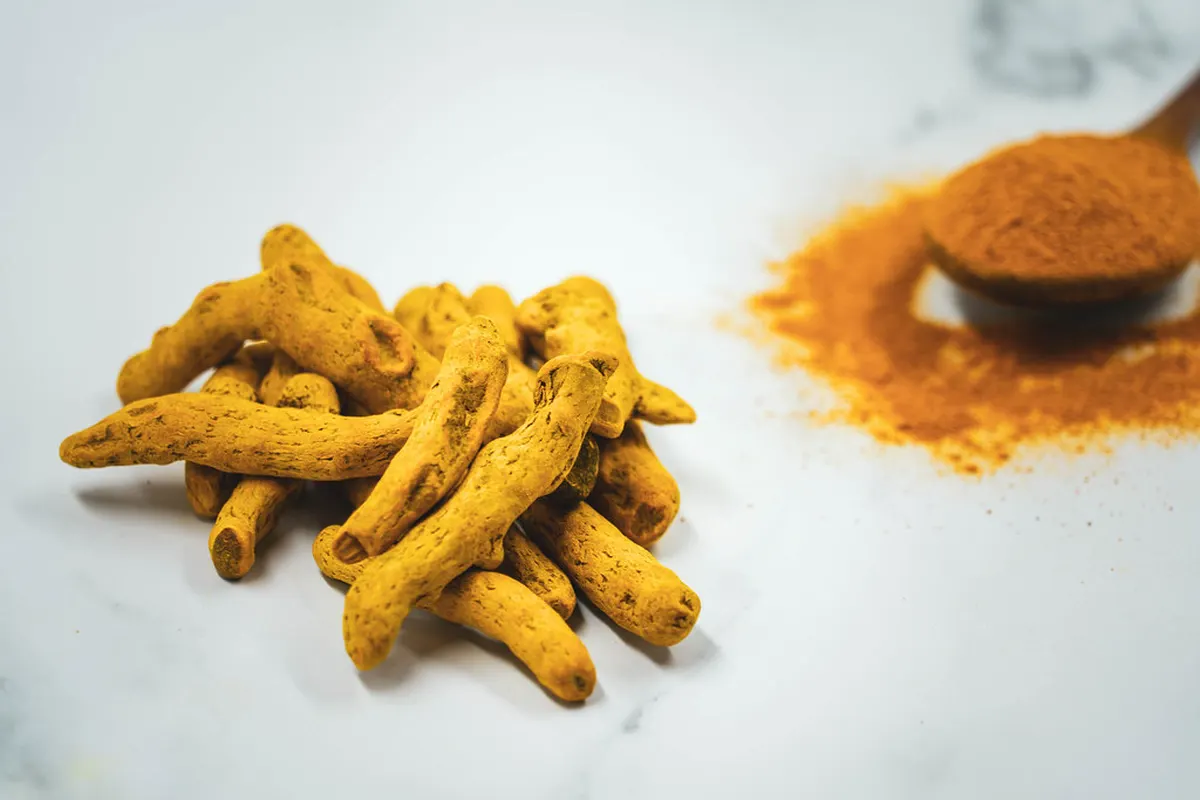
In this article 8 sections
- What is ubtan, this traditional beauty recipe?
- The traditional ubtan formula: chickpea flour, turmeric, milk and oil
- How to apply a facial ubtan step by step
- How often should you use ubtan?
- Adapting ubtan to your skin type: dry, oily or sensitive
- What can you honestly expect from ubtan?
- Precautions before using ubtan
- Your questions
Ubtan is the traditional Indian scrub-mask made from chickpea flour (besan), turmeric, milk and oil: the ingredients are mixed into a fresh paste, then applied to the face to cleanse, gently exfoliate and even out the complexion. It is one of the oldest beauty recipes of the Indian subcontinent, still prepared today before weddings, during the haldi ceremony.
No store-bought product needed: four kitchen ingredients are enough, and the recipe adapts easily to dry, oily or sensitive skin. Here is the traditional formula, the application technique step by step, and how often to use it.
What is ubtan, this traditional beauty recipe?
In several North Indian languages, the word ubtan refers to a cosmetic paste made from flours and ground herbs, applied to the skin and then rinsed off with water. In the Ayurvedic tradition, the practice is closely related to udvartana, the powder scrub also performed on the body — you will find the full-body version in our article on the Ayurvedic bath. On the face, ubtan has a special reputation: it is the treatment prepared for brides and grooms in the days before the ceremony, to give the skin a clean, luminous look. There is nothing magical about it: it is gentle, regular exfoliation combined with nourishing everyday ingredients.
The traditional ubtan formula: chickpea flour, turmeric, milk and oil
The base of a facial ubtan comes down to four ingredients, each with a precise role:
- Chickpea flour (besan): the exfoliating base. Its slightly grainy texture lifts off dead cells without being harsh, and it absorbs excess sebum. You will find it at Indian grocery stores, many health food stores, or online.
- Turmeric: used in a very small amount, it is traditionally associated with a glowing complexion and antiseptic properties. Careful, it stains: better too little than too much.
- Milk (whole, or a plant milk such as almond): it binds the paste and softens it; its mild acidity is traditionally associated with a soothing effect on the skin.
- An oil (sesame, sweet almond): it nourishes and prevents the tight feeling a flour-based scrub can leave behind.
As a guide, for one application:
| Ingredient | Amount for one application | Traditional role |
|---|---|---|
| Chickpea flour (besan) | 2 tablespoons | Exfoliating base, absorbs excess sebum |
| Ground turmeric | 1/4 teaspoon | Glow, antiseptic tradition |
| Milk (or plant milk) | 2 to 3 tablespoons | Binder, softening effect |
| Oil (sesame, sweet almond) | 1 teaspoon | Nourishes, limits the drying effect |
Mix with a fork in a small bowl until you get a smooth paste — not too runny (it drips) and not too thick (it cracks). Always prepare a fresh batch for each application: with no preservatives, ubtan does not keep.
How to apply a facial ubtan step by step
- Remove makeup and cleanse the face with warm water, leaving the skin slightly damp.
- Apply the paste with your fingertips in a thin, even layer, avoiding the eye area and the lips.
- Leave it on for 5 to 10 minutes, until the mask is barely dry to the touch — do not let it dry out completely, as it can irritate by pulling on the skin.
- Wet your fingertips and massage the face in small circular motions: it is this friction that exfoliates, not simply wearing the mask.
- Rinse with warm water, without soap, then pat dry with a clean towel.
- Finish with a light oil or a moisturizer, since the skin is more permeable right after a scrub.
How often should you use ubtan?
It is a weekly ritual, not a daily one: 1 to 2 times a week is enough to get the benefits of exfoliation without weakening the skin's protective barrier. Using it too often, especially on dry or sensitive skin, can dull and irritate instead. The same logic of moderate regularity applies to the body scrub described in our article on the traditional Ayurvedic bath.
Leave at least 3 to 4 days between two sessions, even when a dull complexion tempts you to do more: the skin needs that time to renew its surface layer. Oily skin tolerates up to twice a week, dry or sensitive skin once a week at most, in a thin layer and for a shorter time. These signs mean you are overdoing it:
| Sign | What to do |
|---|---|
| Persistent tightness after rinsing | Cut back to once a week or shorten the time left on |
| Redness lasting several hours | Friction too firm or skin already weakened: take a two-week break |
| Unusually shiny or flaking skin | Stop scrubbing and moisturize well until the skin settles |
| New sensitivity to your usual products | A warning sign: see a dermatologist if it persists |
No study has tested ubtan itself. The closest data come from an open-label randomized controlled study by Liu and colleagues in the Journal of Cosmetic Dermatology (doi:10.1111/jocd.70605): in 60 adults with keratosis pilaris, a 28-day protocol pairing a gentle scrub with a moisturizing lotion was compared with a salicylic-acid lotion alone, and skin barrier measurements held up in the scrub-plus-moisturizer group. It concerns a different product on body skin, but it matches the traditional logic: a gentle scrub, spaced out and always followed by an oil or moisturizer.
Adapting ubtan to your skin type: dry, oily or sensitive
The base recipe is easy to adjust. To figure out which category your skin falls into, our guide to identifying your skin's dosha helps refine the picture beyond a simple "dry or oily".
| Skin type | Recipe adjustment | Suggested frequency |
|---|---|---|
| Dry skin (Vata tendency) | Whole milk or heavy cream, double the sesame oil, halve the turmeric | Once a week |
| Oily skin (Kapha tendency) | Skim milk or rose water instead of milk, a minimal amount of oil | Twice a week |
| Sensitive or reactive skin (Pitta tendency) | A tiny amount of turmeric or none at all, plain yogurt instead of milk, sweet almond oil | Once a week, in a very thin layer |
For acne-prone skin or skin subject to breakouts, start with our dedicated article on acne through the lens of Ayurveda: ubtan can complement a routine, but it does not replace a dermatologist's advice in cases of inflammatory acne.
What can you honestly expect from ubtan?
From the first use, skin feels smoother: that is the expected mechanical effect of any gentle scrub. A more even-looking complexion is the traditional promise of regular weekly use, but no clinical study has tested ubtan as a cosmetic, so treat it as a pleasant exfoliating ritual rather than a proven treatment, and be wary of marketing that promises more. The most common drawback is a tight, dry feeling on already dry skin, usually because the mask was left to dry out completely: rinsing earlier and moisturizing afterward avoids it.
What research does show concerns its base ingredient. In a food-science study by Felisiak and colleagues in Foods (2024), shortbread cookies made with chickpea flour had three to six times more polyphenols, flavonoids and antioxidant activity than wheat-flour cookies (see the study). These are measurements on baked food, not on skin: they confirm chickpea flour is rich in antioxidant compounds, without proving any effect when it is applied as a mask.
Precautions before using ubtan
Ubtan is a traditional cosmetic treatment, not a medical one, and it does not exempt you from basic caution:
- Always do a patch test before the first application: a little paste on the inner wrist, left on for 15 minutes, to check for any reaction.
- Turmeric stains — the skin temporarily (yellow, for a few hours) and sometimes towels and clothes for good. Use only a little, and dry off with a towel kept for this purpose.
- Very sensitive, irritated, eczema-prone skin or an active inflammatory acne flare-up: better to abstain, or ask a dermatologist before scrubbing skin that is already fragile.
- Pregnancy: applying a classic ubtan to the skin has no known strong contraindication, but caution remains in order, particularly if your skin has become more reactive — always test a small amount first.
For general precautions about the herbs and powders used in Ayurveda, our safety and precautions guide remains the reference to consult.
Your questions about ubtan
What is the basic ubtan recipe for the face?
The traditional recipe combines 2 tablespoons of chickpea flour (besan), 1/4 teaspoon of turmeric, 2 to 3 tablespoons of milk and 1 teaspoon of a vegetable oil. Mix into a smooth paste, apply in a thin layer, leave on for a few minutes, then massage before rinsing.
How often can you use ubtan?
Once or twice a week is enough. It is an exfoliating scrub: daily use would risk irritating and weakening the skin instead of improving it. Oily skin often tolerates two applications a week; dry or sensitive skin should stick to one.
Is ubtan suitable for sensitive skin?
Yes, in an adapted version: less turmeric or none at all, yogurt instead of milk, a gentle oil such as sweet almond, and application in a very thin layer. A patch test on the wrist remains essential before any first use on the face.
Why does the turmeric in ubtan stain the skin?
Turmeric contains pigments (curcuminoids) that temporarily tint the skin yellow, especially if the amount is too large or the mask is left on too long. The tint usually fades within a few hours to a day; using small amounts keeps this to a minimum.
Can you use ubtan during pregnancy?
There is no known strong contraindication to the classic use of ubtan on the skin during pregnancy, though skin is often more reactive at this time. As a precaution, always test a small amount first and cut back on the turmeric if in doubt.
Does ubtan replace a regular facial cleanser?
No, ubtan is a weekly scrub-mask, not a daily cleanser. It is used alongside a gentle cleansing routine, applied once or twice a week to skin that has already been cleansed of makeup.
What happens if you use ubtan too often?
Overly frequent scrubbing can weaken the skin barrier: persistent tightness, redness lasting several hours, flaking or new sensitivity to your usual products are the warning signs. Space sessions further apart, moisturize, and see a dermatologist if the irritation persists.
Is there scientific proof that ubtan works?
Not for ubtan itself: no clinical study has tested it as a cosmetic. Its immediate smoothing effect is simply that of a gentle scrub, and studies on chickpea flour measure its antioxidant content in food, not an effect on skin. It is best seen as a traditional exfoliating ritual.
Free newsletter
One practical Ayurveda tip every Sunday
A seasonal habit, a recipe or a ritual taken from our articles, in a two-minute read. Your welcome gift: the 7-step Ayurvedic morning routine, unlocked right away. One-click unsubscribe.