Yoga and the Doshas: Adapting Your Practice to Your Constitution
The same yoga class can soothe one person and exhaust another. Ayurveda explains why — and how to choose a style, a pace and poses that work for your constitution, not against it.
In this article 8 sections
- Why adapt your yoga to your dosha?
- Which yoga for Vata? Slowness, grounding, consistency
- Which yoga for Pitta? Coolness and letting go
- Which yoga for Kapha? Heat, intensity, novelty
- Quick reference: yoga according to your dosha
- What if you have two dominant doshas?
- Precautions before rolling out the mat
- Your questions
Adapting your yoga to your dosha means applying Ayurveda's central principle — you balance with opposite qualities — to your physical practice. Concretely: Vata (mobile, light, anxious) needs a slow, grounded, consistent yoga; Pitta (hot, intense, competitive) needs a cool, relaxed practice with zero performance mindset; Kapha (stable, heavy, slow to get going) needs a dynamic, stimulating one.
Yoga and Ayurveda are two sister sciences born of the same Indian tradition: yoga provides the tools (poses, breath, meditation), Ayurveda the individualized owner's manual. Here is how to apply it, dosha by dosha.
Why adapt your yoga to your dosha?
Because we spontaneously choose... what resembles us, and therefore what unbalances us. The Pitta person loves hot, demanding classes that stoke their fire; the Vata person flits between styles and schedules, which feeds their instability; the Kapha person prefers gentle yoga that comforts their inertia. The right yoga is often the one that does not attract you at first.
If you do not know your constitution, start with our dosha test — and remember that you practice above all for your current imbalance (vikriti), not only for your birth nature.
Which yoga for Vata? Slowness, grounding, consistency
The Vata dosha is made of air and space: mobile, cold, dry, irregular. In excess, it brings mental restlessness, light sleep, cracking joints. Its practice should therefore be enveloping and predictable:
- Styles: gentle hatha, yin yoga, restorative yoga; very slow vinyasa at most.
- Key poses: grounding poses held for a long time — mountain, tree, seated poses, forward folds, gentle twists, child's pose.
- Pace: slow movements, careful transitions, a long final relaxation (savasana of at least 10 minutes, covered with a blanket: Vata dreads the cold).
- Avoid: fast-paced flows, high-energy classes, exhausting practices, switching styles every week.
- Ideal time: late afternoon or early evening, at a fixed hour.
Which yoga for Pitta? Coolness and letting go
The Pitta dosha is made of fire: hot, intense, results-driven. In excess: irritability, inflammation, a competitive streak that follows you onto the mat. Its practice should cool the body and disarm the performance mindset:
- Styles: moderate hatha, yin yoga, floor-based practices; vinyasa remains possible if practiced without chasing the perfect pose.
- Key poses: hip openers, calming forward folds, gentle twists, half moon; poses that gently compress the belly soothe Pitta's seat.
- Pace: effort at 70% of capacity — the hardest and most useful instruction for a Pitta. Practice in a cool room, never an overheated one.
- Avoid: hot yoga, posture challenges, comparing yourself to others, practicing in full sun or during the hottest hours.
- Ideal time: early morning or evening, once the day has cooled down.
Which yoga for Kapha? Heat, intensity, novelty
The Kapha dosha is made of water and earth: stable, heavy, slow, enduring. In excess: lethargy, weight gain, flagging motivation. Its practice should warm, lighten and surprise:
- Styles: dynamic vinyasa, adapted ashtanga, energetic classes; this is the only profile that hot practices actually suit fairly well.
- Key poses: repeated sun salutations, backbends (cobra, camel, bridge), strong standing poses, chest openers — the Kapha zone par excellence.
- Pace: sustained, sweat-inducing, with frequent variations to outsmart routine. Keep the final relaxation short: too much rest reinforces inertia.
- Avoid: exclusively gentle yoga, long reclined practices, practicing after a heavy meal.
- Ideal time: morning between 6 and 10 a.m. — precisely the window when Kapha dominates and asks to be shaken up.
Quick reference: yoga according to your dosha
| Dosha | Watchword | Suitable styles | Pace | Savasana |
|---|---|---|---|---|
| Vata | Ground and slow down | Gentle hatha, yin, restorative | Slow, consistent | Long, kept warm |
| Pitta | Cool down and let go | Moderate hatha, yin, floor work | Moderate, non-competitive | Medium, cool room |
| Kapha | Stimulate and warm up | Vinyasa, ashtanga, dynamic classes | Sustained, varied | Short |
Round out the posture practice with breathwork: our guide to pranayama details the breathing exercises that extend these effects — slow for Vata, cooling for Pitta, energizing for Kapha.
What if you have two dominant doshas?
That is the most common case. Two simple rules: practice for the dosha currently in excess (the one whose signs you feel: restlessness, irritability or heaviness), and factor in the season — a more grounded practice in fall and winter (Vata season), a cooler one in summer (Pitta), a more dynamic one in late winter and spring (Kapha). A Vata-Pitta profile, for instance, would choose a steady hatha practice year-round, avoiding overheated studios in summer and frantic flows in winter.
Precautions before rolling out the mat
- Dosha-adapted yoga is about wellbeing, not treatment: it replaces neither physical therapy nor medical care.
- Injuries, herniated disc, high blood pressure, glaucoma, osteoporosis, pregnancy: tell your teacher — some poses (inversions, deep backbends) need to be adapted or skipped; ask your doctor when in doubt.
- Pain is never a signal to push through — the discomfort of a stretch, yes; sharp or radiating pain, no.
- Beginners: a few classes with a qualified teacher beat videos, at least long enough to learn basic alignment.
- Hot practices (hot yoga): hydrate seriously, and abstain if you have cardiovascular conditions — see our safety guide.
Your questions about yoga and the doshas
Which style of yoga is best for a Vata dosha?
A slow, grounded yoga: gentle hatha, yin or restorative, with held poses, calm transitions and a long final relaxation kept warm. Since Vata is mobile and irregular, consistency matters as much as style: same time, same duration, without hopping from one class to another.
Is hot yoga a bad idea for Pitta?
Yes — it is the textbook example of a practice that aggravates this dosha: Pitta is already hot and intense, and a 105 °F (40 °C) room stokes both its fire and its competitive streak. Pitta gains far more from moderate yoga in a cool room, practiced at about 70% of capacity.
What is the best time to practice yoga according to Ayurveda?
Morning between 6 and 10 a.m. suits most people: it is the Kapha window, ideal for a practice that gets the body moving. Vata does better practicing in the late afternoon or evening at a fixed time, and Pitta during the cool hours, early morning or evening.
Do you need to know your dosha to do yoga?
No, yoga is beneficial without it. But knowing your constitution helps you choose a style that balances instead of aggravates: Pitta types rush toward the intensity that overheats them, Kapha types toward the gentleness that puts them to sleep. A self-assessment gives a first orientation; an Ayurvedic practitioner refines it.
What is the difference between yoga and Ayurveda?
They are two sister disciplines from the same Indian tradition. Yoga aims at the union of body and mind through poses, breath and meditation; Ayurveda is a whole-health system that personalizes food, routines and practices according to your constitution. Ayurveda says "what for whom"; yoga provides part of the "how".
Our picks
Accessories chosen to go with this guide — prices in euros, VAT included, delivery in 8 to 15 business days, free from €39. Browse the whole shop.
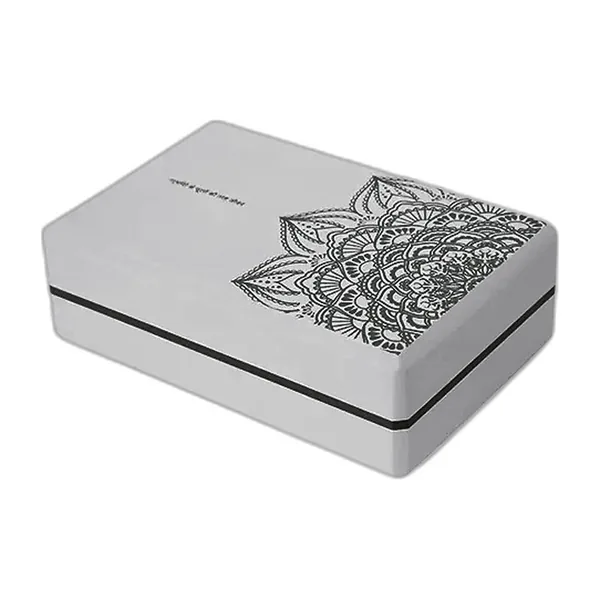 EVA foam yoga block with mandala pattern
A 23 × 15 × 7.5 cm EVA foam block that brings the floor up to you, so you adapt the pose to today’s body rather than force it.
EVA foam yoga block with mandala pattern
A 23 × 15 × 7.5 cm EVA foam block that brings the floor up to you, so you adapt the pose to today’s body rather than force it.
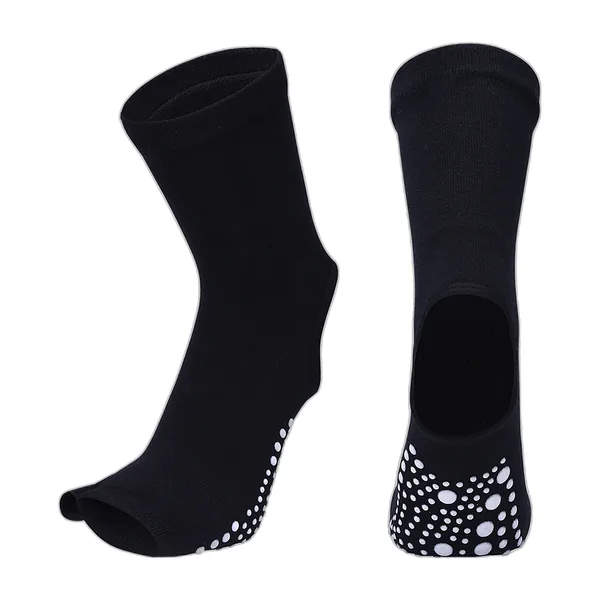 Non-slip split-toe yoga socks
Combed cotton yoga socks with grips under the sole and split toes: your feet stay warm and do not slide.
Non-slip split-toe yoga socks
Combed cotton yoga socks with grips under the sole and split toes: your feet stay warm and do not slide.
Free newsletter
One practical Ayurveda tip every Sunday
A seasonal habit, a recipe or a ritual taken from our articles, in a two-minute read. Your welcome gift: the 7-step Ayurvedic morning routine, unlocked right away. One-click unsubscribe.