Ayurvedic Toothpastes: Neem, Clove and Company
Neem, clove, licorice, charcoal… Ayurvedic toothpastes promise a healthy mouth "just like in India." Some actives are serious, others are folklore — and the fluoride question deserves better than a slogan.
In this article 10 sections
- Which actives do you find in an Ayurvedic toothpaste?
- Fluoride-free toothpaste: good or bad idea?
- How do you read the label of an Ayurvedic toothpaste?
- Paste, powder or miswak stick: which form to choose?
- Toothpaste isn't everything: the full Ayurvedic oral routine
- Precautions before switching toothpaste
- Is Ayurvedic toothpaste dangerous? Allergies, abrasion and sourcing
- Verdict: who is Ayurvedic toothpaste a good choice for?
- How long it takes and how long to use it
- Your questions
An Ayurvedic toothpaste is one formulated around the plants Indian tradition uses for oral hygiene: neem, clove, licorice, babool (acacia), miswak. Most are fluoride-free and free of synthetic mint, with a taste that takes some getting used to. Chosen well, they are an honest option for daily brushing — provided you understand what the formula really contains, and what going fluoride-free implies given your cavity risk.
Here are the actives that matter, the label traps, and the criteria to decide between the dozens of tubes on the market.
Which actives do you find in an Ayurvedic toothpaste?
- Neem: the "village pharmacy" tree, whose twigs traditionally serve as toothbrushes. Its extracts are studied for their action on dental plaque and oral bacteria — the research is still modest, but the tradition is massive. See our neem guide.
- Clove: its eugenol is a recognized antiseptic and dental soother — the smell of old-time dental offices. Details in our clove article.
- Licorice (yashtimadhu): soothing for the gums, naturally sweet without cavity-causing sugar.
- Miswak (salvadora persica): the chewing stick of the Indo-Persian world, rich in cleansing compounds, whose use is documented in oral-hygiene research.
- Babool, triphala, turmeric: traditional astringents and purifiers for the gums.
Be wary, on the other hand, of activated charcoal: heavily marketed, it is considered too abrasive for daily use by many dentists — enamel does not grow back.
Fluoride-free toothpaste: good or bad idea?
This is THE point to settle honestly. Fluoride is the ingredient with the best-demonstrated anti-cavity effectiveness in dentistry — health authorities and the American Dental Association recommend it, at age-appropriate doses. Most Ayurvedic toothpastes contain none. A nuanced position:
- High cavity risk (frequent cavities, sugary snacking, dry mouth, braces): keep a fluoride toothpaste, possibly alternating with an Ayurvedic one. Do not trade proven protection for a promise.
- Low risk (no cavities in years, rigorous hygiene, little sugar): a fluoride-free toothpaste can be discussed — ideally with your dentist, who knows your mouth.
- Children: follow your dentist's or pediatrician's age-based recommendations; this is not the place to experiment.
A few Ayurvedic brands now offer formulas with fluoride AND herbs: the best of both worlds for many profiles.
How do you read the label of an Ayurvedic toothpaste?
Three quick checks:
- Where the herbs sit in the ingredient list: if neem shows up at the end of the list after the thickeners, you are mostly buying marketing. The extracts should appear in the first half of the composition.
- Abrasiveness: the RDA index is rarely displayed, but steer clear of charcoal or brick-powder formulas (yes, that exists in some imported products) for daily use.
- Needless irritants: SLS (sodium lauryl sulfate) makes foam but irritates some mouths; serious Ayurvedic formulas often do without it.
Paste, powder or miswak stick: which form to choose?
| Form | Who it's for | Typical price | Limitations |
|---|---|---|---|
| Paste (tube) | Daily use, the whole family (depending on fluoride) | $4 to $9 per 2.5–3.4 oz (75–100 ml) tube | Quality varies widely between brands |
| Tooth powder (manjan) | Experienced users, gums sensitive to SLS | $5 to $12 per jar | Less convenient; abrasiveness hard to gauge |
| Miswak stick | The curious, on-the-go backup | $2 to $6 per stick | Technique to learn; a complement, not a replacement for brushing |
So expect $4 to $9 for a decent tube at health food stores, Indian grocery stores or online — beyond $15, you are paying for positioning, not the formula.
Toothpaste isn't everything: the full Ayurvedic oral routine
In dinacharya, the traditional morning routine, brushing is only one step. The two most useful complementary practices — the first one endorsed by many dentists:
- Tongue scraping: ten seconds to remove the tongue coating, with a clear effect on breath.
- Oil pulling: the oil mouth rinse, a traditional practice with a more debated scientific status, as a complement to (never a replacement for) brushing.
A neem toothpaste will never make up for sloppy brushing: two minutes twice a day, a soft brush, and floss.
Precautions before switching toothpaste
- Cavities, bleeding gums, pain: see a dentist before changing your routine; no toothpaste, Ayurvedic or not, treats an established condition.
- Allergies: clove's eugenol and some plant extracts can irritate or sensitize; stop at the first lasting tingling.
- Pregnancy: standard store-bought toothpastes pose no problem; for poorly traced imported powders, abstain.
- Non-compliant imported products: inspections have already flagged non-compliant compositions in exotic products; buy brands officially distributed in the US, with a full ingredient list. Our safety guide details the buying reflexes.
Is Ayurvedic toothpaste dangerous? Allergies, abrasion and sourcing
For an adult with no known allergy who buys a traceable brand, an Ayurvedic toothpaste is a safe everyday product. The real risks are rarely in the herbs themselves: they are an allergy to clove's eugenol (a documented contact allergen in dentistry; persistent tingling or burning is a reason to stop, not to “get used to it”), the abrasiveness of charcoal pastes and some traditional powders (enamel worn away does not grow back), and imported tubes whose composition cannot be checked.
| Situation | Precaution |
|---|---|
| Any purchase | Choose a brand officially distributed in your country, with a full ingredient list |
| Persistent tingling, burning, irritated gums | Stop and switch to a neutral formula; see a dentist if it lasts beyond a few days |
| Charcoal paste or abrasive powder | Occasional use only, gentle brushing |
| Canker sores or mouth lesions | Avoid clove-rich formulas, which sting damaged mucosa |
| Young children | Tube out of reach, pea-sized amount, ask a dentist before replacing a fluoride toothpaste |
| A child swallowed a large amount | Call a poison control center |
Why sourcing matters: a study of 230 Ayurvedic medicines bought online found detectable lead, mercury or arsenic in about one in five (Saper et al., JAMA, 2008). It concerned swallowed medicines, not rinsed toothpaste, but it shows why an untraceable import is a gamble. And why tubes stay out of children's reach: a 15-month-old who swallowed about 10 ml of pure clove essential oil developed acute liver failure, treated successfully with N-acetylcysteine (Janes et al., European Journal of Pediatrics, 2005). A toothpaste contains far less eugenol than a pure oil, but the precaution costs nothing.
Verdict: who is Ayurvedic toothpaste a good choice for?
For an adult with no particular dental issues who wants short formulas, traditional herbs and no artificial mint: yes, it is a serious option — owning the fluoride/fluoride-free choice knowingly, ideally with your dentist's input. For cavity-prone mouths and children: fluoride first, herbs as a bonus. And in every case, the winning trio remains careful brushing, tongue scraping and regular checkups.
How long it takes and how long to use it
Fresh breath and a clean-mouth feeling after brushing are noticeable from the very first use of an Ayurvedic toothpaste, thanks to the clove or mint essential oils in the formula. A real effect on gum inflammation (less sensitivity, less bleeding when brushing), on the other hand, needs regular twice-daily use for at least 4 weeks, with improvement continuing up to 8 weeks according to the clinical trials available on neem-based formulas.
Our article ayurvedic toothpaste covers the actives and the fluoride question; this one answers the timing question directly, which is often misunderstood because it mixes two very different effects.
Instant freshness, deeper action: two distinct mechanisms
An Ayurvedic toothpaste works on two levels that need to be kept separate. Eugenol from clove and any essential oils present give a feeling of freshness and a mild local antiseptic effect, noticeable from the first brushing — the effect most often mentioned in user reviews. Neem, on the other hand, works more slowly: it's a deeper-acting ingredient whose effect on plaque and gum inflammation builds with regular brushing, not a single application.
How long for an effect on the gums, according to studies?
A study by Mahmood, Memon, Raffi and colleagues, published in 2023 in the Pakistan Journal of Medical & Health Sciences, compared a neem-and-clove toothpaste against a standard fluoride toothpaste in 70 healthy adults with mild to moderate gingivitis. Both groups showed a significant reduction in plaque and gum-bleeding indices from baseline to week 8, but the herbal-toothpaste group achieved statistically stronger reductions as early as week 4, a gap that held through week 8. This gives a concrete benchmark: 4 weeks is the realistic minimum to expect any change, 8 weeks a more reliable timeframe for judging the effect over time.
Timelines at a glance
| Effect sought | Expected timeline | Main active |
|---|---|---|
| Freshness and clean-mouth feel | Immediate, from the first brushing | Clove (eugenol), essential oils |
| Less sensitive gums when brushing | 4 weeks | Neem, with regular twice-daily use |
| Stable reduction in plaque and bleeding | 6 to 8 weeks | Neem, combined with thorough brushing |
| Effect on tartar already present | None: a toothpaste doesn't remove it | Professional cleaning needed |
Why brushing alone doesn't determine the outcome
To give a neem toothpaste a fair chance, careful brushing still matters: two minutes, twice a day, a soft brush, and a stroke that doesn't skip the gumline. Many disappointments reported in reviews actually come from rushed brushing rather than a flaw in the product. Daily tongue scraping, another part of the Ayurvedic oral-care routine, usefully complements brushing without changing its timeline for gum effects.
Does taste adjust over time too, and what can delay results?
There's a third timeline, less clinical but very real: getting used to the taste. Herbal and bitter with neem, sharp with clove, a world away from classic fresh mint — most users take one to two weeks before it stops surprising them at every brushing, a delay regularly mentioned in user reviews. It's not a coincidence that this roughly coincides with the start of a noticeable effect on the gums: the first two to three weeks call for a bit of consistency, before the product becomes just another habit.
Three situations explain most timing-related disappointments. First: brushing too short or too fast, which doesn't give the actives time to work along the gumline. Second: a formula where neem or clove sit near the very end of the ingredient list, after the thickeners — in that case, the active concentration is probably too low to expect a measurable effect, even after months. Third: giving up after a week without visible results, when the available studies place the first measurable effect around week 4, not sooner.
What if nothing changes after several weeks?
If, after 6 to 8 weeks of regular use and correct brushing, your gums are still sensitive, bleed, or swell, that's no longer a matter of switching toothpaste: it's a sign to see a dentist. No toothpaste, Ayurvedic or otherwise, treats established gingivitis or periodontitis; it supports good hygiene, it doesn't replace it. The section on dangers and allergies above covers the warning signs.
Precautions
Clove and its essential oils can irritate or sensitize certain mucous membranes: stop using the product at the first sign of lasting tingling. For children, check with a dentist whether age-appropriate fluoride is present or absent before switching toothpaste. If cavities are frequent or your risk is high, keep a fluoride toothpaste as your priority. For the full picture on Ayurvedic products, see our safety and precautions guide.
Your questions about ayurvedic toothpastes
Is neem toothpaste effective?
Neem has a genuine oral-hygiene tradition (its twigs serve as toothbrushes in India) and preliminary studies suggest an action on plaque and bacteria. It is a credible active for daily maintenance, but it treats neither a cavity nor established gum disease: those belong to the dentist.
Do Ayurvedic toothpastes contain fluoride?
Most contain none, but some brands offer herbs + fluoride formulas. Fluoride remains the best-proven anti-cavity ingredient: if you get frequent cavities or have a high risk, keep a fluoride toothpaste. If your risk is low, discuss the fluoride-free option with your dentist.
Does Ayurvedic toothpaste whiten teeth?
No, not beyond the normal removal of surface stains by brushing. Distrust whitening promises, especially charcoal formulas: their abrasiveness can wear down enamel with daily use and make teeth look yellower over time. Real whitening happens at the dentist's office.
Can children use an Ayurvedic toothpaste?
Caution: pediatric guidelines call for an age-appropriate fluoride dose, which most Ayurvedic toothpastes do not provide. Some also contain essential oils unsuitable for young children. Ask the dentist or pediatrician before changing a child's toothpaste.
What does Ayurvedic toothpaste taste like?
Expect an herbal, astringent taste, slightly bitter (neem) or spicy (clove), a long way from classic fresh mint. Licorice softens some formulas. Most users adjust within one to two weeks; start with a small tube to test.
Where can you buy a reliable Ayurvedic toothpaste?
Favor health food stores and US-based online retailers that carry brands compliant with FDA cosmetic regulations, with a complete ingredient list. Avoid imported tubes without proper US labeling: non-compliant compositions have already been flagged on such products. Expect $4 to $9 per tube.
How long before you feel an effect from an Ayurvedic toothpaste?
Fresh breath is noticeable from the first brushing, thanks to clove and essential oils. A real effect on the gums (less sensitivity, less bleeding) needs at least 4 weeks of regular twice-daily use.
How long for neem to affect the gums?
A 2023 study comparing a neem-and-clove toothpaste to a fluoride toothpaste found significant reductions in plaque and gum bleeding as early as week 4, with the effect holding through week 8.
Why doesn't my Ayurvedic toothpaste seem to do anything after a week?
That's normal: a week isn't enough to judge the deeper effect on the gums. Only the instant freshness is felt quickly; the effect on gum inflammation builds over 4 to 8 weeks of regular use.
Does an Ayurvedic toothpaste work faster than a regular one on the gums?
According to one comparative study, a neem-and-clove toothpaste showed stronger reductions in plaque and bleeding as early as week 4 compared with a standard fluoride toothpaste, though both options improved over 8 weeks.
Can Ayurvedic toothpaste contain heavy metals?
Heavy metals have been found in about one in five Ayurvedic medicines bought online (JAMA, 2008), but that study covered swallowed medicines, not toothpaste. It is still a good reason to buy a brand officially distributed in your country, with a full ingredient list, rather than an imported tube without proper labeling.
What should I do if a child swallows Ayurvedic toothpaste?
A small amount swallowed now and then is generally not serious. If a child swallows a large amount, especially of a clove-rich formula, call a poison control center as a precaution, even if the child seems fine.
Our picks
Accessories chosen to go with this guide — prices in euros, VAT included, delivery in 8 to 15 business days, free from €39. Browse the whole shop.
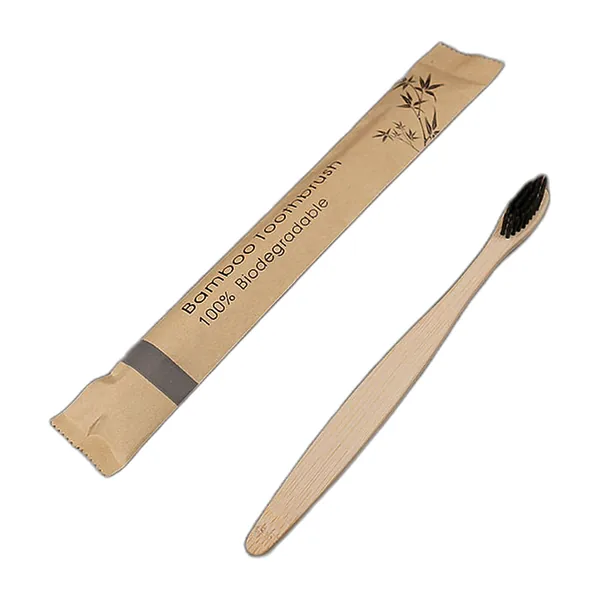 Bamboo toothbrushes, pack of 6
Six toothbrushes with bamboo handles and soft bristles, each individually wrapped: a fresh one every two months for a year.
Bamboo toothbrushes, pack of 6
Six toothbrushes with bamboo handles and soft bristles, each individually wrapped: a fresh one every two months for a year.
Free newsletter
One practical Ayurveda tip every Sunday
A seasonal habit, a recipe or a ritual taken from our articles, in a two-minute read. Your welcome gift: the 7-step Ayurvedic morning routine, unlocked right away. One-click unsubscribe.