CCF Tea Recipe (Cumin, Coriander, Fennel): How to Make It
Three pantry seeds and a small saucepan: CCF tea is the everyday digestive drink of Ayurveda. Here is the exact method, what it can and cannot do, and who should go easy on it.
Key facts
- Simmer 1/2 teaspoon each of whole cumin, coriander and fennel seeds in 500 ml (2 cups) of water for 5 minutes, strain, and drink it warm.
- The rule is equal parts of the three seeds: 1/4 tsp each for one cup, 1 tsp each for a one-litre thermos.
- Use whole seeds, not powders, and drink it the same day.
- In Ayurveda it is the standard gentle digestive drink, considered suitable for all three doshas: a comforting habit, not a treatment.
In this article 8 sections
The recipe at a glance
Ingredients
- 1/2 teaspoon whole cumin seeds
- 1/2 teaspoon whole coriander seeds
- 1/2 teaspoon whole fennel seeds
- 500 ml (2 cups) water
Steps
- Bring the water to the boil in a small saucepan.
- Add the three seeds, lower the heat and simmer for 5 minutes, uncovered.
- Strain into a mug or a thermos.
- Drink warm or hot, in small sips, ideally after a meal or through the day.
To make CCF tea, simmer 1/2 teaspoon each of whole cumin, coriander and fennel seeds in 500 ml (2 cups) of water for 5 minutes, strain, and drink it warm. That makes two cups; double everything for a one-litre thermos to sip through the day. CCF stands for cumin, coriander, fennel (jeera, dhania and saunf in Hindi). In Ayurveda it is the standard gentle digestive drink, considered suitable for all three doshas and traditionally used after meals for bloating and heaviness. It is a comforting habit, not a treatment.
Proportions at a glance
The traditional rule is equal parts of the three whole seeds:
| Water | Cumin | Coriander | Fennel | Good for |
|---|---|---|---|---|
| 1 cup (250 ml) | 1/4 tsp | 1/4 tsp | 1/4 tsp | One cup after a meal |
| 500 ml (2 cups) | 1/2 tsp | 1/2 tsp | 1/2 tsp | Two cups, lunch and afternoon |
| 1 litre (thermos) | 1 tsp | 1 tsp | 1 tsp | Sipping through the day |
Use whole seeds, not powders: the tea stays clear, strains easily and does not turn muddy or bitter. An Indian grocery sells all three for a few dollars per 100 g. A practical trick: mix equal parts in one jar labelled "CCF", so each morning is a single spoonful.
How to prepare CCF tea, step by step
- Bring the water to the boil in a small saucepan.
- Add the seeds, lower the heat and simmer uncovered for 5 minutes. For a milder version, take the pan off the heat, cover and steep for 10 minutes instead.
- Strain into a mug or a thermos.
- Drink warm, not iced: Ayurveda avoids cold drinks around meals.
No saucepan (office, travel)? Put the seeds in a thermos, pour on boiling water, close it and wait 10–15 minutes before straining. The flavour is lighter. Optional: dry-toast the seeds for 30 seconds in the pan first for a rounder, nuttier taste. Drink it the same day; do not keep it overnight.
What each seed brings
| Seed | Names | Role in Ayurveda (tradition) | What research shows |
|---|---|---|---|
| Cumin | Jeera (Hindi), jiraka (Sanskrit) | Warming; stimulates appetite and digestion | One small uncontrolled case series with cumin essential oil in IBS (see below) |
| Coriander | Dhania, dhanyaka | Cooling; balances the heat of cumin | No trial of coriander seed tea for digestion that we could verify |
| Fennel | Saunf, mishreya | Sweet, mild; eases gas; a classic after-meal seed | Recognised in Europe as a traditional herbal medicine for mild bloating and flatulence, on the basis of long-standing use |
The logic of the blend is balance: cumin warms, coriander cools, fennel softens. That is why it is described as tridoshic and why people can drink it daily without the heating effect of a ginger or pepper tea.
What the research says, honestly
There is no clinical trial of CCF tea itself. The evidence is indirect and limited:
- Cumin: in 2013, a Tehran University team gave 20 drops a day of cumin essential oil for four weeks to 57 patients with irritable bowel syndrome and reported less abdominal pain and bloating during and after treatment (Agah et al., Middle East Journal of Digestive Diseases, 2013). This was a case series with no control group, so a placebo effect or natural fluctuation of IBS cannot be ruled out; and a concentrated essential oil is not a mild seed tea.
- Fennel: the European Medicines Agency's herbal committee lists fennel fruit as a traditional herbal medicinal product for mild digestive complaints such as bloating and flatulence. "Traditional" here means accepted on long-standing use, not proven by trials.
So: a pleasant, low-risk habit that many people find settling after meals, with plausible but weak supporting data. If you have IBS, see our overview of Ayurveda and IBS.
When to drink it
- After lunch: one cup 15–30 minutes after the main meal is the most common use.
- Through the day: a thermos sipped warm, typical during a kitchari cleanse, where it replaces most other drinks.
- Evening: it contains no caffeine and will not disturb sleep.
It helps most as part of calmer eating habits: regular meals, less raw food in the evening, well-cooked legumes. Our guide to bloating and difficult digestion covers those causes.
Dosha variations
- Vata (gas, irregular digestion): add 2 thin slices of fresh ginger.
- Pitta (acidity, feeling hot): slightly more coriander and fennel, less cumin; a few dried rose petals work well.
- Kapha (heaviness, slow digestion): a pinch of dried ginger or 2 black peppercorns.
The taste is mild, warm and lightly aniseed, led by the fennel. It is traditionally drunk unsweetened; if you want honey, add it once the tea has cooled to drinking temperature.
Precautions
- Young children: the EMA does not recommend medicinal fennel preparations under 4 years of age, partly because fennel contains estragole, whose exposure should be kept low in young children. Do not give CCF tea as a regular remedy to babies or toddlers; ask your pediatrician.
- Pregnancy and breastfeeding: the seeds are fine in normal cooking amounts. The EMA advises against medicinal fennel use in pregnancy and breastfeeding for lack of safety data, so keep to an occasional cup and check with your midwife or doctor before making it a daily litre.
- Allergy: cumin, coriander and fennel all belong to the carrot family (Apiaceae), like celery. Avoid if you have a known allergy to celery, carrot or related spices.
- Medication: at culinary strength no significant interaction is established. Concentrated extracts or essential oils are different products; mention any supplement to your doctor or pharmacist.
- Symptoms that need a doctor: persistent or worsening abdominal pain, blood in the stool, unintended weight loss, a lasting change in bowel habits, or new symptoms after 50. A tea should never delay that visit.
- Quality: buy whole seeds from a busy shop and store them airtight away from light. Be wary of imported Ayurvedic "digestive" formulas sold online: a study of products bought on the internet found lead, mercury or arsenic in about one in five (Saper et al., JAMA, 2008). Plain kitchen seeds are the simplest choice.
More in our safety and precautions guide.
Your questions about ccf tea recipe (cumin, coriander, fennel)
How do you prepare CCF tea?
Simmer 1/2 teaspoon each of whole cumin, coriander and fennel seeds in 500 ml of water for 5 minutes, uncovered. Strain and drink warm. For a thermos, use 1 teaspoon of each per litre.
What is fennel cumin coriander tea good for?
In Ayurveda it is used as a gentle after-meal drink for bloating, gas and heaviness. Research is limited: there is no trial of the tea itself, only indirect data such as an uncontrolled case series with cumin oil and fennel's traditional-use status in Europe.
Can you drink CCF tea every day?
For most adults, one to three cups a day at kitchen strength is a traditional and low-risk habit. Pregnant or breastfeeding women and young children should keep to small, occasional amounts because of fennel, and anyone on medication can check with a pharmacist.
Should I use whole seeds or powder?
Whole seeds. They give a clear, mild tea that strains easily and they keep much longer than powders, which go stale and cloud the drink.
When is the best time to drink CCF tea?
Traditionally 15 to 30 minutes after lunch, or sipped warm from a thermos through the day. It has no caffeine, so an evening cup is fine.
Is CCF tea safe for babies and toddlers?
Do not give it as a regular remedy. Europe's medicines agency does not recommend medicinal fennel preparations under 4 years, partly because of estragole. Ask a pediatrician about any colic or digestive complaint.
Our picks
Accessories chosen to go with this guide — prices in euros, VAT included, delivery in 8 to 15 business days, free from €39. Browse the whole shop.
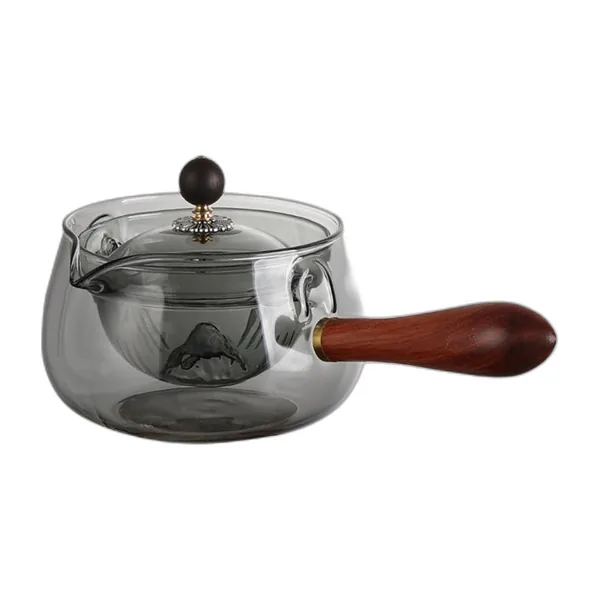 Glass teapot with built-in tea filter and wooden handle
A borosilicate glass teapot with a built-in tea filter: a quarter-turn stops the brew, with no strainer or basket to fish out.
Glass teapot with built-in tea filter and wooden handle
A borosilicate glass teapot with a built-in tea filter: a quarter-turn stops the brew, with no strainer or basket to fish out.
Free newsletter
One practical Ayurveda tip every Sunday
A seasonal habit, a recipe or a ritual taken from our articles, in a two-minute read. Your welcome gift: the 7-step Ayurvedic morning routine, unlocked right away. One-click unsubscribe.