Ratricharya: The Ayurvedic Evening Routine for Deep Sleep
Ayurveda takes care of sleep long before the pillow: the night is prepared from dinner onward. Here is the ratricharya, the traditional evening routine, distilled into simple, sustainable steps.
In this article 8 sections
- Why does an evening routine change sleep quality?
- What time should you eat dinner to sleep well?
- An Ayurvedic evening, step by step
- Foot massage and a warm drink: the two steps that make the difference
- Screens and a racing mind: how to actually slow down
- Adapting the evening routine to your dosha
- Precautions and limits
- Your questions
The Ayurvedic evening routine — the ratricharya — rests on four pillars: an early, light dinner (ideally before 7:30 pm), slowing down gradually after the meal (a gentle walk, dimmed lights, screens set aside), a soothing body ritual (a warm drink, an oil foot massage) and lights out before 10:30 pm, when the natural drowsiness of the evening Kapha window makes falling asleep easy.
It is not a list of constraints but a gentle slope toward the night: each step dials down the activation of body and mind a little further. Here is the full sequence, then the adaptations for your dosha.
Why does an evening routine change sleep quality?
Ayurveda divides the evening into energetic periods: from 6 pm to 10 pm, Kapha reigns, heavy and slow — the body decelerates naturally, and this is the ideal window for falling asleep. From 10 pm onward, Pitta takes over: the fire rises to digest and repair, and if you are still up, it turns into a surge of mental energy — the famous 11 pm "second wind" that pushes bedtime ever later. Going to bed before 10:30 pm means riding the Kapha wave instead of missing it.
Modern physiology says the same thing in different words: regular hours, lower light and temperature, dinner digested before lying down — sleep-hygiene recommendations overlap point by point with the tradition. This routine is the mirror of the morning dinacharya: one prepares the day, the other the night.
What time should you eat dinner to sleep well?
As early as is reasonably possible: the 6:30–7:30 pm window is ideal, the goal being to leave 2 to 3 hours between the end of dinner and bedtime. In the evening, the digestive fire (agni) is at its lowest: a heavy or late meal digests poorly, weighs down the night and encourages wake-ups and reflux.
On the plate: warm, cooked, light. Soups, slow-cooked vegetables, gentle grains, well-cooked dal. Tradition advises against large amounts of raw food in the evening, along with yogurt, heavy cheeses and rich desserts. If hunger returns later, a warm drink is usually enough.
An Ayurvedic evening, step by step
| Approximate time | Practice | Why |
|---|---|---|
| 6:30 – 7:30 pm | Warm, light dinner, eaten calmly | Digestion completed before bedtime |
| After dinner | 10 to 15 minutes of easy walking | Aids digestion without stimulating |
| 8:30 pm | Lights dimmed, end of demands (emails, news) | The signal that the night has begun |
| 9 – 9:30 pm | Warm drink: moon milk or a gentle herbal tea | A calming ritual, inner warmth |
| 9:30 – 10 pm | Oil foot massage, a few slow breaths | Settles the nervous system |
| Before 10:30 pm | Bed, in a cool, dark room | Catch the Kapha window |
Minimal version for rushed evenings: light dinner + screens off 30 minutes before bed + a fixed bedtime. Three steps, and already the essentials.
Foot massage and a warm drink: the two steps that make the difference
Padabhyanga, the warm-oil foot massage, is Ayurveda's most renowned anti-insomnia practice: 5 minutes are enough, with slow strokes over the sole, toes and ankles, using sesame oil (or coconut if you always run hot). Tradition sees in it a direct calming of Vata, the dosha of nighttime restlessness; in practice, it is a surprisingly effective relaxation signal. Put on light socks afterward so you do not stain the sheets.
The warm drink acts as the airlock: a spiced warm milk (nutmeg, cardamom) such as moon milk, a golden milk taken early in the evening, or a simple herbal infusion. What matters is repetition: the same gesture, every evening, eventually triggers drowsiness all by itself.
Screens and a racing mind: how to actually slow down
- Screens: the traditional ideal — nothing after 9 pm — is demanding; aim for at least 30 to 60 screen-free minutes before bed, and above all no news or work messages in bed.
- Empty the mind: two minutes to jot down tomorrow's tasks on paper — the brain lets go of what has been written down.
- Breathing: a few slow breaths with a lengthened exhale, or the humming-bee breath described in our pranayama guide.
- Bedroom: cool (around 18 °C / 65 °F), dark, reserved for sleep.
Adapting the evening routine to your dosha
- Vata (trouble falling asleep, wake-ups around 2–4 am, a mind that races): the profile that needs this routine most. Emphasize strictly regular hours, the warm sesame-oil foot massage and warmth in general (socks, a heavy blanket).
- Pitta (wake-ups around 1–3 am, work rumination): a dinner that is not too spicy, a clean break from work after 8 pm, a cool bedroom, moon milk with rose or cardamom rather than warming spices.
- Kapha (heavy sleep, groggy mornings): a genuinely light dinner — its main lever —, a slightly longer digestive walk, and a regular early rise rather than long lie-ins that worsen the heaviness.
Precautions and limits
This routine is a matter of lifestyle: it improves sleep degraded by poor habits, not a medical condition. Chronic insomnia (more than three months), marked daytime sleepiness, snoring with pauses in breathing, restless legs: talk to your doctor — these situations call for medical advice, sometimes a sleep assessment. If you take prescription sleep medication, never adjust it on your own. Oil massage should be avoided on broken or infected skin. For the complete Ayurvedic approach to sleep, continue with our protocol for better sleep with Ayurveda and the safety guide.
Your questions about ratricharya
What time should you go to bed according to Ayurveda?
Before 10:30 pm ideally. Between 6 pm and 10 pm, the Kapha energy reigns, heavy and slow: the body decelerates naturally and falling asleep is easy. After 10 pm, the Pitta period brings a surge of mental energy — the famous second wind — that pushes sleep back and makes it less restorative.
Why does an early dinner help you sleep better?
Because the digestive fire is at its lowest in the evening: a late or heavy meal digests slowly, warms the body and disturbs the night (heaviness, wake-ups, reflux). By eating a light dinner around 7 pm, digestion is finished by bedtime and sleep grows deeper. Allow 2 to 3 hours between dinner and bed.
Does a foot massage really help you sleep?
It is Ayurveda's most renowned evening practice: 5 minutes of slow massage with warm oil relax the nervous system and calm Vata, the dosha of nighttime restlessness. It is not a sleeping pill, but repeated every evening it becomes a remarkably effective sleep signal for tense people.
What should you drink in the evening to promote sleep?
A spiced warm milk such as moon milk (nutmeg, cardamom, possibly ashwagandha) or a gentle herbal tea, about an hour before bed. Avoid tea and coffee from the afternoon onward, and alcohol in the evening: it knocks you out quickly but fragments the second half of the night. The regularity of the ritual matters as much as the drink.
What can you do when your mind races at bedtime?
Prepare the ground upstream: write tomorrow's tasks down on paper, switch off screens 30 to 60 minutes before bed, then practice a few slow breaths with a lengthened exhale or the humming-bee breath (bhramari). If anxious rumination is daily and overwhelming, professional support is more appropriate than a routine.
Is napping recommended in Ayurveda?
Generally not for healthy adults: napping increases Kapha and can weigh down digestion and nighttime sleep. Tradition allows it in summer, after a very short night, and for children, the elderly or the weakened. If you need one every day, question the quality of your nights instead.
Our picks
Accessories chosen to go with this guide — prices in euros, VAT included, delivery in 8 to 15 business days, free from €39. Browse the whole shop.
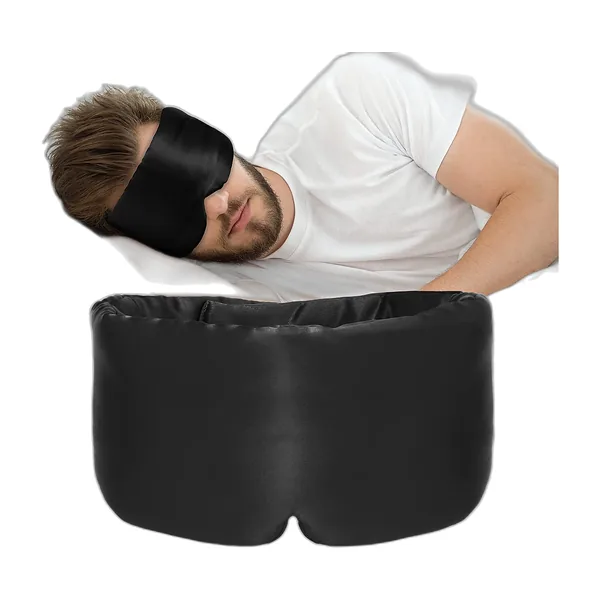 Wraparound satin-feel sleep mask
A wide sleep mask in satin-feel rayon that wraps the upper face without pressing on the eyes or pinching the ears.
Wraparound satin-feel sleep mask
A wide sleep mask in satin-feel rayon that wraps the upper face without pressing on the eyes or pinching the ears.
Free newsletter
One practical Ayurveda tip every Sunday
A seasonal habit, a recipe or a ritual taken from our articles, in a two-minute read. Your welcome gift: the 7-step Ayurvedic morning routine, unlocked right away. One-click unsubscribe.