Abhyanga: How to Do Warm Oil Self-Massage
Ten minutes of warm oil on the skin before the shower: abhyanga is the most emblematic ritual in Ayurveda — and one of the easiest to adopt. Here is the complete technique, without turning your bathroom into an oil slick.
In this article 8 sections
Abhyanga is the Ayurvedic full-body self-massage with warm oil: you warm 2 to 4 tablespoons of oil (most often sesame), massage methodically from head to feet — long strokes on the limbs, circular ones on the joints and belly — for 5 to 15 minutes, let it soak in, then take a warm shower. Tradition makes it a pillar of the daily routine; in practice, 2 to 3 sessions a week are already enough to feel the difference in your skin, your tension levels and how grounded you feel.
It is the anti-Vata ritual par excellence: when daily life is made of screens, speed and constant demands, ten minutes of slow, warm contact with your own body are a concrete counterweight.
What benefits can you expect from abhyanga?
Let us separate what tradition says from what is documented. The Ayurvedic tradition credits abhyanga with pacifying Vata, nourishing the tissues, deeper sleep and more graceful aging — oil massage is a daily act of care (snehana means both "to oil" and "to love"). On the modern-evidence side: skin is objectively better hydrated and softened by regular oil application; massage, across techniques, is associated in studies of varying quality with reduced perceived stress and muscle tension; and the ritual itself acts as a decompression airlock. No solid data, on the other hand, supports the promises of "detox" or of eliminating toxins through the skin — you do not need to believe in them to benefit.
Which oil should you choose for abhyanga?
| Profile / season | Oil | Notes |
|---|---|---|
| Vata, dry skin, autumn-winter | Cold-pressed virgin sesame | THE reference: warming, penetrating; the default oil |
| Pitta, reactive skin, summer | Virgin coconut, or sesame blended with coconut | Cooling; perfect in the hot season |
| Kapha, oily skin, heaviness | Sesame in small amounts, or dry massage | Kapha often gains more from garshana (glove, no oil) |
| Very sensitive skin | Sweet almond, sunflower | Neutral and well tolerated; patch-test on the inner elbow |
Expect to pay $8 to $15 (or the same in euros) for half a liter (about 17 fl oz) of organic virgin sesame oil — a bottle lasts one to two months. Medicated Ayurvedic oils (infused with herbs) can come later; our guide to choosing an oil for your dosha covers the whole landscape. A traditional tip: "cure" sesame oil by gently heating it once for a few minutes, then storing it — it is said to absorb better.
How to do an abhyanga self-massage, step by step
- Warm the oil: 2 to 4 tablespoons in a bowl, set for a few minutes inside a larger bowl of very hot water (never directly on the stove). The oil should feel pleasantly warm on the wrist, not burning.
- Set yourself up in a warm bathroom, standing or sitting on an old towel kept for this purpose — oil stains.
- Scalp and face (optional, depending on your hair plans): a few circular strokes with the fingertips on the scalp, temples and ears.
- Neck and shoulders: firm circular strokes — the area that needs it most.
- Arms: long strokes along the bones (shoulder to wrist), circles on the joints (shoulder, elbow, wrist). Hand and fingers one by one.
- Chest and belly: on the abdomen, slow circles clockwise — the direction of digestion.
- Back and lower back: whatever your hands can reach, no acrobatics.
- Legs: like the arms — long strokes on thighs and calves, circles on hips, knees and ankles.
- Feet: finish with a proper foot massage — arch, toes, heels — the most relaxing part, worth practicing on its own as the evening padabhyanga.
- Let it soak in for 5 to 20 minutes if possible (time enough to brush your teeth, to breathe), then take a warm shower.
Total time: 5 minutes for the express version, 15 for the complete one. The quality of the stroke matters more than the exact sequence: slow, firm without pain, with attention.
The shower after the massage: how to do it
A warm shower, which helps the oil absorb. Two schools: soap only the strategic areas (armpits, folds) and let the oily film keep nourishing the skin, or soap fully with a mild soap if the oily feel bothers you. Two non-negotiable practical precautions: the shower floor becomes slippery — rinse it with soap after the session, and use a non-slip mat if needed; and oil-soaked towels must be washed separately, hot (60 °C / 140 °F), and never tumble-dried while they still smell of oil (oiled fabrics can heat up dangerously in a dryer — a real, documented fire risk).
How often should you practice abhyanga?
Tradition says: every day, as part of the morning dinacharya. In modern practice: 2 to 3 times a week is an excellent rhythm, with an express version (feet, hands, neck) on the other days. In the morning it grounds the day; in the evening, a gentle version on the feet and head prepares you for sleep. The moments it helps most: autumn and winter (Vata season), periods of stress, travel or light sleep. Signs the frequency suits you: supple skin, lasting relaxation after the shower, more stable sleep.
| Frequency | Best for | What to expect |
|---|---|---|
| Daily (traditional ideal) | A structured life with a morning routine already in place | Maximum grounding, especially useful for Vata |
| 2 to 3 times a week | Most working schedules | Real benefit for skin and relaxation, without overload |
| Once a week | Very tight schedules | Better than nothing: a weekend ritual still helps |
| Express version (5 min, feet and hands) | Rushed mornings | A minimum of grounding without a full oil session |
Adjust to your dosha and the season: Vata gains most from a near-daily rhythm, especially in autumn and winter; Pitta does well with two to three sessions a week and oil that is warm, never hot; Kapha can space sessions to about twice a week with a lighter oil. In summer, a lighter oil such as coconut and a more spaced-out rhythm are usually better tolerated. If your skin stays oily or heavy for hours after the shower, cut back the frequency or the amount of oil; if it stays dry and tight despite regular practice, add a session or switch to a richer oil.
On the evidence side, a 2011 pilot study by Basler in the Journal of Alternative and Complementary Medicine measured the effect of a single one-hour abhyanga given to 20 healthy adults: perceived stress and heart rate fell significantly immediately after the massage, while blood pressure dropped only in the prehypertensive participants (see the study). It had no control group and looked at one professional session, not a regular home practice — but it suggests you do not need a perfect daily streak to feel an effect.
Can you do abhyanga on a child?
Yes, in an adapted form that is not a miniature adult abhyanga: a neutral, barely warm oil (virgin sesame or coconut), a light touch only with broad gentle strokes and very soft clockwise circles on the belly, and a few minutes rather than fifteen. The evening, before the bath, is the time most families choose, when the child is calm, neither hungry nor just fed. Never use essential oils or fragranced blends on an infant or young child, and stop at once if the child stiffens, cries or pulls away.
| Age | Oil | Duration | Key precaution |
|---|---|---|---|
| Newborn (first weeks to a few months) | Virgin sesame or coconut, warm, a very small amount | 2 to 5 minutes, very gentle | Patch test first; never on damaged skin; pediatric advice if premature or under medical follow-up |
| Baby (6 months to 2 years) | Virgin sesame or coconut, warm | 5 to 10 minutes | Never force it if the child stiffens or cries |
| Young child (from age 2-3) | Sesame, coconut or sweet almond depending on tolerance | 5 to 10 minutes | Always a light touch, never firm as with an adult |
Never massage a child with a fever or an acute illness, on a rash, active eczema or a wound, or on a recent vaccination site that is still sore; a 24-hour patch test comes first, as sesame is a recognized allergen. On the evidence, a Cochrane review by Bennett, Underdown and Barlow (2013) pooled 34 randomized studies of massage in healthy infants under six months: some analyses favored massage (longer 24-hour sleep, less crying, growth measures), but many studies were at high risk of bias, the evidence was judged of poor quality, and the authors concluded it did not support routine infant massage in low-risk families (see the review). It concerns infant massage in general, not the Ayurvedic technique.
Contraindications and precautions
- Broken or infected skin: no oil massage over wounds, weeping eczema, fungal infections or inflammatory acne flare-ups on the affected area. Intact skin only.
- Fever, acute illness, active digestion: tradition suspends abhyanga during fever and right after meals — wait 2 hours after eating.
- Pregnancy: gentle massage of the legs and feet is generally welcome, but ask your midwife or doctor for advice, particularly regarding the abdomen and the oils used.
- Circulatory conditions: in case of phlebitis, painful varicose veins, cardiovascular disorders or anticoagulant treatment, get medical advice before any firm leg massage.
- Allergies: sesame is a recognized allergen — patch-test any new oil for 24 h on the inner elbow. If you are allergic to sesame, use sunflower or sweet almond (unless you have a tree nut allergy).
- Home safety: a slippery floor and oiled towels in the dryer are the ritual's two real risks — see above, and our safety guide for the rest.
Abhyanga is a wellbeing ritual: it relaxes, nourishes the skin and gives the day structure, but it treats no disease. Persistent pain, chronic skin problems or circulatory disorders belong with a doctor.
Your questions about abhyanga
Which oil should you use for abhyanga?
Cold-pressed virgin sesame oil is the traditional reference: warming, penetrating, suited to most profiles, especially Vata and in winter. Reactive skin and Pitta profiles prefer virgin coconut oil, which is more cooling, particularly in summer. Patch-test any new oil on the inner elbow, as sesame is a recognized allergen.
Is abhyanga done before or after the shower?
Before: you massage with warm oil, let it soak in for 5 to 20 minutes, then take a warm shower that helps the oil absorb. Soap lightly — fully or only the folds, depending on how you feel about the satiny finish. Showering before the massage is also possible (open pores), but the oil then stays on the skin all day.
How long does an abhyanga self-massage take?
Allow 15 minutes for the complete version (whole body, head to feet) and 5 minutes for the express version focused on the neck, hands and feet. Add the soaking-in time, ideally 5 to 20 minutes before the shower. The slowness of the stroke matters more than the total duration.
Can you do abhyanga every day?
Yes — it is even the traditional recommendation within the dinacharya, except during a fever, an acute illness or on broken skin. In practice, 2 to 3 full sessions a week with express versions on the other days already deliver real results for skin and relaxation — consistency beats quantity.
Does abhyanga really eliminate toxins?
Nothing solid supports the idea of a "detox" through the skin: eliminating waste is the job of the liver and kidneys. What oil massage verifiably provides: better-hydrated skin, eased muscle tension and reduced perceived stress — benefits that stand on their own without invoking toxins.
Which oil for evening abhyanga and sleep?
In the evening there is no need to massage the whole body: tradition favors the feet (padabhyanga) and possibly the scalp, with warm sesame oil, 5 to 10 minutes before bed. It is one of the most effective rituals against evening restlessness. Put on old socks to protect the sheets.
Can you do abhyanga only on weekends?
Yes, that is better than nothing: a weekly ritual kept up over time still brings a benefit. A 5-minute express version on the feet and hands can fill in on busier weekdays.
Has a study measured the effect of abhyanga on stress?
A small 2011 pilot study found that a single one-hour abhyanga significantly reduced perceived stress and heart rate in 20 healthy adults, measured just before and after the massage. It had no control group and did not look at regular home practice, so it is a promising signal rather than proof.
Can you give a child an abhyanga like an adult?
No. A child’s massage uses a neutral, barely warm oil without essential oils, very light pressure and only a few minutes, ideally in the evening before the bath. Stop if the child does not enjoy it, never massage during a fever or on irritated skin, and ask a pediatrician first for a premature or medically followed baby.
Our picks
Accessories chosen to go with this guide — prices in euros, VAT included, delivery in 8 to 15 business days, free from €39. Browse the whole shop.
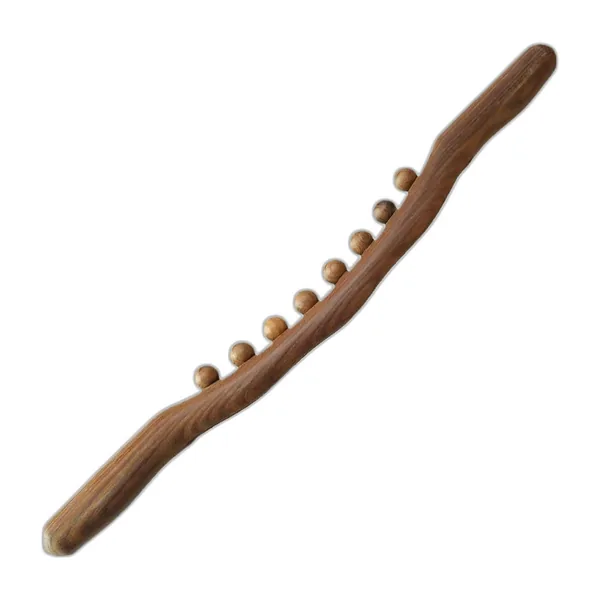 Wooden massage stick with beads, 53 cm
A 53 cm carbonised beech stick with rolling beads: reach your upper back and shoulders on your own, where hands cannot go.
Wooden massage stick with beads, 53 cm
A 53 cm carbonised beech stick with rolling beads: reach your upper back and shoulders on your own, where hands cannot go.
Free newsletter
One practical Ayurveda tip every Sunday
A seasonal habit, a recipe or a ritual taken from our articles, in a two-minute read. Your welcome gift: the 7-step Ayurvedic morning routine, unlocked right away. One-click unsubscribe.