Hair Oiling: The Complete Indian Hair Care Ritual
In India, people have been oiling their hair for millennia — not out of vanity, but as a full-fledged treatment. Here is the complete ritual: the right oil, the right technique, the right leave-in time.
In this article 7 sections
The Ayurvedic hair oil treatment — shiro snehana in the texts — consists of applying warm plant oil to the scalp and lengths, massaging it in, then leaving it on from 30 minutes to a full night before shampooing. The Indian tradition sees it as the foundational hair treatment: it nourishes the fiber, softens the scalp, calms the mind and protects the lengths from drying out. It is also one of the few Ayurvedic rituals whose principle lines up with what hairstylists recommend: a strand coated in oil breaks less.
Good news: no special equipment or budget required. A quality oil, an old towel and a bit of method are enough. Here is how to do it, hair type by hair type.
Why oil your hair according to Ayurveda?
In the Ayurvedic reading, hair is a by-product of bone tissue (asthi dhatu) and suffers first when Vata runs wild: dryness, frizz, breakage, a tight, uncomfortable scalp. Oil is Vata's direct antidote — warm, heavy, unctuous. The tradition credits regular oiling with stronger hair, a healthy scalp and deeper sleep when done in the evening.
On the science side, let us be honest: no oil makes hair grow faster or "repairs" a dead fiber. On the other hand, it is well established that certain oils (coconut first among them) penetrate the hair shaft and limit protein loss during washing, that massage improves scalp comfort, and that a supple fiber breaks less. That is already a lot. For hair loss itself, the limits are real — we detail them in our article on hair loss and Ayurveda.
Which oil should you choose for hair oiling?
The choice depends on your hair type and dominant dosha. As a general guide:
| Profile | Base oil | Why |
|---|---|---|
| Dry, fine, frizz-prone hair (Vata) | Sesame or sweet almond | Warm and nourishing, sesame oil is Ayurveda's classic base |
| Sensitive scalp that runs hot, diffuse shedding (Pitta) | Coconut | Cooling, coconut oil penetrates the fiber well and limits protein loss during washing |
| Thick hair, oily at the roots (Kapha) | Sesame in small amounts, or mustard (traditional) | Lighter, less frequent oiling, mostly on the lengths |
| Strengthening goal | Herb-infused oil | Bhringaraj, amla, brahmi: the classic Indian hair oils |
Indian "medicated" hair oils are base oils in which herbs have been infused. The two stars: bhringaraj, the tradition's "queen of hair", and amla, the strengthening fruit. You will find them in Indian grocery stores, some health food stores and online: choose short, readable ingredient lists, without mineral oil (paraffinum liquidum) or synthetic fragrance — both common in cheap drugstore hair oils.
How to do a hair oil treatment step by step
- Warm the oil: place 2 to 4 tablespoons of oil in a bowl, itself set inside a bowl of hot water. Never straight into the microwave: the oil should be warm, not scalding. Test it on the inside of your wrist.
- Detangle dry hair, then divide it into 4 to 6 sections.
- Apply to the scalp part by part, with your fingertips, in small amounts. Scalp first: it is the real target of the ritual.
- Massage for 5 to 10 minutes: slow little circles with the pads of the fingers, never the nails, from the nape up to the crown. The precise strokes are detailed in our guide to scalp massage.
- Coat the lengths and ends with the remaining oil, smoothing it in.
- Wrap it up: a warm towel or a shower cap. The heat helps the oil distribute better.
- Leave it in, then wash: apply shampoo to still-dry hair (wetting it first would make the oil harder to emulsify), massage, rinse, then do a second, lighter shampoo if needed.
How long should you leave the oil in?
30 minutes is enough for most of the effect; 1 to 2 hours is a good standard; overnight is the traditional version — pleasant but not essential. Beyond one night, there is no added benefit — and on some sensitive scalps, a very long soak can irritate. If you sleep with it in, protect your pillow with a towel, and skip this option if your scalp runs oily or you have significant dandruff.
How often should you oil your hair?
The tradition oiled daily; in a modern life with frequent shampooing, that pace is unrealistic. Concrete benchmarks: once a week for dry or curly hair, once or twice a month for normal hair, and for fine or oily hair a light oiling of the lengths only, or a simple dry scalp massage. Consistency matters more than quantity: better 2 tablespoons every week than half a bottle once a quarter.
| Goal | Frequency | Time before judging the effect |
|---|---|---|
| Scalp comfort, routine upkeep | 1 to 2 times a month | A few weeks |
| Dry or damaged hair, intensive upkeep | Once a week | 2 to 3 months |
Research points in the same direction of regularity over time. In a study by Saxena and colleagues (Scientific Reports, 2021), 140 Indian women, half of them with dandruff, applied coconut oil to the scalp regularly for 12 weeks, followed by 4 weeks without oil: after the application phase, the authors observed changes in the scalp microbiome, including an enrichment of bacterial pathways associated with a healthy scalp (see the study). It had no oil-free control group and measured microbiome composition, not the ideal oiling frequency. Daily oiling, for its part, brings no documented extra benefit and tends to weigh hair down and clog the roots.
The right slot: in the evening, an hour before your bedtime routine, or on the weekend before shampooing. Many practitioners build it into their evening ritual: a warm-oil head massage is one of the most calming things you can do before sleep.
Common mistakes and precautions
- Too much oil: mistake number one. You want to coat, not drench — otherwise it takes two harsh shampoos to rinse out, and the benefit is canceled.
- Oil too hot: risk of scalp burns. Warm, always.
- Problem scalp: with seborrheic dermatitis, psoriasis, open sores or heavy oily dandruff, oil can make things worse — ask a dermatologist before oiling.
- Allergies: patch-test any new oil (especially herb-infused ones) on the inner elbow 24 hours ahead. Be careful with added essential oils, not recommended for pregnant women and children.
- Sudden hair loss or bald patches: that is not an oil question but a medical one.
To round out the ritual, Indian hair powders (amla, shikakai) form the second pillar of the Ayurvedic hair routine, and our safety guide sums up the general precautions.
Your questions about hair oiling
Should you leave hair oil in overnight?
It is not necessary: 30 minutes to 2 hours delivers most of the effect. The overnight soak, though traditional, is comfortable if your scalp tolerates it, but it adds no major extra benefit and can irritate sensitive or oily-prone scalps.
What is the best oil for Ayurvedic hair oiling?
Sesame is the traditional base, ideal for dry hair; coconut suits scalps that run hot and penetrates the hair shaft well. For a strengthening effect, choose an oil infused with bhringaraj or amla, with a short ingredient list and no mineral oil.
Does hair oiling make hair grow faster?
No — no oil speeds up growth: that rate is set by genetics and overall health. However, oiling limits breakage and protein loss during washing, so the lengths suffer less damage — which over time gives visibly longer, healthier hair.
How many times a week should you oil your hair?
Once a week for dry, curly or damaged hair; once or twice a month for normal hair. Fine or oily hair: oil only the lengths, or settle for a scalp massage without oil. Consistency matters more than the amount applied.
How do you wash out a hair oil treatment properly?
Apply shampoo directly onto the oiled, still-dry hair and massage before adding water: shampoo emulsifies the oil far better that way. Rinse, then do a second gentle shampoo if the hair still feels greasy. Avoid very hot water, which sensitizes the scalp.
Can you oil an oily or dandruff-prone scalp?
With caution. On an oily scalp, oil the lengths instead and shorten the leave-in time. With heavy oily dandruff, seborrheic dermatitis or significant itching, oil can feed the imbalance and make it worse: ask a dermatologist first.
Can you oil your hair every day?
It is not recommended for most hair types: beyond the weekly rhythm for dry hair, daily oiling brings no documented extra benefit and is more likely to weigh down the hair and clog the roots.
Should you oil right before shampooing?
Tradition recommends oiling the night before or a few hours before washing, rather than on freshly washed hair. If you wash every two to three days, oiling before every other wash is enough.
Our picks
Accessories chosen to go with this guide — prices in euros, VAT included, delivery in 8 to 15 business days, free from €39. Browse the whole shop.
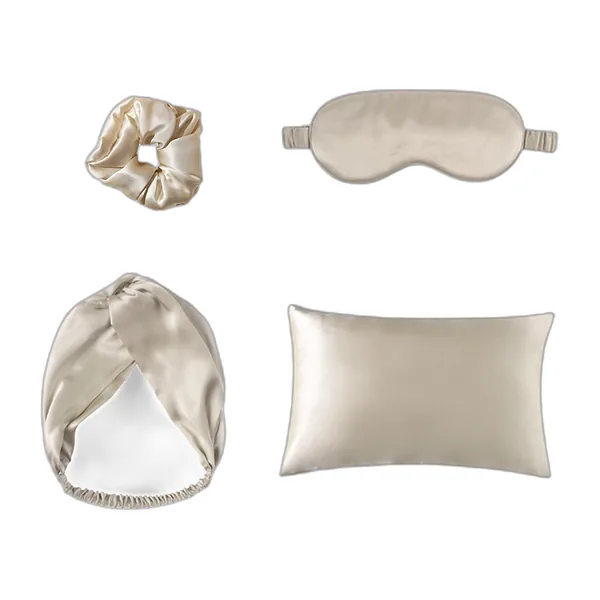 Satin night set: pillowcase, mask, headband and scrunchie
Four matching pieces in champagne satin: 48 × 65 cm pillowcase, sleep mask, headband and scrunchie, for a considered evening ritual.
Satin night set: pillowcase, mask, headband and scrunchie
Four matching pieces in champagne satin: 48 × 65 cm pillowcase, sleep mask, headband and scrunchie, for a considered evening ritual.
Free newsletter
One practical Ayurveda tip every Sunday
A seasonal habit, a recipe or a ritual taken from our articles, in a two-minute read. Your welcome gift: the 7-step Ayurvedic morning routine, unlocked right away. One-click unsubscribe.