Cumin: Dangers, Side Effects and Real Contraindications
Cumin is one of the safest culinary spices in Ayurveda. Here are the real points of caution anyway: cross-allergy, high-dose interactions and mix-ups with other seeds.
In this article 9 sections
- Cumin dangers: what is actually claimed?
- Possible side effects
- Allergy and interactions to know
- Cumin and pregnancy: culinary doses accepted
- Cumin, caraway, black cumin: a mix-up to avoid
- Culinary dose vs concentrated extract
- Precautions and safety
- How to enjoy cumin while limiting the risks
- Your questions
"Cumin dangers" and "cumin side effects" are frequent searches, and the answer is quickly reassuring: at usual culinary doses (a pinch of seeds in a dish, an occasional tea), cumin is considered one of the safest spices in the whole Ayurvedic pharmacopoeia. Risk only appears in specific, minority situations: allergy, a concentrated extract, or a specific medication.
This guide details those situations, without overdramatizing a use that, for the vast majority of people, poses no particular concern.
Cumin dangers: what is actually claimed?
Ayurvedic tradition regards cumin (jeeraka) as an everyday digestive ally, almost tridoshic in how well it suits most constitutions. That reputation as an "easy" spice is broadly justified. The word "danger" people search for online mostly points to specific cases — allergy, high concentrated dose, species mix-up — not a generalized risk.
Possible side effects
- Mild heartburn in a minority of sensitive people, especially at high doses or on an empty stomach.
- Mouth irritation, rare, with very concentrated seeds or an essential oil (to be clearly distinguished from the culinary spice).
- Paradoxical bloating in very rare, very sensitive people, even though cumin is precisely used to ease it.
These discomforts remain, in the vast majority of cases, mild and reversible by lowering the dose.
A more serious reaction exists but is exceptional: severe food allergy. Boxer, Roberts and Grammer published a case report in 1997 in the Journal of Allergy and Clinical Immunology describing anaphylaxis within minutes of eating a falafel containing ground cumin, with skin tests confirming sensitization to cumin as well as to sesame and chickpea (see the case report). Given how much cumin is eaten worldwide, such cases are very rare, but facial or throat swelling, shortness of breath, widespread itching or feeling faint after a cumin-spiced dish call for emergency care.
Cumin essential oil has a different profile from the spice: far more concentrated (notably in cuminaldehyde), it can irritate the skin or cause contact dermatitis when applied undiluted, like other Apiaceae essential oils. Dilute it heavily, test it on a small patch of skin first, and never ingest it without guidance from a trained professional.
Allergy and interactions to know
| Situation | Reported risk | What to do |
|---|---|---|
| Apiaceae allergy (carrot, celery, fennel, coriander) | Possible cross-allergy to cumin, rare but documented | Caution with a known allergy to this botanical family; see an allergist if in doubt |
| Diabetes medication | Theoretical effect on blood sugar at concentrated doses, undocumented in culinary use | Closer monitoring with an extract course; ask your doctor or pharmacist |
| Everyday culinary use | Risk considered very low | No particular restriction, unless your doctor advises otherwise |
Cumin and pregnancy: culinary doses accepted
Cumin in cooking poses no known problem during pregnancy or breastfeeding, at usual food amounts. As with any spice, concentrated extracts and supplement courses lack safety data specific to these periods: it's best to stick to culinary use and ask your midwife or doctor if in doubt.
| Use | Assessment during pregnancy |
|---|---|
| Seeds in cooking, CCF tea (½ to 1 teaspoon of seeds a day) | No known concern at usual doses |
| Occasional cumin water (jeera water) | Generally considered reasonable |
| Concentrated extracts or supplements | Insufficient data; medical advice recommended out of caution |
Cumin belongs to the Apiaceae family, like carrot, celery, fennel and coriander. A 1997 study by Jensen-Jarolim and colleagues in Clinical and Experimental Allergy characterized allergens shared by anise, fennel, coriander and cumin (see the study). Cross-allergy is rare, but a pregnant woman with a known Apiaceae allergy should be careful with CCF tea too, since it combines three plants of that family.
Cumin, caraway, black cumin: a mix-up to avoid
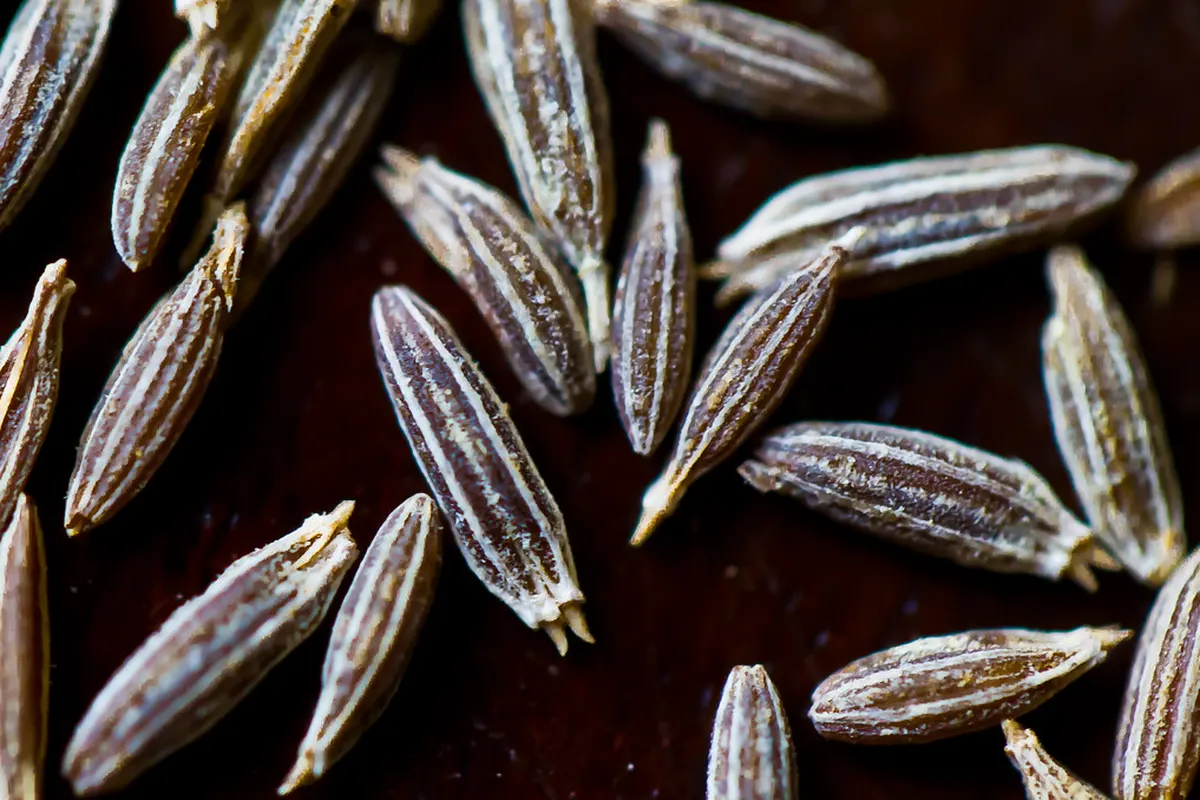
Some of the worry online comes from confusing species. Cumin (Cuminum cyminum) is brown and elongated; caraway ("meadow cumin") has a quite different anise-like flavor; "black cumin" refers, depending on the seller, to nigella or Indian kala jeera. The uses and precautions described here concern true cumin — check the botanical name when buying, particularly at specialty grocers where naming varies.
Culinary dose vs concentrated extract
As with most spices, the distinction is essential: a pinch of seeds in a dish has nothing to do with a concentrated extract or essential oil, reserved for supervised use. Before buying a cumin-based supplement, check our pointers on choosing a reliable Ayurvedic supplement.
Precautions and safety
- Known apiaceae allergy: caution, see an allergist if needed.
- Treated diabetes: monitoring with a concentrated course; culinary doses pose no particular concern.
- Pregnancy and breastfeeding: culinary doses accepted, no concentrated course without medical advice.
- Reflux or sensitive stomach: moderate the amount, prefer coriander, which is more cooling.
For an overview of the precautions worth knowing before any concentrated herb or spice use, see our safety and precautions guide. If in doubt, on any ongoing treatment, or with a persistent digestive symptom, talk to your doctor or pharmacist.
How to enjoy cumin while limiting the risks
Favor moderate everyday culinary use (½ to 1 teaspoon of seeds a day) over concentrated extracts, unless your doctor advises otherwise. CCF tea remains the gentlest, best-tolerated way to have it regularly, with the added benefit of combining three seeds with complementary profiles rather than one at a high dose.
Your questions about cumin
Is cumin dangerous in everyday cooking?
No, at usual culinary amounts, cumin is one of the best-tolerated spices. The risk mostly concerns high-dose concentrated extracts, apiaceae cross-allergy, or confusion with caraway.
Can cumin cause an allergy?
It is rare but possible, particularly in people already allergic to other apiaceae such as celery, carrot or fennel. With that kind of history, particular caution and an allergist's advice are recommended before regular use.
Does cumin interact with diabetes treatment?
A theoretical effect on blood sugar exists mostly at concentrated extract doses; culinary use generally poses no problem. A cumin-based supplement course nonetheless warrants monitoring and a healthcare professional's advice.
Can you eat cumin while pregnant?
Yes, at usual culinary doses, with no known particular concern. Concentrated extracts and supplement courses lack specific pregnancy data, so it's best to stick to cooking and ask if in doubt.
What is the difference between cumin, caraway and black cumin?
Cumin (Cuminum cyminum) is brown and straight, with a warm flavor; caraway, more curved, has an anise-like flavor typical of German and Nordic cuisines; "black cumin" often refers to nigella. Check the botanical name when buying to avoid mixing up the uses.
Can you drink CCF tea during pregnancy?
Yes, cumin-coriander-fennel tea at usual amounts is generally well tolerated during pregnancy and often used gently for the digestive heaviness of late pregnancy. The exception is a known allergy to Apiaceae (celery, carrot, fennel): the three seeds belong to that family, so ask an allergist first.
What are the signs of an allergic reaction to cumin?
Itching, swelling of the face or throat, shortness of breath, nausea or feeling faint within minutes of a cumin-spiced meal. These reactions are exceptional, but if they occur, stop eating and seek emergency care without delay, especially if you are already allergic to celery, carrot or fennel.
Is cumin essential oil safe on the skin?
Not undiluted: it is much more concentrated than the spice and can cause irritation or contact dermatitis. Always dilute it heavily and test a small patch first; the culinary seeds carry no comparable risk.
Free newsletter
One practical Ayurveda tip every Sunday
A seasonal habit, a recipe or a ritual taken from our articles, in a two-minute read. Your welcome gift: the 7-step Ayurvedic morning routine, unlocked right away. One-click unsubscribe.