Pippali (Long Pepper): The Spice That Rekindles Digestive Fire
Before black pepper conquered the world, it was long pepper — pippali — that antiquity fought over. Ayurveda made it one of its major spices: digestion, breathing, and the rare status of a rasayana.
In this article 7 sections
Pippali, or long pepper (Piper longum), is one of the most important spices in the Ayurvedic pharmacopoeia: tradition uses it to rekindle digestive fire (agni), clear the respiratory tract, and "carry" other herbs thanks to piperine, which improves the absorption of many active compounds. It's one of the three pungent spices in the famous trikatu, alongside dry ginger and black pepper.
A cousin of black pepper but more complex — pungent on first bite, then surprisingly sweet and mellow at the finish — long pepper deserves a place in the kitchen as much as in the herb cabinet. Just respect its strength: it's a small-dose spice.
What are the benefits of pippali?
- Digestion: this is its primary ground. Tradition ranks it among the best dipana (digestive-fire stimulants): sluggish appetite, heaviness after meals, a "cold and slow" digestion feeling. The concept of agni is detailed in our article on digestive fire.
- Breathing: pippali is Ayurveda's lung spice: congestion, phlegmy cough, heavy winter breathing. A well-established traditional use, with modest clinical data.
- Absorption of other herbs: rich in piperine, it boosts the bioavailability of many compounds — the same principle used with turmeric, whose curcumin is poorly absorbed alone.
- Rasayana: unusual for a pungent spice, tradition grants it rasayana status (a rejuvenating tonic), particularly for respiratory tissues, via graded protocols reserved for practitioners.
- Metabolism: tradition uses it to "burn ama" (residue of incomplete digestion) and lighten Kapha; modern research on this remains preliminary.
On the dosha side: pippali reduces Vata and Kapha, increases Pitta. An interesting quirk: although pungent on the tongue, tradition credits it with a sweet after-effect (vipaka), making it less "heating" long-term than black pepper or chili.
Pippali or black pepper: what's the difference?
| Pippali (long pepper) | Black pepper | |
|---|---|---|
| Botany | Piper longum, elongated catkin | Piper nigrum, round berry |
| Taste | Pungent then sweet, warm almost sugary notes | Direct, sharp pungency |
| Long-term effect (tradition) | Sweet after-effect, rasayana status | Heating, a simple stimulant |
| Preferred use | Digestion plus breathing, courses | Everyday seasoning |
| Where to find it | Indian grocers, herbalists, online | Everywhere |
In short: black pepper is the everyday spice, pippali the finer tool — more aromatic, more "respiratory," and the only one of the two tradition dares use as a background tonic. A small anecdote that says it all: the English word "pepper" traces back to the Sanskrit pippali, via Latin piper. It's long pepper, not black pepper, that gave its name to the whole family — a sign of its prestige in ancient trade between India and the Mediterranean.
How to use pippali: indicative dosage
For guidance only — pippali's strength means starting low:
| Form | Typical dose | Use |
|---|---|---|
| Powder | 250 mg to 1 g per day (one or two pinches) | With unheated honey (traditional for the lungs) or warm water before a meal |
| In trikatu | Depending on the blend, often 500 mg to 1 g before meals | Slow digestion, heaviness |
| In cooking | 1 grated or ground catkin per dish | Dals, soups, winter dishes, spiced chai |
Two concrete entry points: trikatu, the classic ginger-black pepper-pippali blend for sluggish digestion, and trikatu-spiced ghee, a spoonful that turns a bland dish into an easy-to-digest one. In winter, a pinch of pippali with a spoonful of (never heated) honey is the traditional gesture for a congested throat and chest. In the kitchen, think of it as a spice with character: grated at the last moment over a dal, a squash soup, or a winter hot chocolate, it brings a rounded warmth black pepper doesn't have. Start with a 3- to 4-week course, watch your digestion, then take a break — the Ayurvedic logic of courses, not continuous use.
Side effects and precautions of pippali
A powerful spice means real precautions:
- High Pitta, sensitive stomach: heartburn, reflux, gastritis, active digestive inflammation — pippali is heating and can worsen these. Avoid during a flare.
- Pregnancy: no at remedy doses. Pungent spices at therapeutic doses are traditionally discouraged during pregnancy; an occasional culinary pinch isn't the issue. Breastfeeding: professional advice.
- Drug interactions: this is THE underrated point. Piperine increases the absorption of many substances, including some medications — which can alter their effect. If you're on treatment (especially a narrow-margin drug), talk to your doctor or pharmacist before any pippali or trikatu course.
- Dosage: stay within pinch-sized doses. Escalating-dose rasayana protocols (vardhamana pippali) are for an experienced practitioner, not self-treatment.
- Children: no supplement use without professional advice.
The full framework is in our safety and precautions guide.
Where to buy long pepper and at what price?
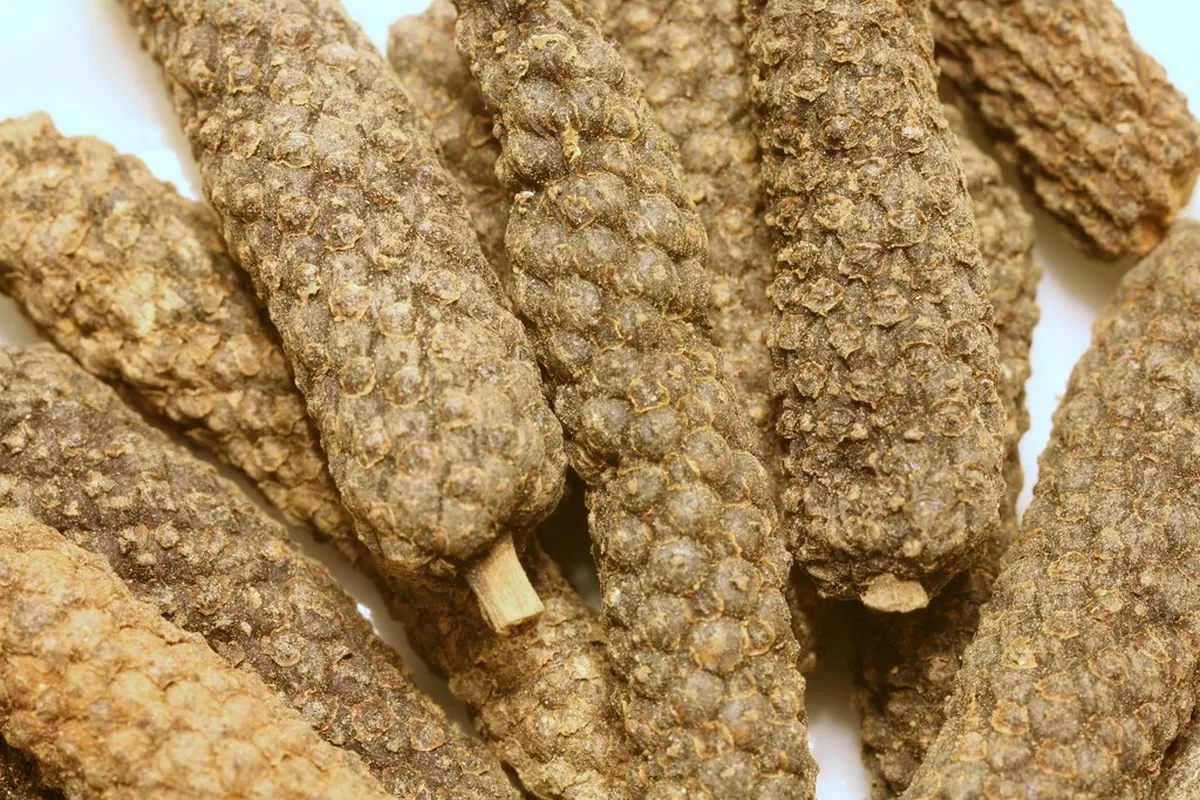
Pippali is found at Indian grocers, herbalists and online Ayurvedic shops, as whole catkins (the small gray-brown "spikes") or as powder. Expect to pay a modest price for a bag of catkins that will last months — the spice is dense and used by the pinch. Prefer whole catkins to grind yourself: powder goes stale fast and is easier to adulterate. Demand a stated origin, airtight packaging and, for trikatu-type blends, a detailed composition with no opaque "proprietary blend" — the same quality markers as for any Ayurvedic herb.
How long it takes and how long to use it
On slow digestion and post-meal heaviness, pippali (long pepper) acts within days: a pinch before the meal, as a short two-to-three-week course, generally rekindles appetite and eases digestion fairly quickly. On the respiratory tract, by contrast, Ayurvedic tradition places its use on a longer timeline — protocols spanning several weeks, often with a gradually increasing dose (vardhamana pippali), reserved for an experienced practitioner.
This guide separates these two paces, and explains why the potency of this spice calls for patience rather than higher doses to speed things up.
What timeline for each goal?
| Goal | First signs | Usual course length |
|---|---|---|
| Slow digestion, sluggish appetite | A few days | 2 to 3 weeks, then a break |
| Respiratory congestion (traditional use) | Several days to a few weeks | Supervised protocol, gradual dose |
| Improving absorption of other herbs (piperine) | From the combined intake | As long as the combined intake lasts |
What are the first signs pippali is working?
- Appetite returning and a less "cold and sluggish" digestion;
- Less heaviness after meals, often within a few days of regular use before meals;
- Easier breathing with congestion, per traditional use that needs more time and consistency.
Why does the dose increase take time?
Pippali is a potent spice: tradition recommends starting with the smallest dose (a pinch, about 250 mg) and increasing it gradually only if needed, never the other way around. This is especially true for vardhamana-pippali-type respiratory protocols, which call for a trained practitioner rather than self-medication — trying to speed up the effect by raising the dose alone mostly risks digestive irritation, with no proven extra benefit.
When should you conclude pippali is not working for you?
On digestion, if a properly dosed two-to-three-week course brings no improvement, it is reasonable to stop and consider other options, such as trikatu or ginger. Persistent breathing trouble, fever, or asthma call for a doctor, not a spice, however traditional.
How to give it the best chance of working within these timelines
- Start small: a pinch before the meal, never more at first;
- Stay consistent over the course rather than occasionally increasing the dose;
- Take a break after 2 to 3 weeks, in keeping with the traditional logic of courses rather than continuous intake;
- Seek professional advice before any progressive-dose protocol aimed at the respiratory tract.
Precautions during the course
Pippali is heating and can worsen heartburn in Pitta profiles. Piperine increases the absorption of many substances, including some medications: mention any ongoing treatment to your doctor or pharmacist before a course. Pregnancy: no remedy dose without medical advice. The full picture is in our safety guide.
Your questions about pippali (long pepper)
What is the difference between pippali and black pepper?
Two related species: pippali (Piper longum) forms elongated catkins with a pungent-then-sweet taste, black pepper (Piper nigrum) round berries with a direct pungency. Ayurvedic tradition gives pippali a higher status: less heating long-term, active on breathing, and classed as a rasayana, whereas black pepper stays an everyday stimulant.
What is trikatu used for?
Trikatu combines equal parts dry ginger, black pepper and pippali. It's the go-to Ayurvedic blend for rekindling sluggish digestive fire: low appetite, heaviness after meals, slow, cold digestion. It's taken in a small dose before meals. Pitta types, prone to heartburn, should avoid it.
How do you take pippali for digestion?
A pinch of powder (about 250 mg to 1 g per day) in warm water before a meal, or via trikatu, for a course of a few weeks. Always start with the smallest dose: pippali is potent and warming. If you have heartburn, reflux or take medication, get professional advice first.
Is pippali good for the lungs?
It's its most reputed traditional use: Ayurvedic tradition uses it against congestion, phlegmy cough and heavy breathing, often a pinch mixed with unheated honey. Modern clinical data remain modest. Persistent breathing trouble, asthma or fever call for a doctor.
Does piperine interact with medications?
Yes, this is a serious point: the piperine in long pepper increases the absorption of many substances, including some medications, which can strengthen or unbalance their effect. If you take regular medication, talk to your doctor or pharmacist before a pippali or trikatu course. Culinary pinch-sized use generally isn't a problem.
How long does pippali take to work on digestion?
First signs generally appear within a few days of a two-to-three-week course, taken as a pinch before meals. It is a short course followed by a break, rather than continuous intake.
How long does pippali take to work on breathing?
Traditional use needs several weeks, often with a gradually increasing dose (vardhamana pippali) supervised by a practitioner. This is not a protocol to run alone or to speed up by raising the dose.
Why should you start with a small dose of pippali?
It is a potent spice whose piperine also increases the absorption of other substances, including medications. Starting small lets you gauge tolerance before considering a higher dose, always under supervision.
What if pippali does not ease my digestion after three weeks?
It is reasonable to stop this course and try trikatu or ginger instead. Digestive trouble that persists despite several approaches deserves medical advice rather than extending the course.
Free newsletter
One practical Ayurveda tip every Sunday
A seasonal habit, a recipe or a ritual taken from our articles, in a two-minute read. Your welcome gift: the 7-step Ayurvedic morning routine, unlocked right away. One-click unsubscribe.