Vetiver Side Effects: Is Vetiver Water Safe to Drink?
Khus water has cooled Indian summers for generations, yet science has barely looked at its safety. Here is what is actually known, form by form, and where the real risks sit.
In this article 7 sections
Vetiver water has no documented serious side effects, but that is mainly because it has never been properly studied in humans: there are no clinical trials and no published poisoning series for drinking root-infused water. The practical risks are elsewhere: pure vetiver essential oil (skin irritation, never to be swallowed), sugary khus syrups sold as “vetiver drinks”, and roots of unknown origin, since vetiver is a plant known to store heavy metals in its roots when it grows on contaminated soil.
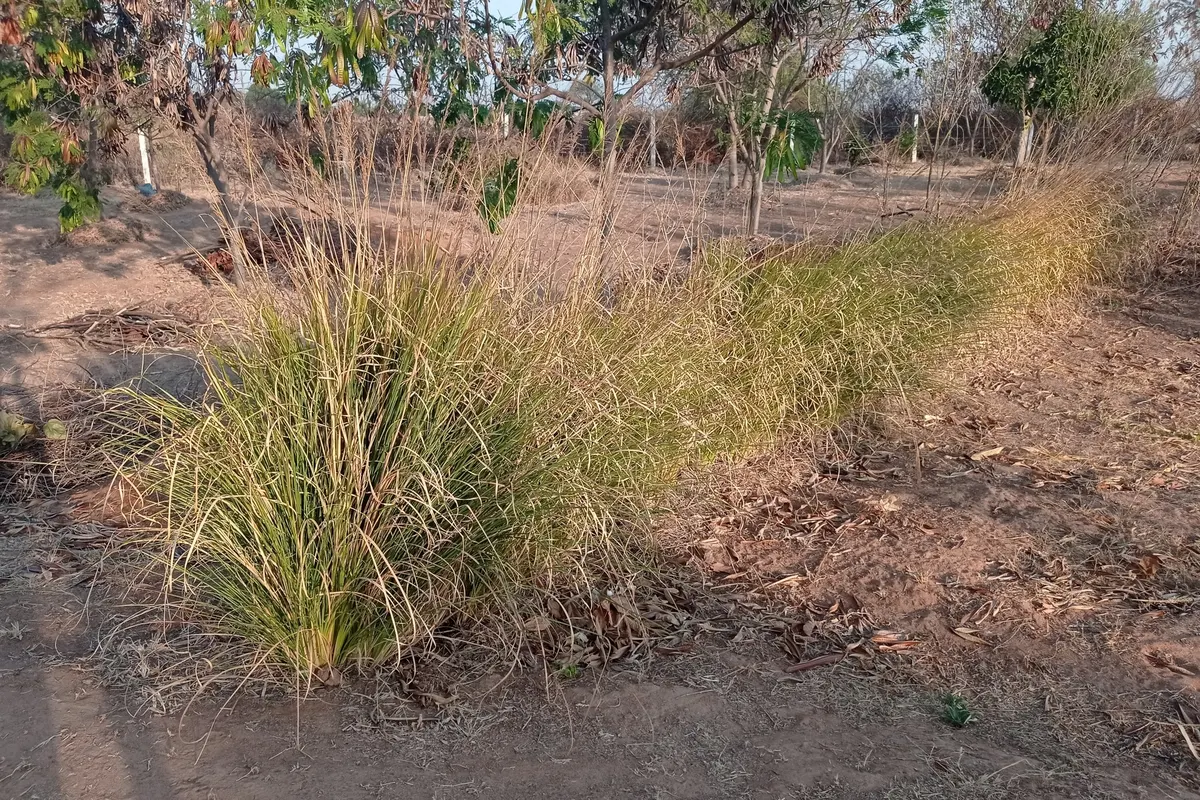
Vetiver (Chrysopogon zizanioides, formerly Vetiveria zizanioides) is called ushira in Sanskrit and khus or khas in Hindi. The tradition uses its roots, not its leaves, to cool the body in hot weather. Here is what can honestly be said about its safety.
What the evidence says (and does not say)
A 2021 literature review by Grover and colleagues in Environmental Science and Pollution Research compiled the phytochemistry and pharmacology of vetiver (Grover et al., 2021). Its conclusion is telling: many traditional uses have been tested in laboratory and animal models using root extracts, leaves or root oil, but the active constituents and their mechanisms still need to be established. In other words, there is no human dataset from which to draw a safe daily amount of vetiver water, a list of side effects or a list of drug interactions.
So the honest answer to “what are the side effects of vetiver water?” has two parts: no harm has been reported for the traditional drink, and no one has looked closely enough to rule harm out. Common-sense precautions follow from that gap.
Side effects and risks by form
| Form | What is known | Practical precaution |
|---|---|---|
| Root soaked in drinking water (khus water) | Traditional use; no documented adverse effects, but no human studies either | Use clean, traceable roots; rinse them; replace the water daily; moderate amounts |
| Khus syrup and “khus” drinks | Many are mostly sugar, flavoring and green coloring; real root content is rarely stated | Read the label; count it as a sugary drink, especially with diabetes |
| Pure vetiver essential oil on the skin | Concentrated aromatic compounds; irritation or sensitization possible, as with other essential oils | Always dilute in a carrier oil; patch-test on a small area first |
| Essential oil taken by mouth | No safety data supporting internal use | Do not swallow it; keep bottles away from children |
| Khus mats, fans, curtains | External, environmental use; no known specific risk | Keep mats clean and dry to avoid mold |
The overlooked issue: where the roots come from
Vetiver is one of the plants most studied for phytoremediation, meaning the clean-up of polluted soils. A review in the International Journal of Phytoremediation describes vetiver as tolerant of a wide range of heavy metals (arsenic, cadmium, chromium, lead, mercury and others) and notes that most of the metals it absorbs are stored in its roots, with lead levels of up to about 1% measured in the roots under test conditions (Danh et al., 2009). These were glasshouse and field experiments on contaminated soils, not tests of roots sold for drinking water, so they do not mean store-bought vetiver is contaminated.
They do mean that the roots are exactly the part you steep, and that vetiver grown along roadsides, near industrial sites or on land used to clean up pollution is not something to put in your water jug. Buy roots from a seller who can name the origin, and avoid loose roots of unknown source.
Heavy metals are not a theoretical worry in this category of products. When researchers analyzed 193 Ayurvedic medicines ordered from websites, about one in five (20.7%) contained detectable lead, mercury or arsenic, whether made in the US or in India (Saper et al., JAMA, 2008). In the US, herbal supplements do not need FDA approval before they go on sale, so quality depends on the manufacturer. Our guide to trustworthy Ayurvedic brands explains what to look for.
Who should avoid vetiver or ask a professional first
| Situation | Why | What to do |
|---|---|---|
| Pregnancy and breastfeeding | No safety data for concentrated forms or essential oil | Avoid the essential oil; ask your midwife or doctor before regular use of other forms |
| Babies and young children | Essential oils can be harmful if swallowed or applied undiluted | No essential oil; store bottles out of reach |
| Diabetes or weight management | Most khus syrups are sugar-based | Prefer plain root-infused water over syrup |
| Sensitive or eczema-prone skin | Risk of irritation from concentrated oils | Dilute well and patch-test, or avoid |
| Taking regular medication | Interactions have never been studied | Mention it to your pharmacist or doctor before daily use |
How to prepare vetiver water with fewer risks
- Choose clean, whole roots from a traceable source, ideally labelled as food grade;
- Rinse the roots well, then soak a small bundle in a clay pot or jug of drinking water for a few hours;
- Change the water every day and let the roots dry between uses so they do not grow mold; discard roots that smell musty;
- Drink it as you would ordinary water in hot weather, not as a concentrated remedy;
- Stop if you notice any unusual reaction, and seek medical advice if it persists.
The tradition sees vetiver as cooling in the Pitta sense; our articles on cooling down naturally in summer and excessive sweating put it in context. Vetiver water is a refreshing drink, not a treatment: heat exhaustion, dehydration or persistent symptoms call for medical care.
Precautions in short
- No drug interactions are documented, simply because none have been studied;
- Never swallow pure essential oil, and always dilute it before skin use;
- Treat khus syrup as a sugary drink;
- Source roots carefully because they can store heavy metals from the soil they grew in;
- Pregnancy, breastfeeding, young children and chronic illness: ask a professional first.
The general rules for all Ayurvedic herbs and products are in our safety and precautions guide.
Your questions about vetiver side effects
Does vetiver water have side effects?
No serious side effects have been documented for traditional vetiver (khus) water, but it has never been studied in clinical trials, so rare effects cannot be ruled out. The main practical risks come from the quality of the roots, sugary khus syrups and pure essential oil, not from the plain drink itself.
Is it safe to drink vetiver water every day?
It is used daily in hot weather in India, with no reported harm, but there is no scientific data on long-term daily intake. Use clean, traceable roots, change the water every day, and ask a doctor first if you are pregnant, breastfeeding or on regular medication.
Can vetiver roots contain heavy metals?
They can if the plant grew on contaminated soil: vetiver is widely used to clean up polluted land precisely because its roots accumulate metals such as lead. That does not mean commercial roots are contaminated, but it is a good reason to buy only from sellers who can state the origin.
Can you swallow vetiver essential oil?
No. There are no safety data supporting internal use of vetiver essential oil. It should only be used diluted on the skin or in a diffuser, and kept out of the reach of children.
Is vetiver safe during pregnancy?
There are no studies on vetiver in pregnancy. Avoid the essential oil and talk to your midwife or doctor before drinking vetiver water regularly.
Can you use a vetiver fan or vetiver-scented cloth while pregnant?
Yes. Root-scented fans and cloths are a traditional household use with no known risk, far removed in concentration from the essential oil, which remains the form to avoid in pregnancy and while breastfeeding.
Free newsletter
One practical Ayurveda tip every Sunday
A seasonal habit, a recipe or a ritual taken from our articles, in a two-minute read. Your welcome gift: the 7-step Ayurvedic morning routine, unlocked right away. One-click unsubscribe.