The Ayurvedic Spice Guide: Which Ones, When, and How
In Ayurveda, spices aren't decoration — they're the daily regulators of digestion. Here are the 15 essentials, their effect on each dosha, and how to use them properly.
Key facts
- The 15 essential Ayurvedic spices are turmeric, cumin, coriander, fennel, ginger, cardamom, cinnamon, black pepper, mustard, fenugreek, clove, saffron, ajwain, asafoetida and nutmeg.
- Almost every spice soothes Vata and Kapha; Pitta does best with the mild ones: coriander, fennel, cardamom, turmeric and saffron.
- Three techniques cover most uses: dry-roasting whole seeds, tadka (whole spices sizzled in ghee or oil) and infusion, such as CCF tea.
- In human volunteers, 20 mg of piperine from black pepper increased curcumin absorption by about 2000% (Shoba et al., 1998).
- Cassia cinnamon is the main dietary source of coumarin, with a tolerable intake of 0.1 mg/kg a day (Abraham et al., 2010); nutmeg is toxic in large amounts.
In this article 8 sections
- Why does Ayurveda place so much importance on spices?
- The table of the 15 essential spices and their effect on the doshas
- How to use spices: dry-roasting, tadka and infusion
- Which spices for which time of day?
- Should you adjust doses to your constitution?
- Fresh or dried: which form to choose?
- Precautions: spices are not harmless
- Your questions
The essential Ayurvedic spices come down to about fifteen names: turmeric, cumin, coriander, fennel, ginger, cardamom, cinnamon, black pepper, mustard, fenugreek, clove, saffron, ajwain, asafoetida and nutmeg. Each acts on the digestive fire and on the doshas in a precise way: some warm and stimulate (ginger, pepper), others soothe without heating (coriander, fennel), and others do both depending on the dose (turmeric, cardamom).
This guide is a practical dashboard: the effect on Vata, Pitta and Kapha, when to use each spice, and above all how — because a poorly prepared spice loses most of its value. The underlying logic is that of the six tastes: pungent and hot to stimulate, sweet and cool to soothe.
Why does Ayurveda place so much importance on spices?
Because they sustain agni, the digestive fire, considered the keystone of health: complete digestion nourishes the tissues, while sluggish digestion produces ama, poorly processed residues. Spices are the simplest everyday tools for adjusting this fire — the texts classify them as dipana (which rekindle agni) and pachana (which help digest what has stagnated). They also make difficult foods easier to digest: legumes, cabbage, dairy. This is the whole point of Indian cooking: spices there are first and foremost functional. For the full concept, see our article on agni, the digestive fire.
The table of the 15 essential spices and their effect on the doshas
Key: ↓ soothes the dosha, ↑ aggravates it in excess, = neutral at a normal dose.
| Spice | Vata | Pitta | Kapha | Main use |
|---|---|---|---|---|
| Turmeric | = | = | ↓ | Universal: dishes, golden milk; always with fat and black pepper |
| Cumin | ↓ | = | ↓ | Digestion, bloating; the base of CCF tea |
| Coriander (seed) | ↓ | ↓ | ↓ | The mildest: digestion without heat, friendly to Pitta |
| Fennel (seed) | ↓ | ↓ | = | After meals, bloating, evening infusions |
| Ginger | ↓ | ↑ (dried) | ↓ | Rekindles agni; fresh is milder than dried |
| Cardamom | ↓ | = | ↓ | Digestion, breath; sweetens coffee and milk |
| Cinnamon | ↓ | ↑ in excess | ↓ | Gentle warmth, breakfasts, chai |
| Black pepper | ↓ | ↑ | ↓ | Stimulant, activates turmeric; small doses |
| Mustard (seed) | ↓ | ↑ | ↓ | South Indian tadka, sautéed vegetables |
| Fenugreek | ↓ | ↑ in excess | ↓ | Useful bitterness: metabolism, dals |
| Clove | ↓ | ↑ | ↓ | Chai, simmered dishes; potent, minimal dose |
| Saffron | ↓ | ↓ | ↓ | The great tridoshic spice: milk, desserts, mood |
| Ajwain | ↓ | ↑ | ↓ | Express anti-bloating, legumes |
| Asafoetida (hing) | ↓ | ↑ in excess | ↓ | A pinch in dals: digestibility, anti-gas |
| Nutmeg | ↓ | ↑ | ↓ | Sleep: a pinch in evening milk, never more |
The turmeric and black pepper pairing in the table is one of the few traditional habits measured in people: in Shoba et al. (1998, Planta Medica), healthy volunteers given 2 g of curcumin alone had blood levels that were undetectable or very low; adding 20 mg of piperine raised its bioavailability by about 2000%. Those were supplement doses, far above a pinch in a curry, but they explain why turmeric is cooked with pepper and fat.
Key takeaway: almost every spice soothes Vata and Kapha; it is Pitta that needs to be selective, favoring coriander, fennel, cardamom, turmeric and saffron. Detailed profiles — including turmeric and cumin — are in our herbs hub.
How to use spices: dry-roasting, tadka and infusion
Three techniques cover most uses:
- Dry-roasting: heat whole seeds (cumin, coriander, fennel) for 1 to 2 minutes in a dry pan, with no added fat, until fragrant, then grind. The aromas multiply and digestibility improves. Ideal for homemade spice blends and raita.
- Tadka (gentle frying): let whole spices sizzle for 30 to 60 seconds in hot ghee or oil before adding the vegetables, or pour this fragrant ghee over a dal at the end of cooking. This is THE Indian technique: the fat extracts fat-soluble compounds, including curcumin from turmeric.
- Infusion: lightly crushed seeds, steeped covered for 5 to 10 minutes in simmering water. The gold standard is CCF tea (cumin-coriander-fennel), Ayurveda's universal digestive.
Two classic mistakes: burning ground spices (they turn bitter — add them near the end of cooking) and buying everything pre-ground (whole seeds keep their aroma for months, powder for only a few weeks).
Which spices for which time of day?
- Morning: fresh ginger in hot water, cinnamon and cardamom in porridge — gently wake up agni.
- Midday: the main event — a full tadka, turmeric, cumin, asafoetida on legumes. This is the meal where digestion can handle anything.
- After the meal: chew half a teaspoon of fennel seeds, the simplest Indian habit to adopt.
- Evening: mild spices only — fennel or cardamom as an infusion, a pinch of nutmeg in warm milk to prepare for sleep.
Should you adjust doses to your constitution?
Yes, but simply. Vata benefits from almost everything, only avoiding excess dry pungency, which is drying; its best allies are fresh ginger, cumin, cardamom and asafoetida. Pitta sticks to the mild ones (coriander, fennel, turmeric, saffron, mint) and saves pepper, mustard and chili for winter. Kapha can — and should — spice generously: ginger, black pepper, mustard and cinnamon are its daily engines. When in doubt, the cumin-coriander-fennel trio suits everyone: it is the tridoshic blend par excellence.
Fresh or dried: which form to choose?
In Ayurveda a fresh spice and its dried form are not interchangeable: drying removes water, concentrates the aromatic compounds and often shifts the virya. Fresh ginger is mild and only lightly warming, while dried ginger becomes distinctly pungent and heating, hence its caution for Pitta; the powder is also much stronger by weight, so use a smaller amount than fresh and taste as you go. As a rule, fresh suits everyday cooking and gentle, cooling needs (summer, Pitta, sensitive stomach), while powder gives a steadier, reproducible dose.
| Spice | Fresh | Dried / powder | Best for |
|---|---|---|---|
| Ginger | Mild, watery, neutral to warm | Pungent, strongly warming; small amounts for Pitta | Fresh: everyday cooking, occasional nausea. Dried: winter dishes |
| Turmeric | Green, slightly bitter taste, subtler color | Warmer, tannic, keeps for months away from light | Fresh: juices, quick sautés. Dried: golden milk, simmered dishes |
| Mint | Aromatic, cooling, best raw | Earthier, loses much of its menthol | Fresh almost always: tea, chutneys |
| Cilantro / coriander | Citrusy leaf, a last-minute garnish | The dried form is mainly the seed, used for digestion | Leaf as garnish; seed in CCF tea and dals |
Storage decides what you keep: fresh ginger and turmeric roots go unpeeled in the fridge in a perforated bag or damp cloth for a few weeks, and freeze well whole or grated in portions; powders belong in an opaque, airtight jar away from the stove, since light and heat slowly dull their aroma; fresh herbs keep a few days as a bunch in a glass of water in the fridge. A teaspoon of powder taken daily as a “course” is far more concentrated than a culinary pinch: see the precautions below.
Precautions: spices are not harmless
At culinary doses, the spices in this guide are safe for most adults. A few real safeguards:
- Nutmeg: its myristicin makes it toxic in large amounts (several grams, far beyond a culinary pinch), with nausea, racing heart and hallucinations. A review of 10 years of calls to the Illinois Poison Center (Ehrenpreis et al., 2014) found 32 nutmeg cases, more than half of the accidental ones in children under 13: keep it out of reach and stick to a pinch.
- Cinnamon: cassia, the cheap and common cinnamon in the US and UK, contains coumarin, which can harm the liver in sensitive people. A risk assessment (Abraham et al., 2010, Molecular Nutrition & Food Research) confirmed a tolerable daily intake of 0.1 mg per kg of body weight and found that heavy cassia consumers can reach it. For daily use, choose Ceylon cinnamon (Cinnamomum verum), which contains very little.
- Turmeric and black pepper: pepper does boost curcumin absorption (see the FAQ), which is also why concentrated curcumin-plus-piperine supplements are a different matter from cooking.
Pungent spices worsen reflux, gastritis and hemorrhoids; and at concentrated doses (supplements, capsules), some spices interact with medications — blood thinners with turmeric or ginger in particular. Pregnant women: culinary doses are fine, "therapeutic" doses should be discussed with a professional. Situation-by-situation detail is in our safety and precautions guide.
Your questions about the ayurvedic spice guide
What are the basic spices for starting Ayurvedic cooking?
Six are enough to cover the essentials: turmeric, cumin, coriander, fennel, ginger and cardamom. They make CCF tea, golden milk, dals and sautéed vegetables possible, and suit all three doshas at a reasonable dose. Buy whole seeds when you can: they keep far better than pre-ground powders.
What is the gentlest spice for the stomach?
Coriander seed, followed by fennel: both aid digestion without heating, which makes them suitable even for sensitive stomachs and Pitta constitutions. As an after-meal infusion or toasted into dishes, they soothe bloating and discomfort without the aggressive edge of chili or pepper.
Should you toast spices before using them?
For whole seeds (cumin, coriander, fennel, mustard), yes: 1 to 2 minutes dry or in a little ghee greatly boosts their aroma and, according to Ayurveda, their digestibility. Already-ground spices, on the other hand, should not be toasted: they burn and turn bitter. Add them partway through or near the end of cooking instead.
Why pair turmeric with black pepper?
Piperine in black pepper strongly increases the absorption of curcumin, turmeric's active pigment, which is otherwise poorly absorbed: in a 1998 study in human volunteers, 2 g of curcumin with 20 mg of piperine was absorbed about 20 times better than curcumin alone. Indian tradition worked this out empirically: turmeric is cooked with pepper and fat (ghee, milk, oil). A pinch of pepper is enough — no need to pepper heavily.
Which spices suit the Pitta dosha?
The mild, cooling ones: coriander, fennel, cardamom, turmeric, saffron, mint and dill. Pitta, on the other hand, moderates chili, mustard, clove, dried ginger and excess black pepper, which stoke its heat. An anti-Pitta dish can still be very flavorful — it's the pungency that's removed, not the taste.
Are spice capsules as good as culinary spices?
These are two different uses. In cooking, doses are moderate, safe and everyday: this is the core Ayurvedic use. Concentrated extracts (curcumin, ginger capsules) fall into the supplement category: potentially stronger effects, but also possible drug interactions — medical advice is essential if you are on medication.
Is ginger powder stronger than fresh ginger?
Yes, by weight: drying removes most of the water, so powder is more concentrated and also more heating and pungent. Use a smaller amount of powder than fresh and taste as you go; Pitta types generally do better with fresh ginger.
How should fresh and dried spices be stored?
Fresh ginger and turmeric roots unpeeled in the fridge (or frozen, grated in portions); powders in an opaque, airtight jar away from heat and light, where they slowly lose aroma without becoming unsafe; fresh herbs as a bunch in a glass of water in the fridge.
Our picks
Accessories chosen to go with this guide — prices in euros, VAT included, delivery in 8 to 15 business days, free from €39. Browse the whole shop.
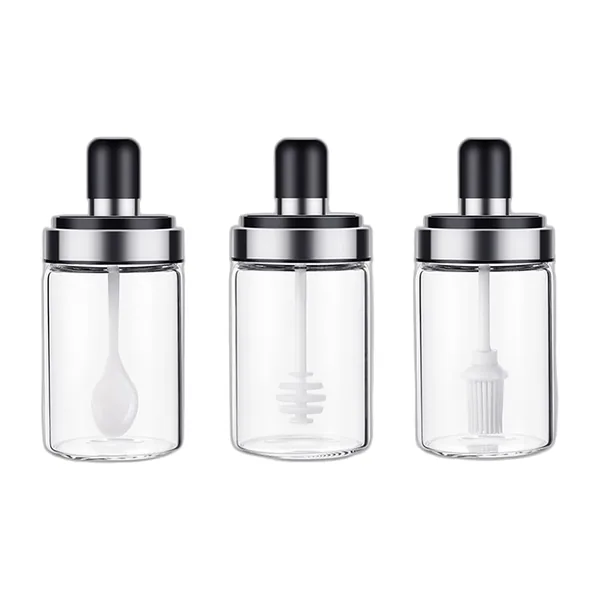 Glass jar with lid and spoon, brush or honey dipper
A glass jar with a black and steel lid whose tool hangs from the lid: a spoon for spices, a brush for ghee, or a honey dipper.
Glass jar with lid and spoon, brush or honey dipper
A glass jar with a black and steel lid whose tool hangs from the lid: a spoon for spices, a brush for ghee, or a honey dipper.
Free newsletter
One practical Ayurveda tip every Sunday
A seasonal habit, a recipe or a ritual taken from our articles, in a two-minute read. Your welcome gift: the 7-step Ayurvedic morning routine, unlocked right away. One-click unsubscribe.