Ayurvedic Teas: How to Choose Well (and See Through the Marketing)
Those "Vata balance" tea bags at $8 for less than an ounce often contain… the fennel and cinnamon already in your pantry. Here is how to read an ingredient list, recognize a good blend, and know when a plain kitchen spice does the job.
In this article 10 sections
- What exactly is an Ayurvedic tea?
- Are the store-bought "Vata, Pitta, Kapha" blends any good?
- How do you read the ingredient list of an Ayurvedic tea?
- Which tea for which dosha (and which moment)?
- How much does a good Ayurvedic tea cost?
- The real danger of licorice, and other precautions
- Precautions: an herbal tea is still an active product
- Buy or make your own: the verdict
- How long it takes and how long to use it
- Your questions
An Ayurvedic tea is a blend of infused spices and herbs chosen for its effect on the doshas: warming and grounding Vata, cooling Pitta, stimulating Kapha. The market offers dozens, from the organic supermarket tea bag to the artisan loose blend. The useful truth: quality is judged by the ingredient list, not by the pretty Sanskrit name on the box — and the best Ayurvedic teas are often the ones you make yourself with three kitchen spices.
This guide gives you the concrete benchmarks: what should (and shouldn't) appear on the label, honest price ranges, and the cases where a ready-made blend is genuinely worth it.
What exactly is an Ayurvedic tea?
Tradition does not speak of "tea" but of decoctions and infusions (kashaya): herbs heated in water to extract their principles, usually drunk warm or hot, in connection with the digestive fire, agni. Three big families dominate the market:
- "Dosha" blends (Vata, Pitta, Kapha): spice assemblies classified by their warming or cooling effect.
- Digestive teas: cumin, coriander, fennel, ginger, licorice — the classic carminatives.
- Single-herb infusions: tulsi (holy basil), ginger, hibiscus… often the best value for money.
None of these teas is a medicine: they are comfort and lifestyle beverages, pleasant and useful day to day, not treatments.
Are the store-bought "Vata, Pitta, Kapha" blends any good?
They rest on genuine Ayurvedic logic: each spice has a warming or cooling energy. A typical "Vata" blend contains cinnamon, ginger, cardamom, licorice, fennel; a "Pitta" leans on rose, coriander, fennel, mint; a "Kapha" on ginger, clove, black pepper. Nothing esoteric: these are kitchen spices, assembled on the principle of opposites.
So the problem is not the concept but the price per ounce: some boxes sell for the equivalent of $130 to $200 per pound for ingredients that cost $10 to $20. Before buying, ask yourself one simple question: does this blend contain herbs I couldn't easily source on my own (tulsi, rose, vetiver…)? If the answer is no, homemade CCF tea — cumin, coriander, fennel — does better for a tenth of the price.
How do you read the ingredient list of an Ayurvedic tea?
The ingredient list runs in descending order by weight: the first three ingredients make up most of the cup. Points of vigilance:
- "Flavors" or "natural flavor" high on the list: the sign of a product designed for marketing taste, not for the effect of the herbs.
- Missing percentages: a good producer displays each herb's share; an "exclusive blend" with no detail is a red flag.
- Licorice at the top of the list: a pleasant sweet taste, but to be moderated if you have high blood pressure — see our licorice guide.
- Organic certification and origin: non-organic spices are among the most heavily treated crops; a certification (USDA Organic or equivalent) and a stated origin are a real plus.
- Tea bags or loose leaf: loose tea lets you dose freely, costs less and avoids steeping plastic-containing bags in hot water.
Which tea for which dosha (and which moment)?
| Need | Typical herbs | When to drink it |
|---|---|---|
| Calming Vata (nervousness, cold, bloating) | Mild ginger, cinnamon, cardamom, fennel, licorice | Morning and late afternoon, always hot |
| Cooling Pitta (heat, acidity, irritability) | Coriander, fennel, rose, mint, hibiscus | Lukewarm or room temperature, after meals |
| Stimulating Kapha (heaviness, sluggish digestion) | Dry ginger, clove, black pepper, tulsi | In the morning and before meals, piping hot |
| All-purpose digestion | Cumin + coriander + fennel (CCF) | From a thermos throughout the day |
If you don't know your constitution, start with a dosha test — or stick with CCF, reputed to suit everyone. For the place of hot drinks in the Ayurvedic day, see our guide on what to drink according to Ayurveda.
How much does a good Ayurvedic tea cost?
Typical US ranges: $5 to $9 for a box of 15 to 20 tea bags of dosha blends at health food stores; $7 to $16 per 3.5 oz (100 g) loose from artisans and specialty shops; pure tulsi runs around $6 to $11 per 3.5 oz (100 g). Beyond that, you are paying for the brand. Conversely, a very cheap blend of unknown origin raises the question of spice quality: better a few well-sourced ingredients than a long mediocre list.
The real danger of licorice, and other precautions
Most Ayurvedic teas are gentle everyday drinks. One very common ingredient of “Vata” and digestive blends, licorice, carries a documented risk with regular use: a 2017 meta-analysis by Penninkilampi, Eslick and Eslick in the Journal of Human Hypertension, pooling 18 studies and 337 participants, linked consistent licorice intake to higher blood pressure and lower blood potassium, an effect tied to the daily dose of glycyrrhizic acid (see the study). An occasional cup is not a problem for most people; daily, prolonged use of licorice-rich blends is.
| Situation | Precaution |
|---|---|
| High blood pressure | Avoid daily, prolonged use of licorice-rich teas |
| Diuretic or heart medication | Possible interaction via potassium; ask your doctor or pharmacist |
| Pregnancy | Regular licorice not advised; medical advice first |
| Kidney disease | Extra caution with potassium balance; medical advice essential |
| Liver disease, daily cinnamon tea | Prefer Ceylon cinnamon: Cassia, common in blends, is rich in coumarin |
| Known Apiaceae allergy (celery, fennel, coriander) | Rare cross-reactions to cumin or fennel; stop at any itching, swelling or breathlessness |
Headaches, unusual fatigue, muscle cramps or blood pressure rising without explanation are signs to stop a licorice-rich tea and see a doctor. Licorice often hides under its botanical name, Glycyrrhiza glabra, and gives a sweet, anise-like taste.
Precautions: an herbal tea is still an active product
Gentle does not mean neutral. A few rules:
- Pregnancy and breastfeeding: several common herbs (licorice, certain doses of cinnamon or concentrated ginger) should be cleared with a healthcare professional before regular consumption.
- High blood pressure: avoid licorice-rich blends consumed daily.
- Ongoing medication: heavy, regular consumption of certain herbs can interact with drugs; when in doubt, ask your pharmacist.
- Children: stick to very mild infusions (light fennel) and your pediatrician's advice.
- An herbal tea never replaces a treatment or a medical visit when a symptom persists.
The complete guidance (at-risk herbs, sensitive groups) is in our safety and precautions guide.
Buy or make your own: the verdict
Make the basic digestive teas yourself: CCF and fresh-ginger infusions cover 80% of needs for pennies a cup. Buy ready-made when the blend brings herbs that are hard to source (quality tulsi, food-grade rose petals, vetiver) or when the convenience of the tea bag is what will keep you consistent. Either way, apply the same grid as for any Ayurvedic product: transparent composition, origin, organic certification — the detailed criteria are in our checklist on how to spot a trustworthy Ayurvedic brand.
How long it takes and how long to use it
For a heavy digestion after a hearty meal, the effect of a carminative Ayurvedic tea (ginger, cumin, coriander, fennel) is fast, often felt within the hour. For a baseline effect on general digestive comfort or relaxation, on the other hand, you need regular use over several weeks. These two timescales shouldn't be confused, and mixing them up is often what causes disappointment after a single cup.
What research shows about ginger
A randomized, double-blind trial by Wu, Rayner, Chuah, Changchien, Lu, Chiu and Lee, published in 2008 in the European Journal of Gastroenterology & Hepatology, measured the effect of a ginger dose (1,200 mg) on gastric emptying in 24 healthy volunteers, compared to a placebo (study available on PubMed). Result: ginger measurably speeds up gastric emptying and stomach contractions, with an effect observed within 90 minutes of intake alongside a test meal. This is consistent with the traditional use of ginger tea after a heavy meal, for a fast, one-off effect.
Realistic timeline by type of tea and use
| Use | Expected timeline |
|---|---|
| Ginger tea after a hearty meal | 30 minutes to 1.5 hours for noticeable digestive comfort |
| CCF tea (cumin, coriander, fennel) sipped from a thermos all day | Gradual effect throughout the day, on general digestion |
| Soothing evening tea (chamomile, light tulsi) | A one-off relaxing effect, more tied to the ritual than a fast measurable mechanism |
| Daily "dosha" blend used as a baseline habit | Several weeks for a perceptible overall effect on regular digestive comfort |
Why does the baseline effect take longer?
A one-off effect on a heavy digestion, like the one documented for ginger, says nothing about a possible baseline benefit for general digestive comfort or agni day to day. This second effect, more often sought through regular daily use of Ayurvedic spice blends, mainly rests on tradition and a cumulative logic: the same spice consumed occasionally doesn't carry the same weight as one built into a routine over several weeks.
How do you judge whether a tea suits you?
- For a one-off effect (heavy digestion, bloating after a meal): judge from the first or second cup; a total lack of effect after several tries suggests this particular tea doesn't match your need;
- For a baseline effect (regular digestive comfort, general relaxation): give yourself 3 to 4 weeks of daily use before judging, following the same course-of-treatment logic already covered in our reference guide.
What if nothing changes despite regular use?
If digestive discomfort persists despite several weeks of suitable teas and an otherwise reasonable diet, tea probably isn't the right lever on its own. Digestive trouble that lasts calls for medical advice rather than trying yet another blend.
Precautions to follow, whatever the timeline you're after
The usual dose and frequency guidelines apply from the very first cup: caution during pregnancy, breastfeeding or ongoing treatment, particularly with licorice-rich blends. Full details on precautions are in our article Ayurvedic teas: dangers and precautions and our safety guide.
Your questions about ayurvedic teas
What is the best Ayurvedic tea for digestion?
The reference is CCF tea: cumin, coriander and fennel in equal parts, steeped for 10 minutes. It is reputed to suit all three doshas and can be sipped throughout the day. Fresh ginger infusion is the alternative for slow, cold digestion — moderate it if you are prone to heartburn.
Can you drink Ayurvedic tea every day?
Yes for blends of mild kitchen spices (cumin, coriander, fennel, cardamom), which tradition uses daily. Stay careful with licorice (not every day if you have high blood pressure) and vary your blends. Pregnant, breastfeeding or on medication: clear it with a healthcare professional.
Do "Vata, Pitta, Kapha" teas really work?
They apply a coherent Ayurvedic principle: warming spices for Vata and Kapha, cooling ones for Pitta. The felt effect is real but gentle — digestive comfort, warmth, calm — and nothing like a medicine. Their real flaw is often the price: the same spices cost ten times less in the spice aisle.
Which Ayurvedic tea is best in the evening?
In the evening, favor caffeine-free, Vata-soothing herbs: fennel, cardamom, chamomile, a pinch of cinnamon, or a light tulsi infusion. Avoid very stimulating dry ginger late in the day. Spiced warm milk (moon milk style) remains the classic Ayurvedic bedtime option.
Where can you buy quality Ayurvedic teas?
Health food stores and specialty online retailers for ready-made blends; Indian grocery stores for loose spices at the best prices. Demand a detailed composition with percentages, an organic certification and a stated origin. An "exclusive blend" that doesn't detail its herbs is a warning sign.
How long after a ginger tea do you feel a digestive effect?
A 2008 clinical trial measured faster gastric emptying within 90 minutes of taking ginger, consistent with its traditional use after a hearty meal: the effect is fast and one-off, not a baseline effect that builds up over weeks.
Why doesn't a digestive tea work right away for some people?
It depends on the type of effect you're after: a one-off effect on a heavy digestion can be judged from the first cup, while a baseline effect on regular digestive comfort needs regular use over several weeks, not a single isolated cup.
Do you need to drink an Ayurvedic tea every day for a baseline effect?
Yes, that's generally necessary: allow 3 to 4 weeks of daily use before judging a baseline effect on digestive comfort or general relaxation, a logic closer to a course of treatment than a one-off cup.
What if digestive discomfort persists despite regular teas?
After several weeks of trying with no improvement, it's better to see a doctor than to keep trying different blends indefinitely. A tea supports digestive comfort; it doesn't treat an established digestive disorder.
Is licorice in tea really dangerous?
Occasional use is not a problem for most people. A 2017 meta-analysis of 18 studies confirmed that regular, prolonged licorice intake can raise blood pressure and lower blood potassium, in proportion to the daily dose: people with hypertension, on diuretics, with kidney disease or pregnant should avoid licorice-rich blends as a daily habit.
Is the cinnamon in Ayurvedic teas bad for the liver?
Not in an occasional cup. Cassia cinnamon, the most common in commercial blends, contains coumarin, which the liver clears poorly at high doses; if you drink a cinnamon tea every day, or have liver disease, Ceylon cinnamon, naturally low in coumarin, is the more cautious choice.
Our picks
Accessories chosen to go with this guide — prices in euros, VAT included, delivery in 8 to 15 business days, free from €39. Browse the whole shop.
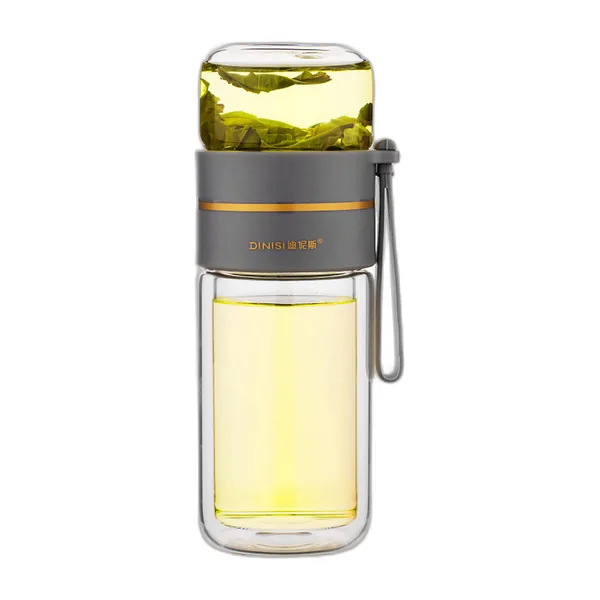 Double-wall glass tea bottle with steel filter, 400 ml
A double-wall borosilicate glass bottle with a separate tea chamber and steel filter: the tea brews on the go and the leaves stay put.
Double-wall glass tea bottle with steel filter, 400 ml
A double-wall borosilicate glass bottle with a separate tea chamber and steel filter: the tea brews on the go and the leaves stay put.
Free newsletter
One practical Ayurveda tip every Sunday
A seasonal habit, a recipe or a ritual taken from our articles, in a two-minute read. Your welcome gift: the 7-step Ayurvedic morning routine, unlocked right away. One-click unsubscribe.