Pranayama: The Essential Ayurvedic Breathing Exercises
Three breathing exercises, five minutes a day, zero equipment: pranayama is probably the Ayurvedic practice with the best effort-to-benefit ratio. Here is where to start, safely.
In this article 9 sections
- What exactly is pranayama?
- Which pranayama exercise should you start with?
- Nadi shodhana: alternate-nostril breathing step by step
- Bhramari: the humming-bee breath against agitation
- Which pranayama for which goal?
- How long and how often should you practice?
- How long before you feel the effects?
- Precautions: when should you not practice pranayama?
- Your questions
Pranayama is the name for the conscious breathing exercises of yoga and Ayurveda. To begin, three techniques are enough — safe and progressive: belly breathing (the absolute foundation), nadi shodhana (alternate-nostril breathing, the balancer) and bhramari (the humming-bee breath, deeply calming). Five to ten minutes a day already produce tangible effects on nervous tension.
Good news for beginners: all three exercises are done sitting on a chair, fully dressed, with no particular flexibility. This guide walks through each technique step by step, then helps you choose according to your goal — calm, sleep, energy or focus.
What exactly is pranayama?
In Sanskrit, prana is the vital breath — the energy that animates the body according to tradition — and ayama means extension or mastery. Pranayama is therefore the art of regulating the breath to regulate your inner state. It is one of the eight limbs of classical yoga, and Ayurveda weaves it into its daily routines, notably the morning dinacharya.
What tradition expresses in terms of prana, modern physiology describes differently: slow, deep breathing stimulates the parasympathetic nervous system — the one in charge of rest and digestion. Studies suggest that slow breathing (around 6 cycles per minute) lowers heart rate and perceived stress — research remains preliminary on the rest, but the short-term calming effect is well documented.
Which pranayama exercise should you start with?
Belly breathing, always. It corrects the most widespread fault: breathing short and high, in the chest, as if under permanent stress.
- Sit with your back straight but relaxed, one hand resting on your belly.
- Inhale through the nose, letting the belly swell under your hand — the chest barely moves.
- Exhale slowly through the nose as the belly falls back. Aim for an exhalation slightly longer than the inhalation (for instance 4 counts in, 6 counts out).
- Continue for 3 to 5 minutes, without forcing. If you feel light-headed, return to normal breathing.
Practice it for a week or two before moving on to the next techniques: it is the foundation of everything else, and already an excellent tool for mild stress or anxiety.
Nadi shodhana: alternate-nostril breathing step by step
Nadi shodhana ("channel cleansing") is the balancing breath par excellence: you breathe through one nostril, then the other, alternately. Tradition credits it with harmonizing the body's energies; in practice, its slow rhythm and the attention it demands calm the mind remarkably well.
- Bring your right hand in front of your face: the thumb will close the right nostril, the ring finger the left.
- Close the right nostril and inhale slowly through the left.
- Close the left, open the right, and exhale through the right.
- Inhale through the right, close it, and exhale through the left. That full cycle is one round.
- Do 5 to 10 rounds, with no breath retention at the beginning.
The gesture feels odd for the first few days, then becomes automatic. The ideal moment: in the morning before meditation, or in the late afternoon to mark the transition from work to evening. Blocked nose (cold, allergy)? Postpone the session.
Bhramari: the humming-bee breath against agitation
Bhramari consists of exhaling while producing a low hum, mouth closed, like a bee. The sound vibration occupies the mind, and the very long exhalation it imposes relaxes deeply — it is often the favorite technique of people who "can't manage to meditate".
- Sit comfortably, eyes closed. Optionally, gently block your ears with your index fingers.
- Inhale through the nose.
- Exhale while humming "mmmm", lips closed, to the end of the breath.
- Repeat 5 to 10 times.
It is the evening exercise par excellence, to slip into your bedtime routine when the day has been hectic.
Which pranayama for which goal?
| Goal | Technique | Suggested duration | When |
|---|---|---|---|
| Defusing acute stress | Belly breathing, extended exhalation | 3 to 5 min | On demand |
| Balance and mental clarity | Nadi shodhana | 5 to 10 rounds | Morning or late afternoon |
| Preparing for sleep | Bhramari | 5 to 10 breaths | Evening, before bed |
| Waking up energy (Kapha) | Rhythmic belly breathing, brisker | 2 to 3 min | Morning |
Through the dosha lens: slow, regular breathing soothes Vata, long cooling exhalations suit Pitta, and a slightly brisker rhythm stimulates Kapha. Fast energizing techniques (kapalabhati, bhastrika) exist, but they are best learned with a teacher: they are deliberately left out of this beginner's guide.
How long and how often should you practice?
Tradition places pranayama in the morning dinacharya, on an empty stomach, and recommends daily practice counted in breathing cycles rather than a duration imposed from the start: you progress by gradually lengthening the exhalation, never by forcing. In practice, 5 to 10 minutes suit a beginner and 15 to 20 minutes an established practice; on busy days, two or three minutes of simple alternate breathing still keep the habit alive.
| Profile | Duration per session | Indicative frequency |
|---|---|---|
| Beginner | 5 to 10 minutes | Daily, preferably in the morning |
| Established practice | 15 to 20 minutes | Daily |
| Minimal format on busy days | 2 to 3 minutes of simple alternate breathing | Daily, better than nothing |
Research mostly measures short-term effects. In a small crossover study by Telles and colleagues, published in 2017 in Medical Science Monitor Basic Research, fifteen healthy young men took part, on separate days, in 15 minutes of alternate nostril breathing, breath awareness, or quiet sitting; systolic blood pressure dropped significantly after alternate nostril breathing, while performance on a vigilance test improved (see the study). The vigilance score also improved after quiet sitting, and a single session says nothing about the cumulative effects of daily practice.
How long before you feel the effects?
The immediate calming effect is felt from the very first well-executed session: shoulders dropping, mind slowing down. For a deeper effect on nervous tension or sleep, allow 3 to 4 weeks of daily practice, even short. Consistency beats duration: five minutes every morning are worth more than half an hour on Sunday. Many practitioners anchor their session to an existing habit — after brushing their teeth, before coffee — so that it becomes automatic.
Precautions: when should you not practice pranayama?
- Never force: dizziness, tingling or tightness mean you are overdoing it. Return to normal breathing; these signs fade within moments.
- Pregnancy: slow, gentle breathing is generally fine, but avoid breath retentions and fast techniques; ask your midwife or doctor for advice.
- Heart conditions, high blood pressure, epilepsy, panic disorder, unstable asthma: talk to your doctor before practicing, and favor guidance from an experienced teacher.
- Breath retentions (kumbhaka): reserved for supervised practitioners, and unnecessary for the benefits sought here.
- Pranayama is a wellness tool: it replaces neither treatment nor psychological care. For overwhelming anxiety or persistent sleep problems, seek help — see also our safety guide.
Your questions about pranayama
What is the best pranayama for beginners?
Belly breathing: seated, one hand on the belly, you inhale by letting the belly swell and exhale slightly longer, for 3 to 5 minutes. It is risk-free, can be done anywhere and lays the foundation for every other technique. Nadi shodhana and bhramari follow naturally.
How many minutes of pranayama per day?
Five to ten daily minutes are plenty for a beginner, ideally in the morning or at the end of the day. Consistency matters more than duration: a short session every day produces more effects than a long occasional one. Increase gradually if you feel like it, without ever forcing.
Does pranayama really help with stress?
Yes, for the short-term calming effect: slow breathing with an extended exhalation activates the parasympathetic nervous system, which relaxes the body measurably. Studies also suggest an effect on perceived stress with regular practice, but pranayama does not replace professional support for significant anxiety.
Can you practice nadi shodhana with a blocked nose?
No — it is uncomfortable and counterproductive: postpone the session, or replace it with simple belly breathing through a slightly open mouth if needed. During a cold or allergy episode, a saline nasal rinse (neti) before practice can clear the nostrils enough.
What is the difference between pranayama and coherent breathing?
Coherent breathing (or cardiac coherence) is a modern protocol — breathing at 6 cycles per minute, 5 minutes, 3 times a day — that in fact overlaps with the slow-breathing principle of pranayama. Pranayama is broader: it includes dozens of techniques, varied rhythms and a traditional dimension tied to prana.
Should you practice pranayama every day?
That is the traditional ideal. On busy days, even 2 to 3 minutes of simple alternate breathing kept up daily is more useful than a longer but irregular practice.
Does one pranayama session lower blood pressure?
A small 2017 study in healthy young men measured a significant drop in systolic blood pressure right after 15 minutes of alternate nostril breathing. It is a short-term effect after a single session, not a treatment: with high blood pressure, pranayama complements medical follow-up, never replaces it.
Can pranayama be dangerous?
The gentle techniques presented here are safe for most people. The risks concern intense practices (rapid breathing, long retentions) done without supervision, and certain situations: pregnancy, heart conditions, epilepsy, panic attacks. In those cases, medical advice and an experienced teacher are essential.
Our picks
Accessories chosen to go with this guide — prices in euros, VAT included, delivery in 8 to 15 business days, free from €39. Browse the whole shop.
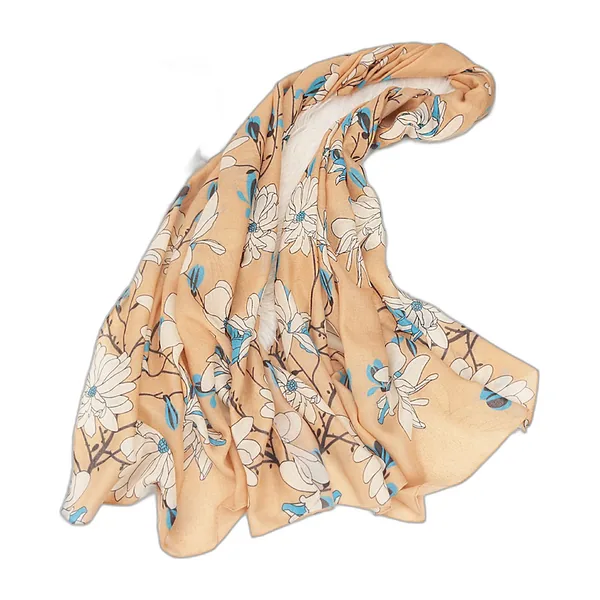 Cotton meditation shawl, 180 × 90 cm, floral print
A 180 × 90 cm floral cotton shawl: over the shoulders during pranayama, it keeps you warm without restricting the breath.
Cotton meditation shawl, 180 × 90 cm, floral print
A 180 × 90 cm floral cotton shawl: over the shoulders during pranayama, it keeps you warm without restricting the breath.
Free newsletter
One practical Ayurveda tip every Sunday
A seasonal habit, a recipe or a ritual taken from our articles, in a two-minute read. Your welcome gift: the 7-step Ayurvedic morning routine, unlocked right away. One-click unsubscribe.