Ghee vs Butter: What's the Difference for Cooking and Digestion?
Ayurveda favors ghee, but plain butter remains a perfectly reasonable choice in plenty of cases. Here are the real differences between the two, without the dogma.
In this article 7 sections
Ghee and butter share the same origin (cream), but ghee is clarified butter: the water and milk proteins (casein, lactose residue) have been removed through slow cooking, leaving only pure fat. The practical result: ghee handles higher cooking temperatures without burning, keeps longer without refrigeration, and often suits people sensitive to lactose or casein better — without being guaranteed 100% "lactose-free." Classic butter remains a perfectly reasonable choice for raw use or gentle heat, especially for reasons of cost or habit.
Ayurveda favors ghee for regular use and for cooking over heat, but that doesn't make butter an ingredient to ban.
What are the real differences between ghee and butter?
| Criterion | Ghee | Butter |
|---|---|---|
| Composition | Pure fat, no water or milk proteins | Fat + water + milk proteins (casein) |
| Smoke point | High (around 480°F / 250°C) | Lower (around 300–350°F / 150–175°C), burns faster |
| Storage | Several months at room temperature, away from moisture | A few weeks, refrigerated |
| Taste | Nutty, more concentrated | Milder and creamier |
| Lactose/casein tolerance | Generally better tolerated | Contains normal amounts of lactose and casein |
Why does Ayurveda favor ghee?
In Ayurvedic tradition, ghee is considered particularly digestible and an excellent carrier (anupana) for delivering herbal compounds into the body — which is why so many traditional preparations (golden milk, kitchari) use it as their fat base. Its stability under heat also makes it a practical choice for simmered or high-heat sautéed dishes, unlike butter, which burns and develops unwanted compounds beyond its smoke point.
When does plain butter remain a good choice?
- Raw or very-low-heat cooking: on toast, finishing a dish — where smoke point isn't a factor;
- Tight budget: butter is generally cheaper than ghee, especially organic or artisanal ghee;
- A specific taste: some recipes (baking in particular) rely specifically on the taste and texture of unclarified butter;
- Habit and availability: butter is sold everywhere, whereas ghee sometimes stays confined to specialty stores.
Nothing stops you from using both depending on the task: ghee for high-heat cooking and traditional Ayurvedic preparations, butter for everything else day to day.
Does ghee suit people who are lactose intolerant?
The clarification process removes the vast majority of lactose and casein, which explains why many lactose-intolerant people tolerate ghee better than butter. This is not, however, an absolute guarantee for everyone: people with a diagnosed milk protein allergy (as opposed to simple lactose intolerance) should stay cautious, since residual traces of casein can remain depending on how thoroughly the ghee was clarified.
How do you choose a good ghee if you go with it?
A quality ghee has a golden color, a clean nutty smell (never rancid), and a slightly grainy texture at room temperature. Homemade ghee remains the simplest guarantee of quality; when buying, favor ghee made from organic milk, ideally from grass-fed cows, with no additives or preservatives.
Precautions to keep in mind
Both ghee and butter remain saturated fats: consumption should stay reasonable and fit within an overall balanced diet, particularly for anyone under medical follow-up for cardiovascular disease or high cholesterol — a doctor can help you find the right amount for your situation. Neither should be presented as a remedy or a miracle food: they're cooking fats, to be used with common sense. General precautions appear in our safety guide.
Your questions about ghee vs butter
Is ghee healthier than butter?
It's not that clear-cut: ghee is better tolerated by people sensitive to lactose and handles high-heat cooking better, but both remain saturated fats to consume in moderation. Neither is a miracle food.
Can you replace butter with ghee in every recipe?
In most cases yes, with a slight quantity adjustment (ghee being more concentrated in fat). For certain baked goods that rely on the specific taste of unclarified butter, the result will differ without being worse.
Does ghee really keep without refrigeration?
Yes, properly made ghee (with no water residue) keeps for several months at room temperature, away from light and moisture, unlike butter, which needs refrigeration and keeps for a noticeably shorter time.
Is ghee suitable for lactose intolerance?
Generally better than butter, since clarification removes most of the lactose and casein. People with a diagnosed milk protein allergy should still be cautious, as residual traces can remain.
Our picks
Accessories chosen to go with this guide — prices in euros, VAT included, delivery in 8 to 15 business days, free from €39. Browse the whole shop.
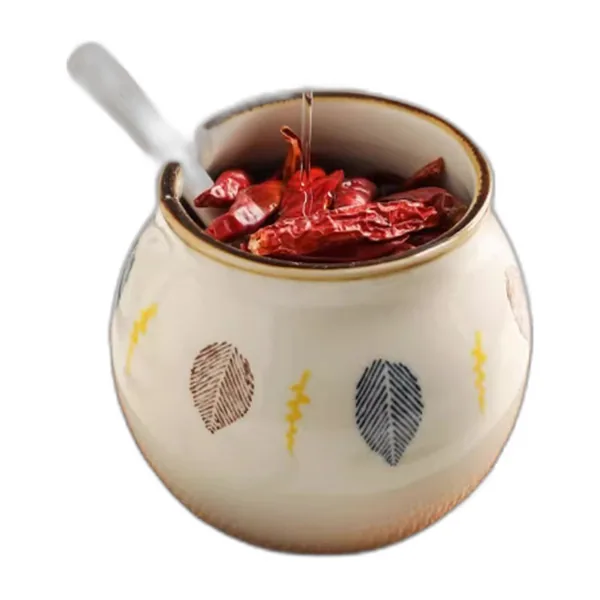 Leaf-painted ceramic jar, 670 ml, notched lid
A round cream ceramic jar painted with leaves, 670 ml, with a notched lid: the spoon stays in, and so does the ghee.
Leaf-painted ceramic jar, 670 ml, notched lid
A round cream ceramic jar painted with leaves, 670 ml, with a notched lid: the spoon stays in, and so does the ghee.
Free newsletter
One practical Ayurveda tip every Sunday
A seasonal habit, a recipe or a ritual taken from our articles, in a two-minute read. Your welcome gift: the 7-step Ayurvedic morning routine, unlocked right away. One-click unsubscribe.