Padabhyanga: The Foot Massage That Prepares You for Sleep
Ten minutes of warm oil on your feet before bed: of all the Ayurvedic evening rituals, padabhyanga is the one whose effect you feel from the very first night — and all it costs is a bottle of sesame oil.
In this article 9 sections
- Why does massaging your feet at night help you sleep?
- How to do padabhyanga, step by step
- Which oil should you choose for foot massage?
- The kansa bowl: the traditional tool that changes the massage
- How often should you do it?
- The warm foot bath: the oil-free version
- Precautions: when should you skip the oil foot massage?
- Padabhyanga, abhyanga, evening routine: how does it all fit together?
- Your questions
Padabhyanga is the Ayurvedic warm-oil foot massage, practiced in the evening before bed. It is the ritual tradition recommends first against trouble falling asleep and racing thoughts: massaging the feet with warm oil draws attention down from the head toward the lower body, relaxes the whole nervous system and prepares deeper sleep. No other evening ritual offers such a favorable effort-to-effect ratio: 10 minutes, one plant oil, no equipment required.
On the science side, there are no solid studies specific to padabhyanga — but the relaxing effect of foot massage is consistent with what we know about slow touch and the nervous system, and the experiment is easy to run: try it three nights in a row.
Why does massaging your feet at night help you sleep?
The Ayurvedic reading: sleep-onset insomnia is typically an excess of Vata — the dosha of movement, wind and mental agitation. Oil (heavy, warm, unctuous) is its exact antidote, and the feet are a privileged zone: tradition locates many vital points (marmas) there, connected to the whole body, including the eyes. Massaging the feet literally "grounds" energy downward.
The modern reading: slow, rhythmic, warm touch on a richly innervated area encourages the shift into parasympathetic mode — the mode of rest and digestion. Add the mini-ritual itself (screens down, sitting still, breathing) and you get a powerful bedtime cue, exactly what sleep specialists recommend.
How to do padabhyanga, step by step
- Prepare: wash your feet in warm water (or use your evening shower), dry them well. Put a towel under your feet — oil stains.
- Warm 1 to 2 tablespoons of oil: run the bottle under hot water, or set a small bowl of oil inside a bowl of hot water for a minute.
- The sole: with a wrapping palm, massage the arch in long, firm strokes from heel to toes, then draw circles with your thumb over the whole sole. 2 to 3 minutes per foot.
- The toes: gently stretch and roll each toe between thumb and index finger.
- Top of the foot and ankles: soft gliding strokes between the tendons, then circles around the ankle bones.
- Finish with a still, steady press of a few seconds at the center of the sole, the foot held between both hands.
Allow 5 to 10 minutes for both feet. Then: thin cotton socks to protect the sheets, and off to bed. Express version for exhausted evenings: 2 minutes on the soles is already effective.
Which oil should you choose for foot massage?
| Oil | Profile / season | Effect |
|---|---|---|
| Virgin sesame | Vata, winter, cold feet — the default choice | Warming, nourishing, the most widely used |
| Coconut | Pitta, summer, feet that run hot at night | Cooling, light |
| Mustard (diluted) | Kapha, very cold feet, harsh winters | Very warming — test on a small area first |
| Ghee | Burning sensation in the feet, use with a kansa bowl | Soothing, traditional for hot feet |
The benchmark: a virgin, organic, cold-pressed oil — our guide to sesame oil explains "curing," the traditional pre-heating that improves absorption, and our overview of massage oils by dosha helps you fine-tune for your profile.
The kansa bowl: the traditional tool that changes the massage
Padabhyanga has its own dedicated implement: the kansa bowl, a small bronze bowl (a copper-tin alloy) whose rounded back is rubbed over the sole of the foot coated with ghee. Tradition credits it with "absorbing excess heat" — practitioners mostly appreciate the particular glide of the metal and the deeply calming effect of the slow, steady rubbing. It is in no way required: hands make an excellent padabhyanga. If the object tempts you, our guide to the kansa bowl covers the alloy, the ghee technique and typical prices (generally $20 to $40, at Ayurvedic retailers online).
How often should you do it?
Tradition places padabhyanga in the evening ritual, every day: brief and localized, it is far easier to keep up than a full-body abhyanga, and a few minutes each evening count for more than one long weekly session.
| Rhythm | Context | Suggested duration |
|---|---|---|
| Daily, in the evening | The traditional reference, before bed | 5 to 10 minutes per foot |
| 3 to 4 times a week | A realistic alternative if daily isn't sustainable | 5 minutes per foot |
| Daily, reinforced | Weeks of long walks, tight shoes, heavy legs | 10 minutes per foot, slightly firmer pressure |
| Occasional | A one-off for cold feet or tension before sleep | A few minutes |
Padabhyanga itself has not been tested in clinical trials. The closest data concern foot reflexology, a related gesture with a different theory: a meta-analysis by Huang and colleagues in the Journal of Advanced Nursing (2021), covering 42 randomized trials and 3,928 participants, found an improvement in sleep disturbances (see the study). These were mostly practitioner-led sessions, so it is an indirect hint, not proof for home self-massage.
The warm foot bath: the oil-free version
On evenings without oil, the evening routine also includes a simple warm foot bath: feet soaked up to the ankles for 15 to 20 minutes, about an hour before bed. Tradition reads it the same way as the massage: warmth at the extremities calms Vata, the dosha of restlessness and cold feet. It can also precede the massage: dry well between the toes, then move on to the oil.
| Step | Detail |
|---|---|
| Timing | About an hour before bed |
| Water temperature | Around 40 °C (104 °F): pleasantly warm, tested with the hand first |
| Duration | 15 to 20 minutes, feet immersed up to the ankles |
| Optional | A handful of salt; warm water alone is enough |
| Afterward | Dry thoroughly between the toes, then padabhyanga if you like |
In a randomized comparative study by Güven in the Journal of Gerontological Nursing (2022), 100 older adults did either a warm foot bath every evening one hour before bed or foot reflexology twice a week, for six weeks: sleep-quality scores (Pittsburgh index) improved in both groups, with no significant difference between them (see the study). There was no untreated control group and it concerned older adults only. With peripheral neuropathy or diabetes, test the water with your hand (burns can go unnoticed) and check your feet for wounds; with varicose veins, keep the water lukewarm rather than hot.
Precautions: when should you skip the oil foot massage?
- Wounds, athlete's foot or other fungal infections, infected ingrown nails: no massage on broken or infected skin — treat that first.
- Diabetes: diabetic feet call for special vigilance (reduced sensation, slow healing) — ask your doctor's advice, massage very gently and inspect the skin.
- Blood clot (DVT) or any suspicion of one (a warm, swollen, painful calf): no massage at all, seek urgent medical care.
- Pregnancy: gentle foot massage is generally welcome, but mention it to your midwife or OB-GYN, who will tell you which areas are traditionally avoided.
- Slipping risk, a real one: never walk on tile with oiled feet; socks every time after the massage.
And as always: chronic insomnia, persistent foot pain or tingling belong with a doctor. Full guidelines in our safety guide.
Padabhyanga, abhyanga, evening routine: how does it all fit together?
Padabhyanga is the targeted — and most realistic for daily life — version of the great self-massage abhyanga, which covers the whole body and is practiced mostly in the morning. In the evening, the traditional sequence looks like this: an early, light dinner, screens off, perhaps a warm drink, foot massage, lights out by 10:30 pm — that is the outline of ratricharya, the complete evening routine. If you were to keep only one practice from that whole list, tradition and practitioners' experience agree: it is the ten minutes of oil on your feet.
Your questions about padabhyanga
Does an oil foot massage really help you sleep?
It is the evening ritual most recommended by the Ayurvedic tradition against trouble falling asleep, and the mechanism is plausible: slow, warm touch on a richly innervated area, a shift toward relaxation, a consistent bedtime cue. There are no solid studies specific to it, but the experiment costs nothing: three nights are enough to judge for yourself.
Which oil should you use for an evening foot massage?
Virgin sesame oil is the default choice: warming, nourishing, suited to cold feet and Vata profiles. Go for coconut oil instead if your feet run hot at night (Pitta profile), and ghee for a burning sensation in the feet. Always virgin, organic, cold-pressed — from a health food store or online — and warmed before use.
Should you rinse the oil off after a foot massage?
No: you let the oil absorb overnight, wearing thin cotton socks to protect the sheets and prevent slipping. The skin absorbs most of it within a few hours. If the oily film bothers you, simply wipe off the excess with the towel before getting into bed.
What is a kansa bowl and do you need one?
The kansa bowl is a small bronze bowl whose rounded back is rubbed over the soles coated with ghee — the traditional padabhyanga accessory, reputed to soothe heat and restlessness. It is not at all essential: hands make an excellent massage. It is a refinement to explore later, for roughly $20 to $40.
Can you do padabhyanga every night?
Yes — that is in fact the traditional use: a daily foot massage at bedtime, 5 to 10 minutes. The only limits are occasional contraindications (wounds, fungal infections, suspected blood clot) and common sense: if the skin gets irritated, space it out. Many people in practice save it for stressful periods or restless evenings — and that alone is already very useful.
Can you do padabhyanga in the morning instead of the evening?
Yes, but the sleep-onset effect it is known for belongs to the evening. A morning foot massage can be done for flexibility and circulation, without expecting the same benefit on sleep; if you do it before walking, wipe off excess oil to avoid slipping.
Is a warm foot bath before bed a good alternative to the oil massage?
Yes, on evenings without oil: 15 to 20 minutes with the feet in water at about 40 °C (104 °F), an hour before bed. A 2022 study in 100 older adults found sleep quality improved with a nightly foot bath as much as with reflexology, without an untreated comparison group. Be careful with diabetes or reduced foot sensation.
Our picks
Accessories chosen to go with this guide — prices in euros, VAT included, delivery in 8 to 15 business days, free from €39. Browse the whole shop.
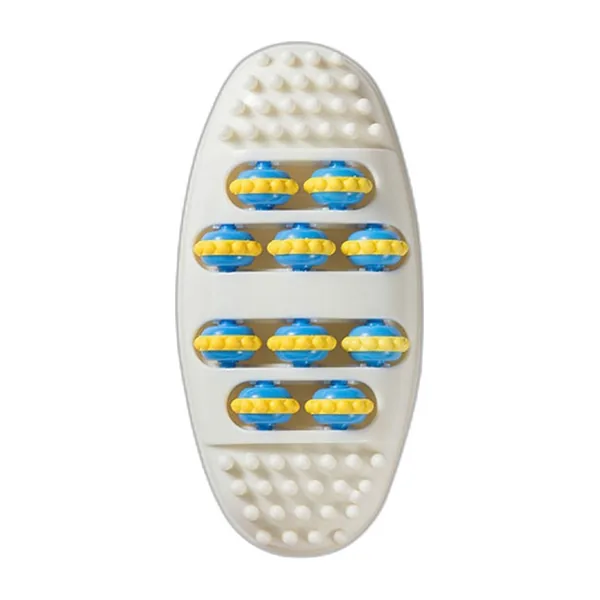 Double foot massage roller
A 28 cm foot roller with ridged rollers and nubs: roll your soles over it, seated, while the tea brews.
Double foot massage roller
A 28 cm foot roller with ridged rollers and nubs: roll your soles over it, seated, while the tea brews.
Free newsletter
One practical Ayurveda tip every Sunday
A seasonal habit, a recipe or a ritual taken from our articles, in a two-minute read. Your welcome gift: the 7-step Ayurvedic morning routine, unlocked right away. One-click unsubscribe.