Cardamom vs Cinnamon: Plant, Taste, Uses and Safety Compared
They sit side by side in every chai, yet they come from unrelated plants, taste nothing alike and carry different safety notes. Here is a clear side-by-side, including the coumarin question that makes Ceylon vs cassia matter.
In this article 6 sections
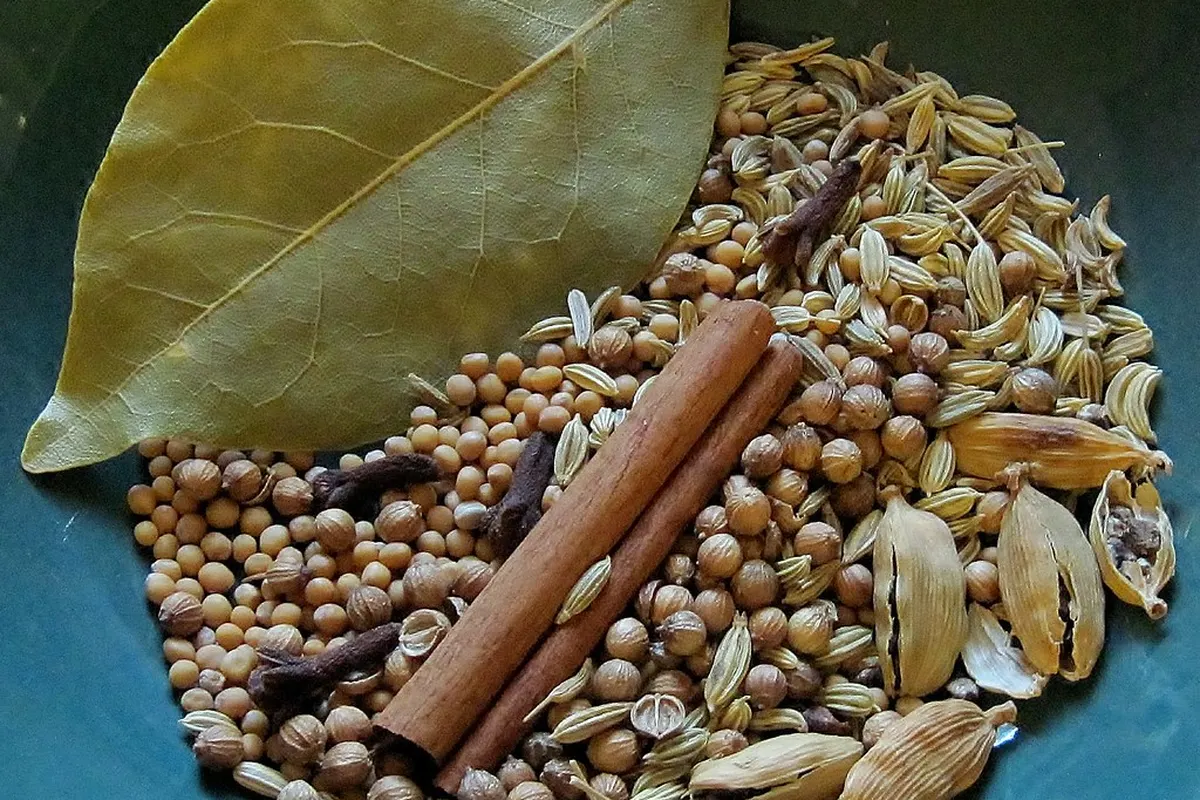
Cardamom and cinnamon are unrelated spices. Cardamom (elaichi) is the seed pod of Elettaria cardamomum, a plant of the ginger family; its flavour is fresh, resinous and slightly eucalyptus-like. Cinnamon (dalchini) is the dried inner bark of Cinnamomum trees, of the laurel family, with a sweet, woody warmth. In Ayurveda, cardamom is the gentler of the two and is described as suitable for all doshas, while cinnamon is clearly heating. On safety, the real difference is coumarin: it is abundant in cassia cinnamon, found only in traces in Ceylon cinnamon, and absent as a concern for cardamom.
Side-by-side comparison
| Criterion | Cardamom | Cinnamon |
|---|---|---|
| Plant and part used | Seed pods of Elettaria cardamomum (green cardamom), family Zingiberaceae. Black cardamom is a different plant, Amomum subulatum. | Inner bark of Cinnamomum verum (Ceylon, "true" cinnamon) or of cassia species: C. cassia, C. burmannii, C. loureiroi. Family Lauraceae. |
| Names | Elaichi (Hindi), ela (Sanskrit) | Dalchini (Hindi), tvak (Sanskrit) |
| Main aroma compounds | 1,8-cineole and alpha-terpinyl acetate: cool, camphor-like, floral | Cinnamaldehyde: sweet, warm, woody |
| Taste profile | Pungent and sweet, fresh finish | Sweet, pungent, slightly astringent |
| Ayurvedic energetics (classical descriptions) | Mildly warming at most; tolerated by Pitta; used to lighten milk, coffee and sweets | Heating; favoured for Vata and Kapha, moderated for Pitta |
| Typical kitchen use | Chai, rice dishes, kheer, coffee, lassi | Chai, curries, porridge, baking |
| Price | One of the most expensive spices by weight | Cassia cheap; Ceylon several times dearer |
| Main safety point | None specific at culinary doses | Coumarin in cassia (liver); lead contamination found in some imported ground cinnamon |
Taste: why they do not replace each other
If a recipe calls for one and you only have the other, expect a different dish. Cardamom lifts and cools the palate: a crushed pod in black coffee or rice pudding reads as "fresh". Cinnamon rounds and sweetens: it makes a porridge taste richer without sugar. That is why masala chai uses both: cinnamon for body, cardamom for brightness. If you must substitute, nutmeg or allspice is closer to cinnamon; for cardamom there is no real stand-in.
How Ayurveda uses each
Cardamom is the spice Ayurvedic cooks add to foods considered heavy or mucus-forming, such as milk, sweets and coffee, to make them easier to digest. Classical materia medica describe it as pungent and sweet, and gentle enough to be widely tolerated, including by Pitta types who react badly to strong heating spices.
Cinnamon is used when digestion feels cold and slow: poor appetite, heaviness after meals, cold hands and feet in winter. Its heating quality suits Vata and Kapha, but in a Pitta type with acid reflux or a tendency to feel hot it is moderated or replaced by cardamom, fennel or coriander. These are traditional frameworks, not clinically tested indications.
What the research says about cinnamon's coumarin
Coumarin is a natural compound that damages the liver at high doses. The European Food Safety Authority set a tolerable daily intake of 0.1 mg of coumarin per kg of body weight in 2004 and kept it after re-evaluating the data (EFSA Journal, 2008). For a 60 kg adult that is 6 mg a day; for a 20 kg child, 2 mg.
Researchers at Germany's Federal Institute for Risk Assessment reviewed the human data and reached the same figure, noting that a subgroup of people appears more sensitive to coumarin's liver effects than lab animals, and that heavy consumers of cassia cinnamon can reach the tolerable intake (Abraham et al., Molecular Nutrition and Food Research, 2010).
In the United States, a University of Mississippi team analysed authenticated barks and store-bought products. Ceylon cinnamon contained only traces of coumarin, whereas all three cassia species contained substantial amounts; coumarin was detected in every locally bought cinnamon, cinnamon-flavoured food and cinnamon supplement tested, most of which appeared to be Indonesian cassia (Wang et al., Journal of Agricultural and Food Chemistry, 2013). In practice: supermarket "cinnamon" in the US is usually cassia unless the label says Ceylon or Cinnamomum verum. Our guide to choosing cinnamon covers labels.
Coumarin content varies widely between batches, so there is no reliable "safe number of teaspoons" of cassia. Using cassia now and then in cooking is not the issue; a daily spoonful in porridge or smoothies, or cinnamon supplements, is where exposure adds up, especially for children.
Precautions
- Cinnamon and the liver: if you have liver disease or take medicines that can affect the liver, prefer Ceylon cinnamon and avoid cinnamon supplements unless your doctor agrees.
- Cinnamon and diabetes medication: cinnamon is marketed for blood sugar, with inconsistent trial results. If you take glucose-lowering drugs, discuss concentrated cinnamon with your doctor before adding it.
- Lead in imported ground cinnamon: after lead-contaminated cinnamon applesauce pouches sickened children in 2023, the FDA issued alerts on several ground cinnamon brands with elevated lead. Check that alert list, and consider whole sticks you grind yourself.
- Supplements: in the US, cinnamon and cardamom capsules are dietary supplements, which the FDA does not approve before they are sold; their content and purity depend on the manufacturer.
- Cardamom: no specific concern at culinary doses. Some references advise caution with concentrated doses in people with gallstones, on theoretical grounds rather than data.
- Pregnancy, breastfeeding, children: both spices are fine in normal food amounts; avoid supplements and essential oils. For children, use Ceylon cinnamon if it is a daily habit.
See also cinnamon risks in detail and our safety and precautions guide.
Your questions about cardamom vs cinnamon
What is the difference between cardamom and cinnamon?
Cardamom is the seed pod of a plant in the ginger family, with a fresh, resinous flavour. Cinnamon is the inner bark of Cinnamomum trees, sweet and woody. They are unrelated botanically and do not substitute well for each other.
Is cardamom or cinnamon healthier?
Neither is a treatment. Both are safe in normal cooking. The main difference is that cassia cinnamon contains coumarin, which can harm the liver in large regular amounts, while cardamom has no comparable concern.
How much coumarin is too much?
EFSA's tolerable daily intake is 0.1 mg per kg of body weight: about 6 mg a day for a 60 kg adult. Cassia can contain substantial and variable amounts, so daily heavy use, especially by children, can reach this level. Ceylon cinnamon contains only traces.
Which is better for Pitta, cardamom or cinnamon?
In Ayurveda, cardamom. It is only mildly warming and widely tolerated by Pitta, whereas cinnamon is clearly heating and is moderated in people prone to heat or reflux.
Can I use cardamom instead of cinnamon in a recipe?
Not as a like-for-like swap: cardamom tastes fresh and camphor-like, cinnamon sweet and woody. Nutmeg or allspice are closer substitutes for cinnamon.
Free newsletter
One practical Ayurveda tip every Sunday
A seasonal habit, a recipe or a ritual taken from our articles, in a two-minute read. Your welcome gift: the 7-step Ayurvedic morning routine, unlocked right away. One-click unsubscribe.