Ayurvedic Tea Shelf Life: How Long It Keeps
A tea does not “rot,” but it fades: its aromas and volatile compounds drift away over time. Here is how long to keep it and how to protect it.
In this article 6 sections
Ayurvedic teas keep, as a rough guide, for 6 to 18 months depending on the herb, in an airtight container, in a dry spot away from light. They do not “expire” the way a fresh food does: well stored, they do not become dangerous, but they lose their aroma and volatile compounds. An old tea gives a bland, less potent brew, without being toxic.
In practice: the best cue is not so much the date as the smell. A tea that no longer smells like much has already let go of most of what made it worthwhile.
How long do they keep?
| Type | Indicative duration |
|---|---|
| Leaves/flowers (tulsi, mint, hibiscus) | 6 to 12 months |
| Roots and barks (dried ginger, licorice, cinnamon) | 12 to 18 months |
| Seeds (fennel, cumin, coriander) | About 12 months |
| Spiced blends (CCF-type, chai) | 6 to 12 months |
The most aromatic and volatile parts (leaves, flowers, ground seeds) fade faster than whole roots and barks. A blend such as masala chai or a digestive infusion mostly loses fragrance. Our buying benchmarks are in Ayurvedic tea, our review.
Loose leaf or tea bags: what is the difference?
Loose leaf often keeps better if transferred into an airtight jar, since whole herbs hold their aroma longer than finely cut ones. Tea bags are convenient and protect each dose from air, but the herb inside is more fragmented, so more exposed. Either way, seal the container well after each use.
How should you store them?
- Airtight jar or opaque box: away from air.
- Dry: moisture encourages mold and clumping.
- Away from light: it fades color and degrades sensitive compounds.
- Away from heat and strong odors: herbs readily pick up nearby smells (coffee, spices).
A study on the shelf life of dried Ayurvedic herbs, published in the Journal of Ayurveda and Integrative Medicine, shows that phytochemical compounds decline gradually depending on storage conditions — air, light and moisture speeding up the loss. The same rules apply to Ayurvedic powders.
Signs a tea has lost its value
- Faded smell: it smells like little or nothing: the aromas are gone.
- Paled color: flowers and leaves have browned or dulled.
- Flavorless brew: the final test; if the water stays bland, it is time to replace it.
- Moisture, mold, suspect spots: here, discard it (a sign of poor storage).
Precautions
A simply aged tea is not dangerous, but a dampened or moldy tea should be discarded. Remember that “natural” does not mean “without precautions”: some herbs (licorice, senna, warming herbs) keep their contraindications, fresh or not — see our safety guide. If pregnant, breastfeeding, or on medication, always check the compatibility of the herbs in your blend.
Your questions about ayurvedic tea shelf life
Is an expired tea dangerous?
A simply aged tea is not dangerous: it has mostly lost its aroma and some of its active compounds, giving a bland brew. A dampened, clumped, or moldy tea, on the other hand, should be discarded, since contamination is the real issue there.
How long does an Ayurvedic tea keep?
As a rough guide, 6 to 12 months for leaves, flowers and seeds, up to 12 to 18 months for whole roots and barks, provided storage is airtight, dry and away from light. The best cue remains smell: a tea that no longer smells like much has run its course.
Should tea be stored in a jar or in its original packaging?
An airtight jar or an opaque box is ideal, especially for loose leaf. If you keep the original pouch, reseal it well after each use. The key is limiting air, light and moisture, and keeping herbs away from strong smells they easily pick up.
How do I know if my tea is still good?
Smell it: a fresh tea is fragrant. If the smell has faded and the color has dulled, it has lost its value. Do the brew test: if the water stays flavorless, replace it. Any trace of moisture or mold means it must be discarded.
Our picks
Accessories chosen to go with this guide — prices in euros, VAT included, delivery in 8 to 15 business days, free from €39. Browse the whole shop.
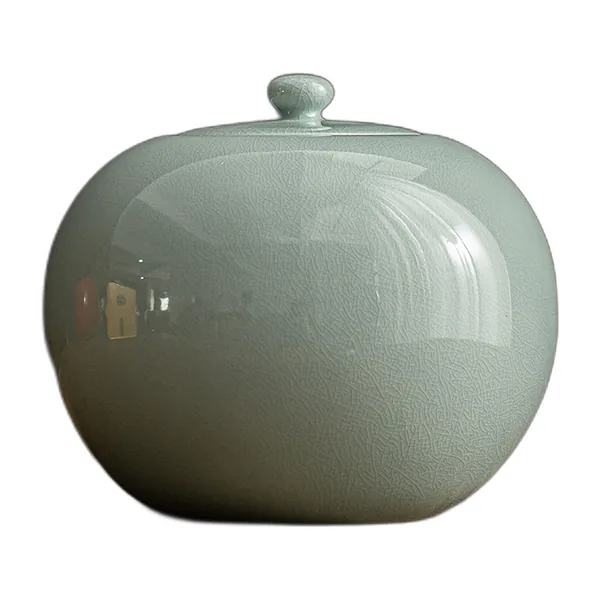 Large glazed porcelain tea jar, 3.8 litres
A round 3.8-litre glazed porcelain jar in crackle celadon or deep red: your loose tea supply becomes the best-looking thing on the shelf.
Large glazed porcelain tea jar, 3.8 litres
A round 3.8-litre glazed porcelain jar in crackle celadon or deep red: your loose tea supply becomes the best-looking thing on the shelf.
Free newsletter
One practical Ayurveda tip every Sunday
A seasonal habit, a recipe or a ritual taken from our articles, in a two-minute read. Your welcome gift: the 7-step Ayurvedic morning routine, unlocked right away. One-click unsubscribe.