Essential Oil Diffusers in Ayurveda: Use, Suitable Oils and Precautions
A diffuser running all day has nothing Ayurvedic about it: tradition favors targeted moments, oils chosen by dosha, and a well-ventilated room. The full how-to.
In this article 6 sections
An essential oil diffuser can fit into an Ayurvedic routine as long as you follow two principles: choose the oil based on the time of day and the dosha to balance rather than at random, and limit diffusion to short, well-ventilated sessions rather than running it continuously all day. It is not a permanent scented backdrop, but a targeted tool, on par with a massage or a cup of herbal tea within dinacharya.
This article complements our comparison of essential oil vs. vegetable oil, which covers the oils themselves, by focusing here on the diffusion method and the precautions specific to this use.
Which oils to diffuse depending on the time of day?
| Time | Goal | Traditionally associated oils |
|---|---|---|
| Morning, waking up Kapha | Stimulate, wake up | Ginger, cinnamon, eucalyptus, citrus |
| Daytime, focus | Mental clarity, without overstimulation | Vetiver, rosemary in moderate amounts |
| Late day, Pitta excess | Cool down, soothe irritability | Diluted peppermint, rose, sandalwood |
| Evening, Vata excess | Calm, prepare for sleep | Lavender, sandalwood, cedarwood |
This logic echoes what we already detailed for vetiver water: no oil is “good” or “bad” in absolute terms, it adapts to the moment and the imbalance to correct.
How to fit a diffuser into a dinacharya routine?
- In the morning: ten to fifteen minutes of stimulating diffusion during your wake-up routine (washing up, preparing breakfast), with a window cracked open if the weather allows.
- During the day: a short diffusion before a task that requires focus, rather than continuous running that eventually stops being noticed (olfactory fatigue) and needlessly exposes the room to prolonged concentration.
- In the evening: fifteen to twenty minutes at the start of ratricharya (the evening routine), before bed rather than running all night — a diffuser running during sleep exposes you to prolonged, uncontrolled inhalation, best avoided as a precaution.
Air out the room between sessions: continuous diffusion does not improve the intended effect, it simply saturates the air with a scent that the nose quickly gets used to.
What does research say about essential oil safety?
A systematic review by Pezantes-Orellana and colleagues, published in 2025 in Frontiers in Medicine, covering 70 studies from the past decade, confirms the interest of certain essential oils under controlled use, but also highlights the range of possible reactions to exposure — respiratory irritation, headaches, skin reactions in case of direct contact with skin or mucous membranes. This review focuses mainly on skin application rather than atmospheric diffusion, but its central message — dilution and moderation reduce risks, prolonged and uncontrolled exposure increases them — applies directly to the short-session diffusion approach recommended here.
Which diffuser should you choose?
An ultrasonic diffuser (using water) remains best suited to regular household use: it does not heat the oil, preserving its volatile compounds, and makes it easy to control the amount of oil used. Nebulizing diffusers (waterless, diffusing pure oil in fine particles) are more powerful but release a higher concentration into the air, best reserved for large rooms and even shorter sessions. Avoid flame-based oil burners, which heat the oil and alter its chemical composition through heat.
Precautions
- Young children: many essential oils (eucalyptus and peppermint, in particular) are discouraged for diffusion in a room where an infant or young child sleeps; check oil by oil before diffusing around children.
- Pregnancy: several essential oils should be avoided for diffusion during pregnancy, particularly in the first three months; ask a healthcare professional for advice.
- Asthma and respiratory sensitivity: diffusion can trigger breathing discomfort in people with asthma or allergies; always test a short session before a longer diffusion.
- Pets: some essential oils are toxic to cats in particular; avoid diffusing in a room shared with a pet without checking beforehand.
- Air out the room systematically between diffusion sessions, and never diffuse continuously for several hours or an entire night.
Precautions specific to each essential oil are detailed in our comparison of essential oil vs. vegetable oil and in our safety and precautions guide.
Your questions about essential oil diffusers in ayurveda
Can you leave an essential oil diffuser running all night?
This is not recommended as a precaution: continuous diffusion exposes you to prolonged, uncontrolled inhalation. It is better to diffuse for fifteen to twenty minutes before bed, at the start of your evening routine, then turn the device off.
Which essential oil should you diffuse in the evening to calm Vata?
Lavender, sandalwood, or cedarwood are traditionally associated with evening calm and easing Vata excess. Diffuse them for fifteen to twenty minutes before bed rather than all night.
Is an ultrasonic diffuser better than a nebulizing one?
An ultrasonic diffuser suits daily household use better: it does not heat the oil and allows for easy dosing. Nebulizing diffusers, more powerful, release a higher concentration and are best reserved for large rooms over shorter periods.
Can you diffuse essential oils around a baby?
With great caution: several common oils (eucalyptus, peppermint) are discouraged in a room where an infant sleeps. Check oil by oil, and when in doubt, favor not diffusing around very young children.
Does diffusing essential oils carry a health risk?
A 2025 review (Pezantes-Orellana et al., Frontiers in Medicine) notes that essential oils can cause respiratory irritation and headaches with prolonged or undiluted exposure. Dilution and moderate diffusion times markedly reduce these risks.
Our picks
Accessories chosen to go with this guide — prices in euros, VAT included, delivery in 8 to 15 business days, free from €39. Browse the whole shop.
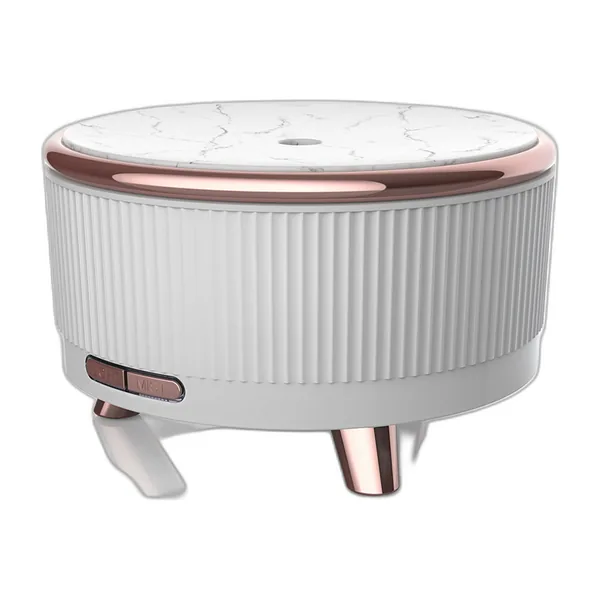 500 ml ultrasonic diffuser, EU plug
A 500 ml cool-mist diffuser with timer and night light: the room softens without flame or heat, and it switches itself off.
500 ml ultrasonic diffuser, EU plug
A 500 ml cool-mist diffuser with timer and night light: the room softens without flame or heat, and it switches itself off.
Free newsletter
One practical Ayurveda tip every Sunday
A seasonal habit, a recipe or a ritual taken from our articles, in a two-minute read. Your welcome gift: the 7-step Ayurvedic morning routine, unlocked right away. One-click unsubscribe.