Stretching After Exercise: What Ayurveda (and Science) Suggest
After a workout, the temptation is to stretch for fifteen seconds standing up, then head straight for the shower. Ayurveda offers a calmer ritual — and the research is more nuanced than commonly believed about what stretching actually delivers.
In this article 7 sections
Stretching after exercise, from an Ayurvedic standpoint, is not primarily meant to "get rid of soreness" — research shows its effect on that specific point is modest — but to guide the body through a gentle transition: slowing the breath, letting the heart rate come down, and lightly working the tissues that were just called into action. It is a cool-down ritual more than a soreness treatment.
This article pairs with our guide on warming up before exercise: where warming up prepares the body for effort, this one accompanies it afterward. It also complements our article on muscle soreness after exercise, which covers the soreness itself rather than the ritual around it.
What Ayurveda offers after exercise
Within the logic of dinacharya, every transition is prepared for rather than forced — the cool-down after exercise is part of that. The traditional ritual combines three simple elements: breathing that deliberately slows the heart rate, gentle stretches held only briefly on the muscle groups that were worked, and, when possible, a few minutes of lying down before moving on with the rest of the day. The goal is not performance but calming the nervous system, which is called upon by effort just as much as the muscles are.
The concrete protocol, step by step
- A slow walk or light movement for two to three minutes to gradually bring the heart rate down, rather than an abrupt stop.
- Slow nasal breathing, a few cycles, to bring attention back into the body and signal to the nervous system that the effort is over.
- Gentle stretches, held for fifteen to thirty seconds without forcing, on the main muscle groups worked — never pushing to the point of pain, since the goal is comfort rather than gaining range of motion.
- Hydration and, if the opportunity arises, a few minutes lying down with legs slightly elevated, to support venous return.
| Step | Content | Suggested duration |
|---|---|---|
| 1. Slow walk | Gradual return to calm, no abrupt stop | 2 to 3 min |
| 2. Breathing | Slow nasal breathing, attention on the body | 1 to 2 min |
| 3. Gentle stretches | Held without forcing, muscle groups worked | 5 to 10 min |
| 4. Rest | Lying down if possible, hydration | 5 min |
What does research really say about stretching and soreness?
This is where honesty matters more than reassurance. A landmark systematic review by Herbert and Gabriel, published in 2002 in the British Medical Journal (vol. 325, no. 7362, p. 468), analyzed the available studies on the effect of stretching, before or after exercise, on soreness (delayed-onset muscle soreness, or DOMS) and injury risk. Its conclusion: stretching produces a weak, statistically non-significant reduction in soreness, whether done before, after, or both before and after exercise (see the study).
In other words, stretching after exercise does not reliably prevent the soreness that classically appears 24 to 48 hours later. This finding, confirmed by later work updating this review, does not make stretching useless, however: it retains real value for immediate muscle relaxation, medium-term joint mobility, and above all for ritualizing a cool-down moment after effort — a different benefit than the one it is often wrongly credited with.
Why stretch anyway, if not for soreness?
| Expected benefit | What the data shows |
|---|---|
| Reduced soreness (DOMS) | Weak, non-significant effect according to the reference review |
| Injury prevention | Limited, mixed data, no solid evidence of a protective effect |
| Immediate muscle relaxation and comfort | Widely reported felt benefit, consistent with dinacharya practice |
| Medium-term joint mobility | Regular stretching work, away from exercise sessions, maintains joint range of motion |
This distinction is exactly why the ritual is worth keeping — not as an anti-soreness measure, but as a useful transition moment in its own right, consistent with the spirit of dinacharya, which structures each part of the day rather than rushing through it.
When should you favor something other than stretching?
After a very intense or unusual effort, our article on muscle soreness after exercise details complementary measures (local heat, light walking on following days, hydration) that have shown more benefit than stretching alone for overall comfort. For people returning to activity after a break, our guides on fragile knees in sport and on adapting exercise to your dosha usefully complement this approach to the cool-down.
Precautions
A stretch should never be pushed to the point of pain: sharp discomfort during stretching, pain lasting beyond a few days, or localized swelling are not simply a matter of not stretching enough and deserve medical or physical therapy advice rather than insisting on the movement. People with a pre-existing joint or tendon condition should seek advice before making stretching a systematic part of their post-exercise routine. For the full set of precautions applicable to Ayurvedic practices, see our safety and precautions guide.
Your questions about stretching after exercise
Does stretching after exercise prevent soreness?
Not reliably: a landmark systematic review (Herbert and Gabriel, 2002, BMJ) shows a weak, non-significant effect of stretching, before or after exercise, on soreness. Stretching remains useful for other reasons, but not as guaranteed prevention of DOMS.
Should you still stretch after exercise?
Yes, but for benefits other than preventing soreness: immediate muscle relaxation, ritualizing the cool-down, and maintaining medium-term joint mobility. It is a comfort and transition gesture, not a pain treatment.
How long should you hold a stretch after exercise?
Fifteen to thirty seconds per stretch is enough, without forcing to the point of pain. The goal is comfort and relaxation, not maximum flexibility gain, which is better worked on away from workout sessions.
What is the difference with warming up before exercise?
Warming up mobilizes the body in motion and prepares it for the effort ahead, without a held static stretch. Stretching after exercise comes once the effort is over, to support the cool-down, in a different context where the body is already warm.
What should you do if pain appears during a stretch?
Stop immediately: sharp pain during a stretch is not normal and should never be "pushed through." If it persists beyond a few days or comes with swelling, see a doctor or physical therapist.
Our picks
Accessories chosen to go with this guide — prices in euros, VAT included, delivery in 8 to 15 business days, free from €39. Browse the whole shop.
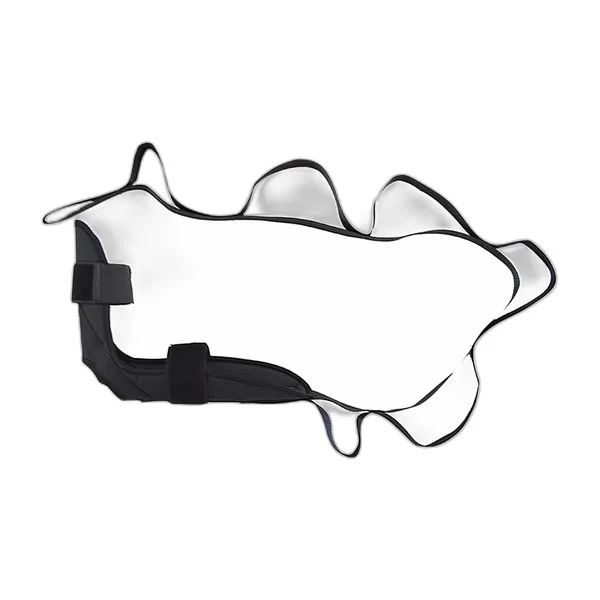 Looped stretching strap with foot cradle
A 155 cm strap with fixed loops and a padded foot cradle: hold a leg stretch without tensing your shoulders, and move up a loop as the muscle lets go.
Looped stretching strap with foot cradle
A 155 cm strap with fixed loops and a padded foot cradle: hold a leg stretch without tensing your shoulders, and move up a loop as the muscle lets go.
Free newsletter
One practical Ayurveda tip every Sunday
A seasonal habit, a recipe or a ritual taken from our articles, in a two-minute read. Your welcome gift: the 7-step Ayurvedic morning routine, unlocked right away. One-click unsubscribe.