Indian Cooking Techniques: the 12 Gestures Behind Every Home-Cooked Indian Dish
This €19 printable guide teaches the 12 techniques that Indian home cooking rests on, one gesture at a time: tadka at the start and at the end (with 5 variations), bhuna, dum, dry roasting, pressure cooking, steaming idli and dhokla, kneading and cooking roti, rice by the absorption method and deep frying. A chapter on fats compares ghee, mustard, coconut, sesame, peanut and black seed oil with smoke points from published food-science sources, then 24 practice recipes (2 per technique), a rescue chart and a printable equipment list.
Who it is for: You cook Indian dishes from recipes and want to understand what you are doing, so they come out right every time.
€19
Get my guide — €19Refunded within 14 days if a guide is not useful to you: write to us, no questions asked.
After you pay
- The next page gives you your access link: read on screen, save as a PDF or print.
- An email follows from “Ayurveda Guide”, subject “Your downloads — Ayurveda Guide”, with the same links.
- Lost it? Find my purchases with the email you paid with.
- No account to create, no phone call, no text message.
Practical guide · printable PDF · 60 A4 pages · Beginner to confident cook · 1 h 15 of reading, 12 weeks of practice at one gesture a week · See a real page of the guide
Secure payment by Stripe (card, Apple Pay, Google Pay) · VAT included
What you get
- The guide “Indian Cooking Techniques” as a PDF, 60 A4 pages
- 22 chapters, from principle to everyday practice
- 10 studies cited, each with its DOI or PubMed record
- Instant access + link by email
- Phone, tablet, computer or paper
In pictures
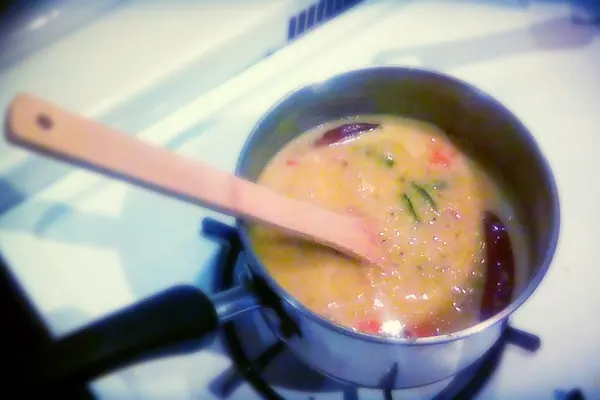
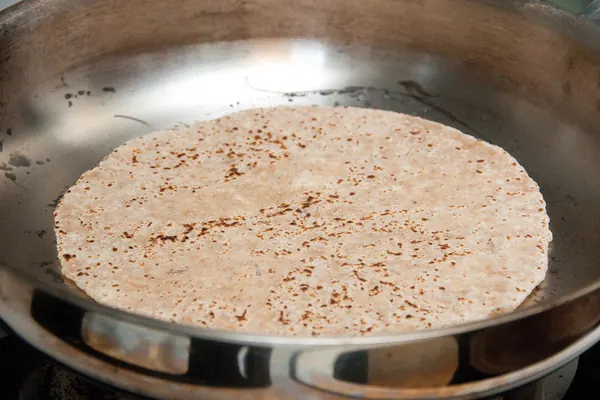
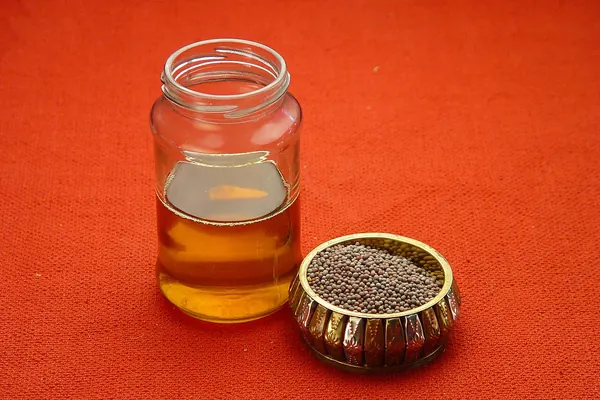

Illustrative photos, taken by their authors and published under free licences.
Verified, source by source
- 85automated checks on every site update
- 10studies cited in this guide, each checked on Crossref or PubMed
- October 2026guides last updated
Sources cited in this guide
- Petersen KS, Maki KC, Calder PC, Belury MA, et al. Perspective on the health effects of unsaturated fatty acids and commonly consumed plant oils high in unsaturated fat. British Journal of Nutrition, 2024;132(8):1039-1050. Review; its Table 4 gives typical smoke points of commercial vegetable oils measured on various batches (not a statistical mean). https://doi.org/10.1017/S0007114524002459
- Ahmad N, Saleem M. Studying heating effects on desi ghee obtained from buffalo milk using fluorescence spectroscopy. PLOS ONE, 2018;13(5):e0197340. Laboratory study: ghee heated from 140 to 250 °C; it began to smoke at 250 °C; the authors describe 140 to 170 °C as safe for cooking and frying. https://doi.org/10.1371/journal.pone.0197340
- Hu Y, Yan Z, et al. Comprehensive advances in phytochemical components, bioactive functionality, and processing applications of mustard (Brassica juncea). Frontiers in Nutrition, 2025;12. Review; cites a smoke point of 250 °C for mustard oil and its erucic acid content. https://doi.org/10.3389/fnut.2025.1626333
- Katragadda HR, Fullana A, Sidhu S, Carbonell-Barrachina ÁA. Emissions of volatile aldehydes from heated cooking oils. Food Chemistry, 2010;120(1):59-65. Laboratory study of coconut, safflower, canola and extra virgin olive oils heated at 180 to 240 °C. https://doi.org/10.1016/j.foodchem.2009.09.070
- EFSA Panel on Contaminants in the Food Chain (CONTAM). Erucic acid in feed and food. EFSA Journal, 2016;14(11):4593. Scientific opinion; tolerable daily intake of 7 mg/kg body weight, based on animal studies. https://doi.org/10.2903/j.efsa.2016.4593
- Kiralan M. Volatile compounds of black cumin seeds (Nigella sativa L.) from microwave-heating and conventional roasting. Journal of Food Science, 2012;77(4). Laboratory analysis: thymoquinone and p-cymene decreased with roasting; pyrazines and furans increased. https://doi.org/10.1111/j.1750-3841.2012.02638.x
- Mashhadi Abolghasem F, Kim RH, Park SY, Lim T, et al. Effects of roasting and ultrasound-assisted enzymatic treatment of Nigella sativa L. seeds on thymoquinone in the oil and antioxidant activities of defatted meal. Journal of the Science of Food and Agriculture, 2023;103(13):6208-6218. Laboratory study: roasting decreased the thymoquinone content of the oil. https://doi.org/10.1002/jsfa.12689
- Raab A, Baskaran C, Feldmann J, Meharg AA. Cooking rice in a high water to rice ratio reduces inorganic arsenic content. Journal of Environmental Monitoring, 2009;11(1):41-44. Laboratory study of rinsing, low- and high-volume cooking and steaming. https://doi.org/10.1039/b816906c
- Menon M, Dong W, Chen X, Hufton J, et al. Improved rice cooking approach to maximise arsenic removal while preserving nutrient elements. Science of the Total Environment, 2021;755:143341. Laboratory study of four absorption-method treatments on brown and white rice. https://doi.org/10.1016/j.scitotenv.2020.143341
- Rodrigo D, Rosell CM, Martinez A. Risk of Bacillus cereus in relation to rice and derivatives. Foods, 2021;10(2):302. Review of the food safety risk of B. cereus in cooked rice. https://doi.org/10.3390/foods10020302
Each record checked on Crossref or PubMed for the October 2026 edition.
- Primary sources scientific papers with a DOI or PubMed record, and the texts of the Ayurvedic tradition.
- Every study linked to its source title, journal, year and study type read on the record, tested form stated.
- Dated updates every guide carries its edition date, every page its update date.
- Secure paymentby Stripe: your card details never go through our servers
- Instant accessright after payment, no account needed
- Money-back guarantee14 days, one email, no questions asked
- Yours to keepread on screen, print or save as PDF
- A real persona question before or after buying: admin@tech-bharat.com
- Clear pricingthe price shown is the price you pay
Complete offer
The Indian Home Kitchen Pack: 6 guides, this one included, for €49.
See the kitchen packIndian home cooking looks like a thousand recipes. Underneath, it is about twelve gestures repeated in different orders: spices popped in hot fat, onions taken slowly to gold, a pot sealed so the steam does the work, a dough kneaded until it feels like an earlobe. Learn the gestures once and the recipes stop being instructions to follow: you start to see why each step is there.
What’s inside
- The 12 gestures one by one: tadka at the start and at the end, bhuna, dum, dry roasting, pressure cooking, steaming idli, steaming dhokla, kneading, cooking roti, rice by absorption, deep frying
- For each gesture: what it does, the sound, smell and colour cues that tell you where you are, the usual mistake and how to avoid it
- The 5 tadka variations side by side: fat, order, timing and the dishes each one suits
- The fats chapter: ghee, mustard, coconut, sesame, peanut and black seed oil, smoke points from published food-science sources, when to use each, storage and reuse
- 24 practice recipes, 2 per technique, from jeera aloo and dal tadka to dum biryani, idli, khaman dhokla, phulka and puri
- Pressure-cooker timings for dal and beans (stovetop whistles and electric multicooker), with the kidney-bean safety rule from the FDA
- Rice by absorption with water ratios, and what research says about rinsing and cooking rice in more water
- The “rescue a dish” chart by technique, a printable equipment list with substitutes and a 12-week practice log
Who is it for?
- You cook Indian dishes from recipes and want to understand what you are doing, so they come out right every time.
- You have a pressure cooker, a tawa or an idli stand at the back of the cupboard and never quite dared to use them.
- You are never sure which oil to use, or when ghee is better than oil, and want a clear answer with sources.
- You like to learn by practice: one technique, two recipes, then the next.
This guide or free resources?
- Free recipe videos and blogs: show one dish at a time. They rarely explain the gesture underneath (why the onions must go golden, how you know the masala is done, why the lid stays shut), so each new dish starts from zero.
- Large Indian cookbooks: give hundreds of recipes, often for a cook who already knows the basics. The guide comes first: 12 gestures, each with the cues to watch, the usual mistake and 2 recipes to practise it.
- Indian Spices from A to Z: our spice guide: choose it to know each spice and make your own blends; this one teaches the techniques of the pan, the pressure cooker, the steamer and the tawa.
Contents (60 A4 pages)
- How to use this guide
- Before you light the stove: heat, sound, smell and mise en place
- The fats of the Indian kitchen: ghee, mustard, coconut, sesame, peanut and black seed oil
- Gesture 1. Tadka at the start: flavouring the fat before anything else
- Gesture 2. Tadka at the end: the finishing burst of aroma
- Gesture 3. Bhuna: cooking the masala until the fat separates
- Gesture 4. Dum: slow cooking in a sealed pot
- Gesture 5. Dry roasting: waking up seeds and grains without fat
- Gesture 6. Pressure cooking: dal and beans, fast and fully cooked
- Gesture 7. Steaming a fermented batter: idli
- Gesture 8. Steaming a quick batter: dhokla
- Gesture 9. Kneading atta: the soft, elastic dough of everyday bread
- Gesture 10. Cooking on the tawa: puffing a roti, crisping a paratha
- Gesture 11. Rice by the absorption method
- Gesture 12. Deep frying: hot oil that seals instead of soaking
- The gestures through the eyes of Ayurvedic tradition
- Safety in the Indian kitchen
- Rescue a dish: the chart by technique
- The printable equipment list
- Your 12-week practice log
- Going further on guide-ayurveda.com
- Sources
Free excerpt
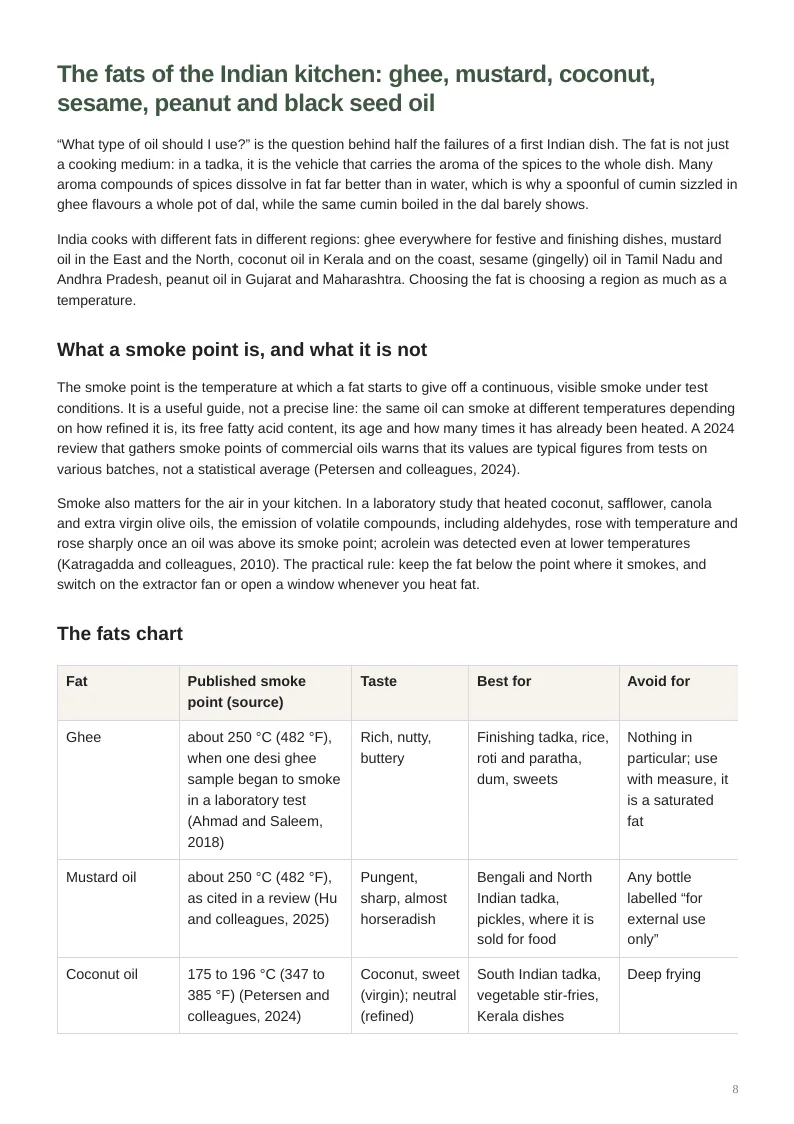
The fats chart
| Fat | Published smoke point (source) | Taste | Best for | Avoid for |
|---|---|---|---|---|
| Ghee | about 250 °C (482 °F), when one desi ghee sample began to smoke in a laboratory test (Ahmad and Saleem, 2018) | Rich, nutty, buttery | Finishing tadka, rice, roti and paratha, dum, sweets | Nothing in particular; use with measure, it is a saturated fat |
| Mustard oil | about 250 °C (482 °F), as cited in a review (Hu and colleagues, 2025) | Pungent, sharp, almost horseradish | Bengali and North Indian tadka, pickles, where it is sold for food | Any bottle labelled “for external use only” |
| Coconut oil | 175 to 196 °C (347 to 385 °F) (Petersen and colleagues, 2024) | Coconut, sweet (virgin); neutral (refined) | South Indian tadka, vegetable stir-fries, Kerala dishes | Deep frying |
| Sesame oil (commercial) | 227 °C (441 °F) (Petersen and colleagues, 2024) | Mild, slightly nutty (light, “gingelly” or til oil) | Tamil and Andhra tempering, chutneys, pickles | Toasted (dark) sesame oil is a finishing oil only |
| Peanut (groundnut) oil | 225 to 230 °C (437 to 446 °F) (Petersen and colleagues, 2024) | Neutral to lightly nutty | Deep frying, Gujarati and Maharashtrian cooking, everyday sautés | Anyone with a peanut allergy |
| Black seed (nigella) oil | no reliable published value found (see text) | Bitter, peppery, intense | A few drops raw, on a finished dish or a salad | Frying, tadka, any high heat |
| Sunflower or canola oil (for comparison) | sunflower 255 °C (491 °F); canola 236 to 256 °C (457 to 492 °F) (Petersen and colleagues, 2024) | Neutral | Deep frying, any tadka where you want no taste of the fat | — |
Smoke points from: Petersen and colleagues, British Journal of Nutrition, 2024 (table of typical values for commercial vegetable oils); Ahmad and Saleem, PLOS ONE, 2018 (buffalo desi ghee heated from 140 to 250 °C); Hu and colleagues, Frontiers in Nutrition, 2025 (review on mustard). Full references at the end of the guide. Values vary with refining and age: treat them as orders of magnitude.
Reproduced exactly as it appears in the guide.
How it works
- You pay by card, Apple Pay or Google Pay on Stripe’s secure page. We never see your card number.
- You land straight on your guide’s page: read it on screen or click “Save as PDF” to keep and print it.
- The link is also emailed to you. Lost it? “Find my purchases”, at the bottom of every page: enter the email you paid with and you get a link to all your purchases.
Money-back guarantee
If the guide isn’t useful to you, email admin@tech-bharat.com within 14 days of purchase and we’ll refund you, no questions asked. This is our own commercial commitment; the details are in our terms of sale.
Seller: LACANGEL GROUP, SAS (French simplified joint-stock company) — SIREN 995 268 018 — 1 rue Marguerin, 75014 Paris, France — EU VAT FR21995268018. Prices VAT included. Questions: admin@tech-bharat.com. Consumer mediation: CM2C. Terms of sale.
Frequently asked questions
Is it for beginners?
Yes. Each technique starts with what it does and the cues to watch, and the first recipe of each pair is the simplest. If you can boil rice and chop an onion, you can start with chapter 4.
Do I need special equipment?
A heavy pan, a lidded pot and a small pan for tadka cover most of the guide. A pressure cooker (stovetop or electric), an idli stand and a tawa are used in their own chapters; the equipment list gives a substitute for each one.
Where do the smoke points come from?
From published sources with a DOI, cited one by one in the fats chapter: a 2024 review table for vegetable oils, a laboratory study on ghee and a review on mustard. Where no reliable value exists, as for black seed oil, the guide says so instead of guessing.
Are the recipes vegetarian?
All 24 practice recipes are vegetarian, and most can be made vegan by using oil instead of ghee and a plant yogurt in the few recipes that use yogurt.
What format is the guide?
A private web page laid out for A4 printing: in any browser, the “Save as PDF” button opens the print dialog, where you choose “Save as PDF”. You keep a PDF on your computer or phone and can print it.
How do I access the guide after paying?
Instantly: after payment, Stripe sends you back to your guide’s page. Stripe also emails you a receipt. If you lose the link, email us from the address on the receipt.
What if the guide isn’t right for me?
Email admin@tech-bharat.com within 14 days and we’ll refund you in full, no questions asked.
Which device can I read it on?
Any device with a browser: phone, tablet or computer. You can also save it as a PDF and print it on A4 or Letter paper.
Is the payment secure?
Yes. You pay on Stripe, by card (or Apple Pay depending on your device). Your card details never go through our servers.